S. 3946 · 117th Congress
Abolish Trafficking Reauthorization Act of 2022
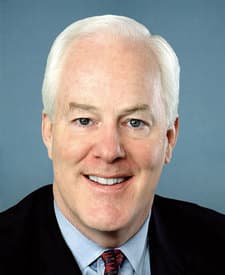
Introduced on Mar 29, 2022 by John Cornyn (R-TX). One cosponsor. Became Public Law 117-347.
- Stage
- Became law
- Public Law 117-347
- Introduced
- Mar 29, 2022
- Cosponsors
- 1
- 1 from the other party
- Policy area
- Crime and Law Enforcement
Progress
The furthest stage the measure reached. Simple and concurrent resolutions do not go to the President.
- Introduced
- Reported by committee
- Passed one chamber
- Passed both chambers
- Sent to the President
- Became law
Official title
A bill to reauthorize the Trafficking Victims Protection Act of 2017, and for other purposes.
Subjects
- Adoption and foster care
- Child safety and welfare
- Computer security and identity theft
- Congressional oversight
- Crime victims
- Crimes against children
- Criminal justice information and records
- Criminal procedure and sentencing
- Department of Homeland Security
- Department of Justice
- Diplomacy, foreign officials, Americans abroad
- Domestic violence and child abuse
- Executive agency funding and structure
- Federal Bureau of Investigation (FBI)
- Government employee pay, benefits, personnel management
- Homelessness and emergency shelter
- Human trafficking
- Law enforcement administration and funding
- Smuggling and trafficking
- State and local government operations
- Transportation employees
Summary
By the Congressional Research Service (Public Law, Jan 5, 2023). Public domain.
Abolish Trafficking Reauthorization Act of 2022
This act reauthorizes various antitrafficking programs, establishes a national strategy on cybercrime against individuals, and expands information sharing and data collection requirements regarding human trafficking.
TITLE I--GRANTS RELATING TO HUMAN TRAFFICKING PREVENTION AND ASSISTANCE FOR VICTIMS OF HUMAN TRAFFICKING
(Sec. 101) This section allows funds provided by the Department of Justice (DOJ) for human trafficking training and technical assistance programs to be used for programs funded through the Office of Community Oriented Policing Services that build law enforcement capacity to identify and respond to human trafficking, such as the Interdiction for the Protection of Children Program.
(Sec. 102) This section allows a victim of human trafficking (e.g., sex trafficking) to pursue a civil claim against persons who attempt or conspire to benefit from the human trafficking in addition to persons who benefit from the human trafficking.
(Sec. 103) This section generally requires grantees and subgrantees that receive funding from DOJ or the Department of Health and Human Services (HHS) to assist victims of trafficking in the United States to protect the confidentiality and privacy of the individuals they serve and their families.
Read the full summary
(Sec. 104) This section authorizes HHS to make grants to states to develop, improve, or expand programs that help child welfare agencies identify and respond to (1) children who are victims of child abuse and neglect and of sexual abuse because they are identified as victims of sex trafficking or severe forms of trafficking in persons; and (2) child-welfare-involved children who are (or are at risk of being) victims of one or more forms of trafficking in persons.
This section also expresses the sense of Congress that health care and social service licensing boards and professional membership associations should facilitate access to trafficking-specific training.
(Sec. 105) This section reauthorizes the Domestic Trafficking Victims' Fund through FY2027. It also makes permanent the requirement for courts to impose a special assessment on nonindigent persons or entities convicted of certain federal trafficking-related offenses including peonage, slavery, or trafficking in persons; sexual abuse; sexual exploitation and other child abuse; transportation for illegal sexual activity; and certain human smuggling offenses. The special assessments are deposited into the Domestic Trafficking Victims' Fund and support programs for victims of human trafficking.
Additionally, this section reauthorizes through FY2027 various grants, programs, and activities that combat human trafficking and assist victims, including
- training for airport and airline personnel to identify and report human trafficking;
- the Human Exploitation Rescue Operation (HERO) Child-Rescue Corps Program;
- grants for the Rape, Abuse & Incest National Network;
- the Human Smuggling and Trafficking Center;
- the Presidential Award for Extraordinary Efforts To Combat Trafficking in Persons;
- additional benefits through HHS and DOJ for domestic victims of severe forms of trafficking; and
- research on domestic and international trafficking in persons.
TITLE II--COMPENSATION OF VICTIMS OF HUMAN TRAFFICKING
(Sec. 201) This section modifies federal bankruptcy laws to specify that a debtor may not discharge in bankruptcy debts for an injury to an individual related to a trafficking offense under federal criminal law. This includes an injury caused by an instance in which the debtor knowingly benefitted financially, or by receiving anything of value, from participation in a venture that the debtor knew or should have known engaged in an trafficking offense under federal criminal law.
TITLE III--CYBER HARASSMENT PREVENTION
Subtitle A--Cybercrime Statistics
(Sec. 311) This section requires DOJ to develop a national strategy to reduce, investigate, and prosecute cybercrimes against individuals. The strategy supplements the National Strategy to Combat Human Trafficking and the National Strategy for Child Exploitation Prevention and Interdiction.
Additionally, this section specifies that the House and Senate Judiciary Committees are appropriate committees to which the National Academy of Sciences must submit its report on cybercrime taxonomy.
Subtitle B--Prioritizing Online Threat Enforcement
(Sec. 321) This section requires DOJ to ensure that there are at least 10 additional agents at the Federal Bureau of Investigation (FBI) to investigate cybercrimes against individuals. DOJ must also ensure that there is at least one attorney in each U.S. Attorney office who is responsible for investigating and prosecuting cybercrimes against individuals.
Finally, this section requires DOJ to implement a training program for FBI agents related to investigating and prosecuting cybercrimes against individuals, including relevant forensic training.
(Sec. 322) This section requires the Office for Victims of Crime within DOJ to report on the nature, extent, and amount of funding under the Victims of Crime Act of 1984 for victims of cybercrimes against individuals. The Victims of Crime Act of 1984 established the Crime Victims Fund, which provides funding to support victims of crime through various federal programs and state and local victim assistance and compensation initiatives.
(Sec. 323) This section allows the Department of State to exchange information with foreign governments pursuant to a bilateral or multilateral agreement that provides for the sharing of information related to individuals who are convicted of sex offenses against minors.
Further, it specifies that an individual may not be issued or reissued a passport without a unique identifier solely because the individual has moved or otherwise resides outside the United States.
(Sec. 324) This section requires DOJ to disseminate information and provide training and technical assistance to help states and local governments (1) investigate, prosecute, pursue, prevent, understand, and mitigate the impact of physical, sexual, and psychological abuse of cybercrime victims; the exploitation of cybercrime victims; and the deprioritization of cybercrime; and (2) assess, address, and mitigate the physical and psychological trauma to victims of cybercrime.
TITLE IV--OTHER FEDERAL IMPROVEMENTS RELATING TO HUMAN TRAFFICKING
(Sec. 401) This section requires DOJ and the Department of Homeland Security (DHS) to provide incentive pay to individuals who are appointed to positions requiring significant cyber skills, including to protect victims of trafficking, prevent trafficking in persons, or prosecute technology-facilitated crimes against children.
(Sec. 402) This section prohibits federal agencies from requiring a survivor of human trafficking who is less than 18 years of age or a homeless youth to obtain the consent or signature of a parent or guardian to receive a government-issued identification card. Additionally, it prohibits federal agencies from charging a fee for the identification card.
(Sec. 403) This section allows DOJ to use amounts in its Assets Forfeiture Fund to reimburse operating expenses and program costs incurred by crime-tip organizations that meet certain criteria (e.g., annually waive their qualification for awards for information leading to forfeiture and payments from equitably shared forfeiture funds) and offer rewards for information about violations of federal criminal laws prohibiting human trafficking.
(Sec. 404) This section requires DOJ to include additional information in its annual report on U.S. government efforts to combat human trafficking. First, with respect to noncitizen victims of human trafficking whose application for continued presence, T nonimmigrant status (a T-visa), or U nonimmigrant status (a U-visa) are denied, DOJ must include the reason for the denial and the length of time for the denial to be issued. Second, DOJ must include disaggregated data regarding the number of victims trafficked by third parties and by family members, victims trafficked by victim age, and victims trafficked by the type of trafficking.
(Sec. 405) This section requires DOJ and HHS to report biennially on the status of various data collection and reporting requirements related to trafficking.
(Sec. 406) This section requires DOJ and DHS to each establish a team of at least 10 agents to exclusively investigate labor trafficking.
Sponsor and cosponsors
Cosponsors by party as of the day they signed on. Original cosponsors signed on the day of introduction.
Democrats · 1
- Amy KlobucharD-MNoriginal
Roll calls
Recorded votes on the measure. Most measures move by voice vote or unanimous consent, which record no individual positions.
No recorded roll call on this measure: it moved by voice vote or unanimous consent, or has not reached the floor.
History
Every action as published, oldest first. Roll calls link to how each member voted.
- Mar 29, 2022Introduced in Senate
- Mar 29, 2022 · SenateRead twice and referred to the Committee on the Judiciary.
- Dec 20, 2022Senate Committee on the Judiciary discharged by Unanimous Consent.
- Dec 20, 2022 · SenateSenate Committee on the Judiciary discharged by Unanimous Consent.
- Dec 20, 2022 · SenateMeasure laid before Senate by unanimous consent. (consideration: CR S9610)
- Dec 20, 2022Passed/agreed to in Senate: Passed Senate with an amendment by Unanimous Consent.(text of amendment in the nature of a substitute: CR S9658-9661)
- Dec 20, 2022 · SenatePassed Senate with an amendment by Unanimous Consent. (text of amendment in the nature of a substitute: CR S9658-9661)
- Dec 21, 2022 · SenateMessage on Senate action sent to the House.
- Dec 21, 2022 · HouseReceived in the House.
- Dec 21, 2022 · HouseHeld at the desk.
- Dec 22, 2022 · HouseMr. Nadler moved to suspend the rules and pass the bill.
- Dec 22, 2022 · HouseConsidered under suspension of the rules. (consideration: CR H10018-10022)
- Dec 22, 2022 · HouseDEBATE - The House proceeded with forty minutes of debate on S. 3946.
- Dec 22, 2022Passed/agreed to in House: On motion to suspend the rules and pass the bill Agreed to by voice vote.(text: CR H10018-10021)
- Dec 22, 2022 · HouseOn motion to suspend the rules and pass the bill Agreed to by voice vote. (text: CR H10018-10021)
- Dec 22, 2022 · HouseMotion to reconsider laid on the table Agreed to without objection.
- Dec 28, 2022Presented to President.
- Dec 28, 2022 · HousePresented to President.
- Jan 5, 2023Signed by President.
- Jan 5, 2023Signed by President.
- Jan 5, 2023Became Public Law No: 117-347.
- Jan 5, 2023Became Public Law No: 117-347.
Committees
Committees and subcommittees the measure was referred to.
Agencies in its committees' jurisdiction
Analisa's mapping of committee jurisdiction to federal agencies; the bill may touch others, or none of these.
Sources and method
Every figure on this page traces to these records.
- Bill status: bills and resolutions, sponsors, actions, subjects and CRS summaries (U.S. Government Publishing Office (GovInfo), from Congress.gov (Library of Congress))GovInfo Bill Status bulk data (Congress.gov; summaries by the Congressional Research Service) · data current to Oct 3, 2026 · loaded Oct 3, 2026 · license: Public domain (U.S. Government work, 17 U.S.C. § 105)
- Members of Congress, their terms, committees and identifiers (The @unitedstates project (from the Biographical Directory of the U.S. Congress, the House and the Senate))unitedstates/congress-legislators: legislators, committees and current committee membership · data current to Oct 3, 2026 · loaded Oct 3, 2026 · license: CC0 1.0 (public domain dedication)
- House roll-call votes (Office of the Clerk, U.S. House of Representatives)Office of the Clerk, U.S. House of Representatives, roll-call vote records · data current to Oct 3, 2026 · loaded Oct 3, 2026 · license: Public domain (U.S. Government work, 17 U.S.C. § 105)
- Senate roll-call votes and DW-NOMINATE scores (Voteview (UCLA Department of Political Science))Lewis, Jeffrey B., Keith Poole, Howard Rosenthal, Adam Boche, Aaron Rudkin, and Luke Sonnet (2026). Voteview: Congressional Roll-Call Votes Database. https://voteview.com/ · data current to Oct 3, 2026 · loaded Oct 3, 2026 · license: Free to use with the required citation
- Lobbying disclosures (LD-1 registrations, LD-2 quarterly reports, LD-203 contribution reports) (Clerk of the U.S. House of Representatives)Clerk of the House, Lobbying Disclosure Act filings (organizations only; lobbyists' names are not loaded) · data current to Oct 3, 2026 · loaded Oct 3, 2026 · license: Public domain (U.S. Government work, 17 U.S.C. § 105)
- Positions are shown only where a roll call recorded them; voice votes and unanimous consent record none.