H.R. 3827 · 117th Congress
Protect Speech Act
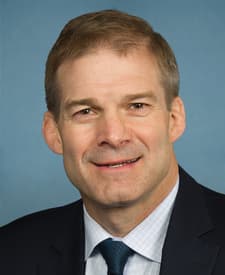
Introduced on Jun 11, 2021 by Jim Jordan (R-OH-4). 14 cosponsors, all from the sponsor's party. Latest action (Jun 14, 2021): Referred to the Subcommittee on Communications and Technology.
- Stage
- Introduced
- Introduced
- Jun 11, 2021
- Cosponsors
- 14
- 0 from the other party
- Policy area
- Science, Technology, Communications
Progress
The furthest stage the measure reached. Simple and concurrent resolutions do not go to the President.
- Introduced
- 2Reported by committee
- 3Passed one chamber
- 4Passed both chambers
- 5Sent to the President
- 6Became law
Official title
To amend section 230 of the Communications Act of 1934 to ensure that the immunity under such section incentivizes online platforms to responsibly address illegal content while not immunizing the disparate treatment of ideological viewpoints and continuing to encourage a vibrant, open, and competitive internet, and for other purposes.
Summary
By the Congressional Research Service (Introduced in House, Jun 11, 2021). Public domain.
Protect Speech Act
This bill modifies the immunity from liability of a provider or user of an interactive computer service (e.g., a social media company) for screening and blocking offensive content on its platform.
Specifically, the bill provides that this immunity shall not apply to any action taken to restrict access to or availability of material provided by another information content provider unless the action is taken in good faith based on an objectively reasonable belief that the material is (1) obscene, lewd, lascivious, filthy, excessively violent, promoting terrorism or violent extremism, harassing, promoting self-harm, or unlawful; or (2) violates the applicable terms of service or use.
In order to avoid liability for taking action based on either belief, certain good faith requirements must be met, such as (1) making publicly available terms of service or use that plainly state the criteria for content moderation practices, and (2) not restricting access to or availability of material on deceptive grounds.
Further, the bill specifies that being responsible in whole or in part for the creation or development of information includes instances in which a person or entity solicits, comments upon, funds, or affirmatively and substantively contributes to, modifies, or alters information provided by another person or entity.
Sponsor and cosponsors
Cosponsors by party as of the day they signed on. Original cosponsors signed on the day of introduction.
Republicans · 14
- Dan BishopR-NC-9original
- Michelle FischbachR-MN-7original
- Scott FitzgeraldR-WI-5original
- Darrell IssaR-CA-50original
- Mike JohnsonR-LA-4original
- Tom McClintockR-CA-4original
- Victoria SpartzR-IN-5original
- W. Gregory SteubeR-FL-17original
- Thomas P. TiffanyR-WI-7original
- Burgess OwensR-UT-4signed on Jun 14, 2021
- Vern BuchananR-FL-16signed on Jun 29, 2021
- Randy K. Weber, Sr.R-TX-14signed on Jul 13, 2021
- Tom RiceR-SC-7signed on Jul 30, 2021
- John H. RutherfordR-FL-4signed on Sep 21, 2021
Roll calls
Recorded votes on the measure. Most measures move by voice vote or unanimous consent, which record no individual positions.
No recorded roll call on this measure: it moved by voice vote or unanimous consent, or has not reached the floor.
History
Every action as published, oldest first. Roll calls link to how each member voted.
- Jun 11, 2021Introduced in House
- Jun 11, 2021Introduced in House
- Jun 11, 2021 · HouseReferred to the House Committee on Energy and Commerce.
- Jun 14, 2021 · HouseReferred to the Subcommittee on Communications and Technology.
Committees
Committees and subcommittees the measure was referred to.
Agencies in its committees' jurisdiction
Analisa's mapping of committee jurisdiction to federal agencies; the bill may touch others, or none of these.
Sources and method
Every figure on this page traces to these records.
- Bill status: bills and resolutions, sponsors, actions, subjects and CRS summaries (U.S. Government Publishing Office (GovInfo), from Congress.gov (Library of Congress))GovInfo Bill Status bulk data (Congress.gov; summaries by the Congressional Research Service) · data current to Oct 10, 2026 · loaded Oct 10, 2026 · license: Public domain (U.S. Government work, 17 U.S.C. § 105)
- Members of Congress, their terms, committees and identifiers (The @unitedstates project (from the Biographical Directory of the U.S. Congress, the House and the Senate))unitedstates/congress-legislators: legislators, committees and current committee membership · data current to Oct 3, 2026 · loaded Oct 3, 2026 · license: CC0 1.0 (public domain dedication)
- House roll-call votes (Office of the Clerk, U.S. House of Representatives)Office of the Clerk, U.S. House of Representatives, roll-call vote records · data current to Oct 3, 2026 · loaded Oct 3, 2026 · license: Public domain (U.S. Government work, 17 U.S.C. § 105)
- Senate roll-call votes and DW-NOMINATE scores (Voteview (UCLA Department of Political Science))Lewis, Jeffrey B., Keith Poole, Howard Rosenthal, Adam Boche, Aaron Rudkin, and Luke Sonnet (2026). Voteview: Congressional Roll-Call Votes Database. https://voteview.com/ · data current to Oct 3, 2026 · loaded Oct 3, 2026 · license: Free to use with the required citation
- Lobbying disclosures (LD-1 registrations, LD-2 quarterly reports, LD-203 contribution reports) (Clerk of the U.S. House of Representatives)Clerk of the House, Lobbying Disclosure Act filings (organizations only; lobbyists' names are not loaded) · data current to Oct 10, 2026 · loaded Oct 10, 2026 · license: Public domain (U.S. Government work, 17 U.S.C. § 105)
- Positions are shown only where a roll call recorded them; voice votes and unanimous consent record none.