H.R. 4720 · 117th Congress
Energy Sector Innovation Credit Act of 2021
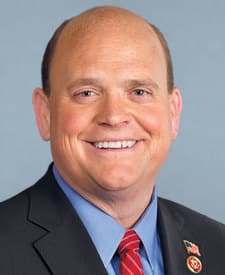
Introduced on Jul 27, 2021 by Tom Reed (R-NY-23). 10 cosponsors, 3 of them from another party. Latest action (Jul 28, 2022): ASSUMING FIRST SPONSORSHIP - Mr. Schweikert asked unanimous consent that he may hereafter be considered as the first sponsor of H.R. 4720, a bill originally introduced by Representative Reed, for the purpose of adding cosponsors and requesting reprintings pursuant to clause 7 of rule XII. Agreed to without objection.
- Stage
- Introduced
- Introduced
- Jul 27, 2021
- Cosponsors
- 10
- 3 from the other party
- Policy area
- Taxation
Progress
The furthest stage the measure reached. Simple and concurrent resolutions do not go to the President.
- Introduced
- 2Reported by committee
- 3Passed one chamber
- 4Passed both chambers
- 5Sent to the President
- 6Became law
Official title
To amend the Internal Revenue Code of 1986 to provide investment and production tax credits for emerging energy technologies, and for other purposes.
Subjects
- Administrative law and regulatory procedures
- Advanced technology and technological innovations
- Air quality
- Alternative and renewable resources
- Building construction
- Business expenses
- Climate change and greenhouse gases
- Congressional oversight
- Electric power generation and transmission
- Energy efficiency and conservation
- Energy prices
- Energy research
- Energy storage, supplies, demand
- Environmental technology
- Government information and archives
- Income tax credits
- Industrial facilities
- Nuclear power
- Product development and innovation
- Research and development
- Retail and wholesale trades
- State and local government operations
- Tax-exempt organizations
- Water use and supply
Summary
By the Congressional Research Service (Introduced in House, Jul 27, 2021). Public domain.
Energy Sector Innovation Credit Act of 2021
This bill adds new tax credits for investment in qualified emerging technology energy property and for the production of electricity from emerging energy technology. The bill defines qualified emerging energy property as property that is constructed, reconstructed, erected, or acquired by the taxpayer and is (1) a facility for the production of electricity from emerging energy technology, (2) carbon capture equipment, or (3) energy storage technology.
The bill also adds a new tax credit for the production of electricity from clean hydrogen. The bill defines clean hydrogen as hydrogen that is produced through a production method for which the rate of the greenhouse gas emission is greater than zero and not greater that 2,500g CO2-e per kilogram of hydrogen produced, or is equal to or less than zero.
Sponsor and cosponsors
Cosponsors by party as of the day they signed on. Original cosponsors signed on the day of introduction.
Democrats · 3
- Josh GottheimerD-NJ-5original
- Jimmy PanettaD-CA-20original
- Thomas R. SuozziD-NY-3original
Republicans · 7
- Darin LaHoodR-IL-18original
- David SchweikertR-AZ-6original
- Michael C. BurgessR-TX-26signed on Jul 28, 2021
- Carol D. MillerR-WV-3signed on Nov 1, 2021
- William R. Timmons IVR-SC-4signed on Dec 1, 2021
- Elise M. StefanikR-NY-21signed on Apr 11, 2022
- Byron DonaldsR-FL-19signed on Aug 19, 2022
Roll calls
Recorded votes on the measure. Most measures move by voice vote or unanimous consent, which record no individual positions.
No recorded roll call on this measure: it moved by voice vote or unanimous consent, or has not reached the floor.
History
Every action as published, oldest first. Roll calls link to how each member voted.
- Jul 27, 2021Introduced in House
- Jul 27, 2021Introduced in House
- Jul 27, 2021 · HouseReferred to the House Committee on Ways and Means.
- Jul 28, 2022 · HouseASSUMING FIRST SPONSORSHIP - Mr. Schweikert asked unanimous consent that he may hereafter be considered as the first sponsor of H.R. 4720, a bill originally introduced by Representative Reed, for the purpose of adding cosponsors and requesting reprintings pursuant to clause 7 of rule XII. Agreed to without objection.
Committees
Committees and subcommittees the measure was referred to.
Agencies in its committees' jurisdiction
Analisa's mapping of committee jurisdiction to federal agencies; the bill may touch others, or none of these.
Who lobbied on it
Organizations whose lobbying reports (LD-2) name this measure. Spending is what they reported for those quarters on all issues, not on this measure alone.
- Chamber of Commerce of the U.S.A.6 reports$112.9M reported (all issues)
Reports filed in 2023, 2024, 2025.
Sources and method
Every figure on this page traces to these records.
- Bill status: bills and resolutions, sponsors, actions, subjects and CRS summaries (U.S. Government Publishing Office (GovInfo), from Congress.gov (Library of Congress))GovInfo Bill Status bulk data (Congress.gov; summaries by the Congressional Research Service) · data current to Oct 9, 2026 · loaded Oct 9, 2026 · license: Public domain (U.S. Government work, 17 U.S.C. § 105)
- Members of Congress, their terms, committees and identifiers (The @unitedstates project (from the Biographical Directory of the U.S. Congress, the House and the Senate))unitedstates/congress-legislators: legislators, committees and current committee membership · data current to Oct 3, 2026 · loaded Oct 3, 2026 · license: CC0 1.0 (public domain dedication)
- House roll-call votes (Office of the Clerk, U.S. House of Representatives)Office of the Clerk, U.S. House of Representatives, roll-call vote records · data current to Oct 3, 2026 · loaded Oct 3, 2026 · license: Public domain (U.S. Government work, 17 U.S.C. § 105)
- Senate roll-call votes and DW-NOMINATE scores (Voteview (UCLA Department of Political Science))Lewis, Jeffrey B., Keith Poole, Howard Rosenthal, Adam Boche, Aaron Rudkin, and Luke Sonnet (2026). Voteview: Congressional Roll-Call Votes Database. https://voteview.com/ · data current to Oct 3, 2026 · loaded Oct 3, 2026 · license: Free to use with the required citation
- Lobbying disclosures (LD-1 registrations, LD-2 quarterly reports, LD-203 contribution reports) (Clerk of the U.S. House of Representatives)Clerk of the House, Lobbying Disclosure Act filings (organizations only; lobbyists' names are not loaded) · data current to Oct 9, 2026 · loaded Oct 9, 2026 · license: Public domain (U.S. Government work, 17 U.S.C. § 105)
- Positions are shown only where a roll call recorded them; voice votes and unanimous consent record none.
- Money and votes are shown side by side; neither explains the other.