S. 1653 · 117th Congress
SMART Act
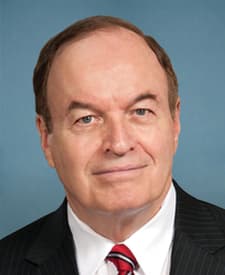
Introduced on May 17, 2021 by Richard C. Shelby (R-AL). Latest action (May 17, 2021): Read twice and referred to the Committee on Finance.
- Stage
- Introduced
- Introduced
- May 17, 2021
- Cosponsors
- 0
- Policy area
- Taxation
Progress
The furthest stage the measure reached. Simple and concurrent resolutions do not go to the President.
- Introduced
- 2Reported by committee
- 3Passed one chamber
- 4Passed both chambers
- 5Sent to the President
- 6Became law
Official title
A bill to repeal the current Internal Revenue Code and replace it with a flat tax, thereby guaranteeing economic growth and fairness for all Americans.
Subjects
- Employee benefits and pensions
- Income tax credits
- Income tax deductions
- Income tax exclusion
- Income tax rates
- Legislative rules and procedure
- Tax reform and tax simplification
- Transfer and inheritance taxes
Summary
By the Congressional Research Service (Introduced in Senate, May 17, 2021). Public domain.
Simplified, Manageable, And Responsible Tax Act or the SMART Act
This bill replaces the marginal income tax rates in the Internal Revenue Code with a single rate of 17% on individual taxable income.
The bill redefines taxable income to mean the amount by which wages, retirement distributions, and unemployment compensation exceed the standard deduction. It also
- increases the basic standard deduction,
- includes an additional standard deduction for dependents, and
- includes the taxable income of each dependent child under the age of 14 in an individual's taxable income.
The bill revises the tax on corporations to (1) replace it with a tax on every person engaged in a business activity equal to 17% of the business taxable income of such person; and (2) make the person engaged in the business activity liable for the tax, whether or not such person is an individual, a partnership, or a corporation.
The bill imposes on employers a 17% tax on the value of excludable compensation provided during the year to employees.
With respect to pension rules, the bill (1) repeals rules relating to non-discrimination, contribution limits, and restrictions on distributions; and (2) revises rules relating to transfers of excess pension assets.
The bill also repeals
- the alternative minimum tax;
- all income tax credits;
- estate, gift, and generation-skipping transfer taxes; and
- income tax provisions, except certain provisions relating to retirement distributions and tax-exempt organizations.
The bill prohibits Congress from considering legislation to make specified changes to tax policy unless Congress waives or suspends the prohibition with a three-fifths vote.
Sponsor and cosponsors
Cosponsors by party as of the day they signed on. Original cosponsors signed on the day of introduction.
No cosponsors.
Roll calls
Recorded votes on the measure. Most measures move by voice vote or unanimous consent, which record no individual positions.
No recorded roll call on this measure: it moved by voice vote or unanimous consent, or has not reached the floor.
History
Every action as published, oldest first. Roll calls link to how each member voted.
- May 17, 2021Introduced in Senate
- May 17, 2021 · SenateRead twice and referred to the Committee on Finance.
Committees
Committees and subcommittees the measure was referred to.
Agencies in its committees' jurisdiction
Analisa's mapping of committee jurisdiction to federal agencies; the bill may touch others, or none of these.
Sources and method
Every figure on this page traces to these records.
- Bill status: bills and resolutions, sponsors, actions, subjects and CRS summaries (U.S. Government Publishing Office (GovInfo), from Congress.gov (Library of Congress))GovInfo Bill Status bulk data (Congress.gov; summaries by the Congressional Research Service) · data current to Oct 9, 2026 · loaded Oct 9, 2026 · license: Public domain (U.S. Government work, 17 U.S.C. § 105)
- Members of Congress, their terms, committees and identifiers (The @unitedstates project (from the Biographical Directory of the U.S. Congress, the House and the Senate))unitedstates/congress-legislators: legislators, committees and current committee membership · data current to Oct 3, 2026 · loaded Oct 3, 2026 · license: CC0 1.0 (public domain dedication)
- House roll-call votes (Office of the Clerk, U.S. House of Representatives)Office of the Clerk, U.S. House of Representatives, roll-call vote records · data current to Oct 3, 2026 · loaded Oct 3, 2026 · license: Public domain (U.S. Government work, 17 U.S.C. § 105)
- Senate roll-call votes and DW-NOMINATE scores (Voteview (UCLA Department of Political Science))Lewis, Jeffrey B., Keith Poole, Howard Rosenthal, Adam Boche, Aaron Rudkin, and Luke Sonnet (2026). Voteview: Congressional Roll-Call Votes Database. https://voteview.com/ · data current to Oct 3, 2026 · loaded Oct 3, 2026 · license: Free to use with the required citation
- Lobbying disclosures (LD-1 registrations, LD-2 quarterly reports, LD-203 contribution reports) (Clerk of the U.S. House of Representatives)Clerk of the House, Lobbying Disclosure Act filings (organizations only; lobbyists' names are not loaded) · data current to Oct 9, 2026 · loaded Oct 9, 2026 · license: Public domain (U.S. Government work, 17 U.S.C. § 105)
- Positions are shown only where a roll call recorded them; voice votes and unanimous consent record none.