S. 3807 · 117th Congress
SHIP IT Act
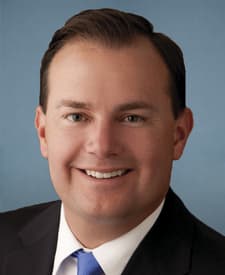
Introduced on Mar 10, 2022 by Mike Lee (R-UT). One cosponsor. Latest action (Mar 10, 2022): Read twice and referred to the Committee on Commerce, Science, and Transportation.
- Stage
- Introduced
- Introduced
- Mar 10, 2022
- Cosponsors
- 1
- 0 from the other party
- Policy area
- Transportation and Public Works
Progress
The furthest stage the measure reached. Simple and concurrent resolutions do not go to the President.
- Introduced
- 2Reported by committee
- 3Passed one chamber
- 4Passed both chambers
- 5Sent to the President
- 6Became law
Official title
A bill to address the supply chain backlog in the freight network at United States ports, and for other purposes.
Summary
By the Congressional Research Service (Introduced in Senate, Mar 10, 2022). Public domain.
Stopping Hindrances to Invigorate Ports and Increase Trade Act or the SHIP IT Act
This bill temporarily waives various requirements and makes other changes to address congestion at U.S. ports.
For example, the Federal Motor Carrier Safety Administration must waive the hours of service limits (i.e., the number of hours a driver may operate a truck or motor carrier in a set period of time) and minimum age requirements that apply to commercial driver's licenses for individuals transporting cargo directly to or from a U.S. port.
Additionally, the Coast Guard may temporarily allow foreign-built, -owned, and -crewed vessels to transport cargo between U.S. ports and engage in certain ship-to-ship transfers of cargo. Current coastwise law, commonly known as the Jones Act, generally requires that vessels transporting cargo domestically be U.S.-built, -owned, and -crewed.
The Department of Defense must (1) inventory its intermodal equipment (e.g., trailers and chassis used to transport shipping containers) to identify equipment available for loan to trucking companies to relieve congestion at U.S. ports, and (2) establish a process to allow trucking companies to request the loan of such equipment.
The Maritime Administration and the Federal Maritime Commission must jointly convene a meeting to discuss the long-term feasibility of, and strategies for, using land or property under the jurisdiction of U.S. inland ports for the storage and transfer of cargo containers.
The Government Accountability Office must submit to Congress a report describing the adoption of technology at U.S. ports as compared to foreign ports.
Sponsor and cosponsors
Cosponsors by party as of the day they signed on. Original cosponsors signed on the day of introduction.
Republicans · 1
- Cynthia M. LummisR-WYoriginal
Roll calls
Recorded votes on the measure. Most measures move by voice vote or unanimous consent, which record no individual positions.
No recorded roll call on this measure: it moved by voice vote or unanimous consent, or has not reached the floor.
History
Every action as published, oldest first. Roll calls link to how each member voted.
- Mar 10, 2022Introduced in Senate
- Mar 10, 2022 · SenateRead twice and referred to the Committee on Commerce, Science, and Transportation.
Committees
Committees and subcommittees the measure was referred to.
Agencies in its committees' jurisdiction
Analisa's mapping of committee jurisdiction to federal agencies; the bill may touch others, or none of these.
- Consumer Product Safety Commission
- Department of Commerce
- Department of Transportation
- Federal Communications Commission
- Federal Maritime Commission
- Federal Trade Commission
- National Aeronautics and Space Administration
- National Science Foundation
- National Transportation Safety Board
- Surface Transportation Board
Who lobbied on it
Organizations whose lobbying reports (LD-2) name this measure. Spending is what they reported for those quarters on all issues, not on this measure alone.
- CHAMBER OF DIGITAL COMMERCE1 report$80K reported (all issues)
- Lineage Logistics1 report
Reports filed in 2023.
Sources and method
Every figure on this page traces to these records.
- Bill status: bills and resolutions, sponsors, actions, subjects and CRS summaries (U.S. Government Publishing Office (GovInfo), from Congress.gov (Library of Congress))GovInfo Bill Status bulk data (Congress.gov; summaries by the Congressional Research Service) · data current to Nov 26, 2026 · loaded Nov 26, 2026 · license: Public domain (U.S. Government work, 17 U.S.C. § 105)
- Members of Congress, their terms, committees and identifiers (The @unitedstates project (from the Biographical Directory of the U.S. Congress, the House and the Senate))unitedstates/congress-legislators: legislators, committees and current committee membership · data current to Sep 24, 2026 · loaded Oct 13, 2026 · license: CC0 1.0 (public domain dedication)
- House roll-call votes (Office of the Clerk, U.S. House of Representatives)Office of the Clerk, U.S. House of Representatives, roll-call vote records · data current to Nov 19, 2026 · loaded Nov 20, 2026 · license: Public domain (U.S. Government work, 17 U.S.C. § 105)
- Senate roll-call votes and DW-NOMINATE scores (Voteview (UCLA Department of Political Science))Lewis, Jeffrey B., Keith Poole, Howard Rosenthal, Adam Boche, Aaron Rudkin, and Luke Sonnet (2026). Voteview: Congressional Roll-Call Votes Database. https://voteview.com/ · data current to Nov 20, 2026 · loaded Nov 21, 2026 · license: Free to use with the required citation
- Lobbying disclosures (LD-1 registrations, LD-2 quarterly reports, LD-203 contribution reports) (Clerk of the U.S. House of Representatives)Clerk of the House, Lobbying Disclosure Act filings (organizations only; lobbyists' names are not loaded) · data current to Nov 27, 2026 · loaded Nov 27, 2026 · license: Public domain (U.S. Government work, 17 U.S.C. § 105)
- Positions are shown only where a roll call recorded them; voice votes and unanimous consent record none.
- Money and votes are shown side by side; neither explains the other.