S. 4160 · 117th Congress
Supreme Court Police Parity Act of 2022
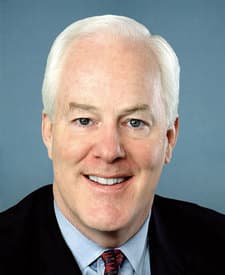
Introduced on May 5, 2022 by John Cornyn (R-TX). One cosponsor. Became Public Law 117-148.
- Stage
- Became law
- Public Law 117-148
- Introduced
- May 5, 2022
- Cosponsors
- 1
- 1 from the other party
- Policy area
- Government Operations and Politics
Progress
The furthest stage the measure reached. Simple and concurrent resolutions do not go to the President.
- Introduced
- Reported by committee
- Passed one chamber
- Passed both chambers
- Sent to the President
- Became law
Official title
A bill to amend title 40, United States Code, to grant the Supreme Court of the United States security-related authorities equivalent to the legislative and executive branches.
Subjects
- Family relationships
- Government employee pay, benefits, personnel management
- Judges
- Law enforcement administration and funding
- Law enforcement officers
- Protection of officials
- Supreme Court
Summary
By the Congressional Research Service (Public Law, Jun 16, 2022). Public domain.
Supreme Court Police Parity Act of 2022
This bill grants the Marshal of the Supreme Court and the Supreme Court Police the authority to protect any member of the immediate family of the Chief Justice, any Associate Justice, or any officer of the Supreme Court if the Marshal determines that such protection is necessary.
Sponsor and cosponsors
Cosponsors by party as of the day they signed on. Original cosponsors signed on the day of introduction.
Democrats · 1
- Christopher A. CoonsD-DEoriginal
Roll calls
Recorded votes on the measure. Most measures move by voice vote or unanimous consent, which record no individual positions.
- Jun 14, 2022· House· Passage· Passed 396–27
History
Every action as published, oldest first. Roll calls link to how each member voted.
- May 5, 2022Introduced in Senate
- May 5, 2022 · SenateRead twice and referred to the Committee on the Judiciary.
- May 9, 2022Senate Committee on the Judiciary discharged by Unanimous Consent.(consideration: CR S2384)
- May 9, 2022 · SenateSenate Committee on the Judiciary discharged by Unanimous Consent. (consideration: CR S2384)
- May 9, 2022Passed/agreed to in Senate: Passed Senate without amendment by Unanimous Consent.(text: CR S2384)
- May 9, 2022 · SenatePassed Senate without amendment by Unanimous Consent. (text: CR S2384)
- May 10, 2022 · SenateMessage on Senate action sent to the House.
- May 10, 2022 · HouseReceived in the House.
- May 10, 2022 · HouseHeld at the desk.
- Jun 14, 2022 · HouseMr. Lieu moved to suspend the rules and pass the bill.
- Jun 14, 2022 · HouseConsidered under suspension of the rules. (consideration: CR H5495-5499)
- Jun 14, 2022 · HouseDEBATE - The House proceeded with forty minutes of debate on S. 4160.
- Jun 14, 2022 · HouseAt the conclusion of debate, the Yeas and Nays were demanded and ordered. Pursuant to the provisions of clause 8, rule XX, the Chair announced that further proceedings on the motion would be postponed.
- Jun 14, 2022 · HouseConsidered as unfinished business. (consideration: CR H5506-5507)
- Jun 14, 2022Passed/agreed to in House: On motion to suspend the rules and pass the bill Agreed to by the Yeas and Nays: (2/3 required): 396 - 27 (Roll no. 261).(text: CR H5495)House · Roll call 261
- Jun 14, 2022 · HouseOn motion to suspend the rules and pass the bill Agreed to by the Yeas and Nays: (2/3 required): 396 - 27 (Roll no. 261). (text: CR H5495)House · Roll call 261
- Jun 14, 2022 · HouseMotion to reconsider laid on the table Agreed to without objection.
- Jun 16, 2022Presented to President.
- Jun 16, 2022 · HousePresented to President.
- Jun 16, 2022Signed by President.
- Jun 16, 2022Signed by President.
- Jun 16, 2022Became Public Law No: 117-148.
- Jun 16, 2022Became Public Law No: 117-148.
Committees
Committees and subcommittees the measure was referred to.
Agencies in its committees' jurisdiction
Analisa's mapping of committee jurisdiction to federal agencies; the bill may touch others, or none of these.
Sources and method
Every figure on this page traces to these records.
- Bill status: bills and resolutions, sponsors, actions, subjects and CRS summaries (U.S. Government Publishing Office (GovInfo), from Congress.gov (Library of Congress))GovInfo Bill Status bulk data (Congress.gov; summaries by the Congressional Research Service) · data current to Oct 6, 2026 · loaded Oct 6, 2026 · license: Public domain (U.S. Government work, 17 U.S.C. § 105)
- Members of Congress, their terms, committees and identifiers (The @unitedstates project (from the Biographical Directory of the U.S. Congress, the House and the Senate))unitedstates/congress-legislators: legislators, committees and current committee membership · data current to Oct 3, 2026 · loaded Oct 3, 2026 · license: CC0 1.0 (public domain dedication)
- House roll-call votes (Office of the Clerk, U.S. House of Representatives)Office of the Clerk, U.S. House of Representatives, roll-call vote records · data current to Oct 3, 2026 · loaded Oct 3, 2026 · license: Public domain (U.S. Government work, 17 U.S.C. § 105)
- Senate roll-call votes and DW-NOMINATE scores (Voteview (UCLA Department of Political Science))Lewis, Jeffrey B., Keith Poole, Howard Rosenthal, Adam Boche, Aaron Rudkin, and Luke Sonnet (2026). Voteview: Congressional Roll-Call Votes Database. https://voteview.com/ · data current to Oct 3, 2026 · loaded Oct 3, 2026 · license: Free to use with the required citation
- Lobbying disclosures (LD-1 registrations, LD-2 quarterly reports, LD-203 contribution reports) (Clerk of the U.S. House of Representatives)Clerk of the House, Lobbying Disclosure Act filings (organizations only; lobbyists' names are not loaded) · data current to Oct 6, 2026 · loaded Oct 6, 2026 · license: Public domain (U.S. Government work, 17 U.S.C. § 105)
- Positions are shown only where a roll call recorded them; voice votes and unanimous consent record none.