H.R. 1633 · 118th Congress
RAIL Act
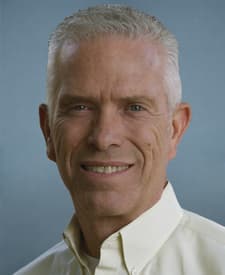
Introduced on Mar 17, 2023 by Bill Johnson (R-OH-6). 15 cosponsors, 8 of them from another party. Latest action (Jan 29, 2024): ASSUMING FIRST SPONSORSHIP - Mrs. Sykes asked unanimous consent that she may hereafter be considered as the first sponsor of H.R. 1633, a bill originally introduced by Representative Johnson (OH), for the purpose of adding cosponsors and requesting reprintings pursuant to clause 7 of rule XII. Agreed to without objection.
- Stage
- Introduced
- Introduced
- Mar 17, 2023
- Cosponsors
- 15
- 8 from the other party
- Policy area
- Transportation and Public Works
Progress
The furthest stage the measure reached. Simple and concurrent resolutions do not go to the President.
- Introduced
- 2Reported by committee
- 3Passed one chamber
- 4Passed both chambers
- 5Sent to the President
- 6Became law
Official title
To enhance safety requirements for trains transporting hazardous materials, and for other purposes.
Subjects
- Administrative law and regulatory procedures
- Civil actions and liability
- Department of Transportation
- Employment and training programs
- Government information and archives
- Government studies and investigations
- Hazardous wastes and toxic substances
- Labor-management relations
- Licensing and registrations
- Railroads
- Transportation safety and security
- User charges and fees
Summary
By the Congressional Research Service (Introduced in House, Mar 17, 2023). Public domain.
Reducing Accidents In Locomotives Act or the RAIL Act
This bill addresses safety requirements for rail carriers and trains transporting hazardous materials.
Specifically, the Department of Transportation (DOT) must issue safety regulations for trains carrying hazardous materials to require that rail carriers (1) provide state emergency response commissioners with advance notice and information about the hazardous materials; (2) reduce blocked rail crossings; and (3) comply with certain requirements regarding train length and weight specifications, track standards, speed restrictions, and response plans.
DOT must also establish requirements for wayside defect detectors. These are used by railway systems alongside the tracks to detect defects and failures (e.g., wheel bearing failures). Current federal regulations do not require their use, but federal guidance does address their placement and use. Under the bill, DOT must issue regulations establishing requirements for the installation, repair, testing, maintenance, and operation of wayside defect detectors for each rail carrier operating a train carrying hazardous materials. Further, these regulations must establish requirements that safety placards be able to withstand heat in excess of 180 degrees.
The bill also
- increases the maximum fines DOT may impose on rail carriers for violating safety regulations,
- requires DOT to update rail car inspection regulations and audit the federal inspection program,
- phases out certain railroad tank cars by May 1, 2028 (one year sooner than required under current law),
- expands training for local first responders, and
- imposes a new fee on certain rail carriers.
Sponsor and cosponsors
Cosponsors by party as of the day they signed on. Original cosponsors signed on the day of introduction.
Democrats · 8
- Joyce BeattyD-OH-3original
- Shontel M. BrownD-OH-11original
- Marcy KapturD-OH-9original
- Greg LandsmanD-OH-1original
- Emilia Strong SykesD-OH-13original
- Raja KrishnamoorthiD-IL-8signed on Apr 26, 2023
- Madeleine DeanD-PA-4signed on May 16, 2023
- Adriano EspaillatD-NY-13signed on Sep 20, 2024
Republicans · 7
- Troy BaldersonR-OH-12original
- Mike CareyR-OH-15original
- David P. JoyceR-OH-14original
- Max L. MillerR-OH-7original
- Michael R. TurnerR-OH-10original
- Vern BuchananR-FL-16signed on May 26, 2023
- Marcus J. MolinaroR-NY-19signed on Oct 26, 2023
Roll calls
Recorded votes on the measure. Most measures move by voice vote or unanimous consent, which record no individual positions.
No recorded roll call on this measure: it moved by voice vote or unanimous consent, or has not reached the floor.
History
Every action as published, oldest first. Roll calls link to how each member voted.
- Mar 17, 2023Introduced in House
- Mar 17, 2023Introduced in House
- Mar 17, 2023 · HouseReferred to the House Committee on Transportation and Infrastructure.
- Mar 20, 2023 · HouseReferred to the Subcommittee on Railroads, Pipelines, and Hazardous Materials.
- Jan 29, 2024 · HouseASSUMING FIRST SPONSORSHIP - Mrs. Sykes asked unanimous consent that she may hereafter be considered as the first sponsor of H.R. 1633, a bill originally introduced by Representative Johnson (OH), for the purpose of adding cosponsors and requesting reprintings pursuant to clause 7 of rule XII. Agreed to without objection.
Committees
Committees and subcommittees the measure was referred to.
Agencies in its committees' jurisdiction
Analisa's mapping of committee jurisdiction to federal agencies; the bill may touch others, or none of these.
Who lobbied on it
Organizations whose lobbying reports (LD-2) name this measure. Spending is what they reported for those quarters on all issues, not on this measure alone.
- NORFOLK SOUTHERN CORPORATION14 reports$2.3M reported (all issues)
- AMERICAN CHEMISTRY COUNCIL10 reports$28.4M reported (all issues)
- CSX CORPORATION10 reports$1.9M reported (all issues)
- BNSF RAILWAY COMPANY5 reports$3.4M reported (all issues)Federal contractor: BNSF RAILWAY COMPANY$439.8K in contracts, FY2026AI match · 100%
- Bath & Body Works, Inc.5 reports$250K reported (all issues)
- CELANESE CORPORATION5 reports$1.8M reported (all issues)
- Commuter Rail Coalition5 reports$100K reported (all issues)
- Int'l Ass'n of Sheet Metal, Air, Rail & Transp. Workers, Transp. Div.5 reports$1.9M reported (all issues)
- MARATHON PETROLEUM CORPORATION5 reports$3.1M reported (all issues)Federal contractor: MARATHON PETROLEUM COMPANY LP$525.1M in contracts, FY2026AI match · 99%
- TRINITY INDUSTRIES INC.5 reports$390K reported (all issues)
- The Dow Chemical Company, dba Dow5 reports
- UNION PACIFIC CORP.5 reports$3.8M reported (all issues)
- South Florida Regional Transportation Authority4 reports$160K reported (all issues)
- ARKEMA INC3 reports$570K reported (all issues)
- Fiber Optic Sensing Association3 reports
- ARKEMA INC. AND ITS AFFILIATES (fka ARKEMA INC.)2 reports$320K reported (all issues)
- ASSOCIATION OF AMERICAN RAILROADS2 reports$2.4M reported (all issues)
- S. FL Reg.1 report$40K reported (all issues)
Reports filed in 2023, 2024.
Sources and method
Every figure on this page traces to these records.
- Bill status: bills and resolutions, sponsors, actions, subjects and CRS summaries (U.S. Government Publishing Office (GovInfo), from Congress.gov (Library of Congress))GovInfo Bill Status bulk data (Congress.gov; summaries by the Congressional Research Service) · data current to Oct 9, 2026 · loaded Oct 9, 2026 · license: Public domain (U.S. Government work, 17 U.S.C. § 105)
- Members of Congress, their terms, committees and identifiers (The @unitedstates project (from the Biographical Directory of the U.S. Congress, the House and the Senate))unitedstates/congress-legislators: legislators, committees and current committee membership · data current to Oct 3, 2026 · loaded Oct 3, 2026 · license: CC0 1.0 (public domain dedication)
- House roll-call votes (Office of the Clerk, U.S. House of Representatives)Office of the Clerk, U.S. House of Representatives, roll-call vote records · data current to Oct 3, 2026 · loaded Oct 3, 2026 · license: Public domain (U.S. Government work, 17 U.S.C. § 105)
- Senate roll-call votes and DW-NOMINATE scores (Voteview (UCLA Department of Political Science))Lewis, Jeffrey B., Keith Poole, Howard Rosenthal, Adam Boche, Aaron Rudkin, and Luke Sonnet (2026). Voteview: Congressional Roll-Call Votes Database. https://voteview.com/ · data current to Oct 3, 2026 · loaded Oct 3, 2026 · license: Free to use with the required citation
- Lobbying disclosures (LD-1 registrations, LD-2 quarterly reports, LD-203 contribution reports) (Clerk of the U.S. House of Representatives)Clerk of the House, Lobbying Disclosure Act filings (organizations only; lobbyists' names are not loaded) · data current to Oct 9, 2026 · loaded Oct 9, 2026 · license: Public domain (U.S. Government work, 17 U.S.C. § 105)
- Positions are shown only where a roll call recorded them; voice votes and unanimous consent record none.
- Money and votes are shown side by side; neither explains the other.