H.Con.Res. 10 · 119th Congress
Emergency Border Control Resolution
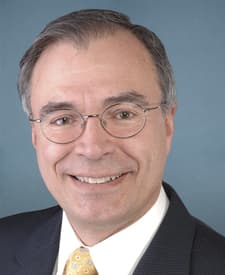
Introduced on Feb 10, 2025 by Andy Harris (R-MD-1). 10 cosponsors, all from the sponsor's party. Latest action (Feb 10, 2025): Referred to the House Committee on the Budget.
- Stage
- Introduced
- Introduced
- Feb 10, 2025
- Cosponsors
- 10
- 0 from the other party
- Policy area
- Economics and Public Finance
Progress
The furthest stage the measure reached. Simple and concurrent resolutions do not go to the President.
- Introduced
- 2Reported by committee
- 3Passed one chamber
- 4Passed both chambers
Official title
Establishing the congressional budget for the United States Government for fiscal year 2025 and setting forth the appropriate budgetary levels for fiscal years 2026 through 2034.
Subjects
- Budget deficits and national debt
- Budget process
- House of Representatives
- Legislative rules and procedure
Summary
By the Congressional Research Service (Introduced in House, Feb 10, 2025). Public domain.
Emergency Border Control Resolution
This concurrent resolution establishes the congressional budget for the federal government for FY2025, sets forth budgetary levels for FY2026-FY2034, and provides reconciliation instructions for legislation that increases or decreases the deficit and increases the statutory debt limit by specified amounts.
The resolution recommends levels and amounts for FY2025-FY2034 for
- federal revenues,
- new budget authority,
- budget outlays,
- deficits (on-budget),
- debt subject to limit,
- debt held by the public, and
- the major functional categories of spending.
The resolution includes reconciliation instructions that direct several House committees to submit legislation that will increase or decrease the deficit and increase the statutory debt limit by specified amounts. The committees must submit the legislation to the House Budget Committee by February 27, 2025.
(Under current law, reconciliation bills are considered by Congress using expedited legislative procedures that prevent a filibuster and restrict amendments in the Senate.)
Finally, the resolution specifies that it is the policy of this resolution that (1) federal spending levels should be restored to the levels that existed prior to the COVID-19 pandemic, adjusted to protect current Social Security and Medicare spending and reflect existing debt service obligations; and (2) it shall be the objective of the House to reach total budget outlays of $6.057 trillion or less this fiscal year.
Sponsor and cosponsors
Cosponsors by party as of the day they signed on. Original cosponsors signed on the day of introduction.
Republicans · 10
- Andy BiggsR-AZ-5original
- Eric BurlisonR-MO-7original
- Michael CloudR-TX-27original
- Andrew S. ClydeR-GA-9original
- Elijah CraneR-AZ-2original
- Clay HigginsR-LA-3original
- Ralph NormanR-SC-5original
- Andrew OglesR-TN-5original
- Scott PerryR-PA-10original
- Chip RoyR-TX-21original
Roll calls
Recorded votes on the measure. Most measures move by voice vote or unanimous consent, which record no individual positions.
No recorded roll call on this measure: it moved by voice vote or unanimous consent, or has not reached the floor.
History
Every action as published, oldest first. Roll calls link to how each member voted.
- Feb 10, 2025Submitted in House
- Feb 10, 2025Submitted in House
- Feb 10, 2025Sponsor introductory remarks on measure. (CR H607)
- Feb 10, 2025 · HouseReferred to the House Committee on the Budget.
Committees
Committees and subcommittees the measure was referred to.
Who lobbied on it
Organizations whose lobbying reports (LD-2) name this measure. Spending is what they reported for those quarters on all issues, not on this measure alone.
- Center for American Progress Action Fund1 report$30K reported (all issues)
Reports filed in 2025.
Sources and method
Every figure on this page traces to these records.
- Bill status: bills and resolutions, sponsors, actions, subjects and CRS summaries (U.S. Government Publishing Office (GovInfo), from Congress.gov (Library of Congress))GovInfo Bill Status bulk data (Congress.gov; summaries by the Congressional Research Service) · data current to Oct 3, 2026 · loaded Oct 3, 2026 · license: Public domain (U.S. Government work, 17 U.S.C. § 105)
- Members of Congress, their terms, committees and identifiers (The @unitedstates project (from the Biographical Directory of the U.S. Congress, the House and the Senate))unitedstates/congress-legislators: legislators, committees and current committee membership · data current to Oct 3, 2026 · loaded Oct 3, 2026 · license: CC0 1.0 (public domain dedication)
- House roll-call votes (Office of the Clerk, U.S. House of Representatives)Office of the Clerk, U.S. House of Representatives, roll-call vote records · data current to Oct 3, 2026 · loaded Oct 3, 2026 · license: Public domain (U.S. Government work, 17 U.S.C. § 105)
- Senate roll-call votes and DW-NOMINATE scores (Voteview (UCLA Department of Political Science))Lewis, Jeffrey B., Keith Poole, Howard Rosenthal, Adam Boche, Aaron Rudkin, and Luke Sonnet (2026). Voteview: Congressional Roll-Call Votes Database. https://voteview.com/ · data current to Oct 3, 2026 · loaded Oct 3, 2026 · license: Free to use with the required citation
- Lobbying disclosures (LD-1 registrations, LD-2 quarterly reports, LD-203 contribution reports) (Clerk of the U.S. House of Representatives)Clerk of the House, Lobbying Disclosure Act filings (organizations only; lobbyists' names are not loaded) · data current to Oct 6, 2026 · loaded Oct 6, 2026 · license: Public domain (U.S. Government work, 17 U.S.C. § 105)
- Positions are shown only where a roll call recorded them; voice votes and unanimous consent record none.
- Money and votes are shown side by side; neither explains the other.