H.R. 10163 · 119th Congress
American Quantum Competitiveness Act
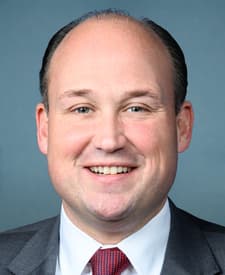
Introduced on Aug 27, 2026 by Nicholas A. Langworthy (R-NY-23). 3 cosponsors, 2 of them from another party. Latest action (Sep 16, 2026): Ordered to be Reported (Amended) by the Yeas and Nays: 36 - 0.
- Stage
- Introduced
- Introduced
- Aug 27, 2026
- Cosponsors
- 3
- 2 from the other party
- Policy area
- Science, Technology, Communications
Progress
The furthest stage the measure reached. Simple and concurrent resolutions do not go to the President.
- Introduced
- 2Reported by committee
- 3Passed one chamber
- 4Passed both chambers
- 5Sent to the President
- 6Became law
Official title
To direct the Secretary of Commerce to promote trusted quantum supply chains and the commercial leadership of the United States with respect to quantum technology, and for other purposes.
Subjects
- Advanced technology and technological innovations
- Computers and information technology
- Public-private cooperation
- Supply chain
- Technology transfer and commercialization
Summary
By the Congressional Research Service (Introduced in House, Aug 27, 2026). Public domain.
American Quantum Competitiveness Act
This bill requires the Department of Commerce to advise the President on, and support U.S. commercial leadership related to, quantum technology and related supply chains. (Quantum technology uses the law of quantum physics for advanced information processing.)
Specifically, Commerce must serve as principal advisor to the President on (1) commercial manufacturing, deployment, and scaling of quantum technology; (2) the supply of critical components of quantum technology; and (3) the establishment, maintenance, and resiliency of a trusted quantum supply chain. (A trusted quantum supply chain involves the sourcing of critical components from the United States or a trusted supplier that is domiciled, headquartered, and organized in the United States or a foreign country that meets specified criteria.)
In advising the President on the quantum supply chain, Commerce must
- use existing authorities or programs to promote a trusted supply chain;
- identify and address barriers to investment in a trusted supply chain; and
- establish a mechanism for identifying critical components, assessing their availability, and mitigating risks related to acquiring them from China, Iran, North Korea, or Russia.
Commerce must also support U.S. commercial leadership in quantum technology and critical components, including by promoting private investment in commercial quantum efforts.
Commerce must periodically publish reports that include a comprehensive strategy for advancing a trusted quantum supply chain and U.S. commercial leadership in quantum technology and critical components.
Sponsor and cosponsors
Cosponsors by party as of the day they signed on. Original cosponsors signed on the day of introduction.
Democrats · 2
- Paul TonkoD-NY-20signed on Sep 16, 2026
- Timothy M. KennedyD-NY-26signed on Sep 28, 2026
Republicans · 1
- Michael LawlerR-NY-17signed on Sep 15, 2026
Roll calls
Recorded votes on the measure. Most measures move by voice vote or unanimous consent, which record no individual positions.
No recorded roll call on this measure: it moved by voice vote or unanimous consent, or has not reached the floor.
History
Every action as published, oldest first. Roll calls link to how each member voted.
- Aug 27, 2026Introduced in House
- Aug 27, 2026Introduced in House
- Aug 27, 2026 · HouseReferred to the House Committee on Energy and Commerce.
- Aug 27, 2026 · HouseReferred to the Subcommittee on Commerce, Manufacturing, and Trade.
- Sep 1, 2026 · HouseSubcommittee Consideration and Mark-up Session Held
- Sep 1, 2026 · HouseForwarded by Subcommittee to Full Committee by Voice Vote.
- Sep 16, 2026 · HouseCommittee Consideration and Mark-up Session Held
- Sep 16, 2026 · HouseOrdered to be Reported (Amended) by the Yeas and Nays: 36 - 0.
Committees
Committees and subcommittees the measure was referred to.
Agencies in its committees' jurisdiction
Analisa's mapping of committee jurisdiction to federal agencies; the bill may touch others, or none of these.
Who lobbied on it
Organizations whose lobbying reports (LD-2) name this measure. Spending is what they reported for those quarters on all issues, not on this measure alone.
- CONSUMER TECHNOLOGY ASSOCIATION1 report$810K reported (all issues)
- INFORMATION TECHNOLOGY INDUSTRY COUNCIL1 report$720K reported (all issues)Federal contractor: INFORMATION TECHNOLOGY INDUSTRY COUNCIL INC$271.1K in contracts, FY2026AI match · 100%
- INFORMS1 report$10K reported (all issues)
- Quantum Industry Coalition1 report$50K reported (all issues)
- SYRACUSE UNIVERSITY1 report$140K reported (all issues)Federal contractor: SYRACUSE UNIVERSITY$696.5K in contracts, FY2026AI match · 100%
- UNIVERSITY OF ROCHESTER1 report$90K reported (all issues)Federal contractor: UNIVERSITY OF ROCHESTER$7M in contracts, FY2026AI match · 100%
Reports filed in 2026.
Sources and method
Every figure on this page traces to these records.
- Bill status: bills and resolutions, sponsors, actions, subjects and CRS summaries (U.S. Government Publishing Office (GovInfo), from Congress.gov (Library of Congress))GovInfo Bill Status bulk data (Congress.gov; summaries by the Congressional Research Service) · data current to Nov 26, 2026 · loaded Nov 26, 2026 · license: Public domain (U.S. Government work, 17 U.S.C. § 105)
- Members of Congress, their terms, committees and identifiers (The @unitedstates project (from the Biographical Directory of the U.S. Congress, the House and the Senate))unitedstates/congress-legislators: legislators, committees and current committee membership · data current to Sep 24, 2026 · loaded Oct 13, 2026 · license: CC0 1.0 (public domain dedication)
- House roll-call votes (Office of the Clerk, U.S. House of Representatives)Office of the Clerk, U.S. House of Representatives, roll-call vote records · data current to Nov 19, 2026 · loaded Nov 20, 2026 · license: Public domain (U.S. Government work, 17 U.S.C. § 105)
- Senate roll-call votes and DW-NOMINATE scores (Voteview (UCLA Department of Political Science))Lewis, Jeffrey B., Keith Poole, Howard Rosenthal, Adam Boche, Aaron Rudkin, and Luke Sonnet (2026). Voteview: Congressional Roll-Call Votes Database. https://voteview.com/ · data current to Nov 20, 2026 · loaded Nov 21, 2026 · license: Free to use with the required citation
- Lobbying disclosures (LD-1 registrations, LD-2 quarterly reports, LD-203 contribution reports) (Clerk of the U.S. House of Representatives)Clerk of the House, Lobbying Disclosure Act filings (organizations only; lobbyists' names are not loaded) · data current to Nov 28, 2026 · loaded Nov 28, 2026 · license: Public domain (U.S. Government work, 17 U.S.C. § 105)
- Positions are shown only where a roll call recorded them; voice votes and unanimous consent record none.
- Money and votes are shown side by side; neither explains the other.