H.R. 1717 · 119th Congress
Communications Security Act
Introduced on Feb 27, 2025 by Robert Menendez (D-NJ-8). One cosponsor. Latest action (Jul 16, 2025): Received in the Senate and Read twice and referred to the Committee on Commerce, Science, and Transportation.
- Stage
- Passed one chamber
- Introduced
- Feb 27, 2025
- Cosponsors
- 1
- 1 from the other party
- Policy area
- Science, Technology, Communications
Progress
The furthest stage the measure reached. Simple and concurrent resolutions do not go to the President.
- Introduced
- Reported by committee
- Passed one chamber
- 4Passed both chambers
- 5Sent to the President
- 6Became law
Official title
To direct the Federal Communications Commission to establish a council to make recommendations on ways to increase the security, reliability, and interoperability of communications networks, and for other purposes.
Subjects
- Broadcasting, cable, digital technologies
- Computer security and identity theft
- Congressional oversight
- Executive agency funding and structure
- Federal Communications Commission (FCC)
- Government studies and investigations
- Internet, web applications, social media
- Public-private cooperation
- State and local government operations
- Telephone and wireless communication
Summary
By the Congressional Research Service (Introduced in House, Feb 27, 2025). Public domain.
Communications Security Act
This bill provides statutory authority for a council established by the Federal Communications Commission (FCC) to provide advice regarding the security, reliability, and interoperability of communications networks. (This advice is currently provided by the FCC’s Communications Security, Reliability, and Interoperability Council.)
The bill specifies that the FCC may designate an existing advisory committee to fulfill this role, provided the committee’s membership is modified, as necessary, to comply with membership requirements set forth in the bill.
Specifically, the bill requires the council to include, to the extent practicable, representatives of companies in the communications industry; public interest organizations or academic institutions; and federal, state, tribal, and local governments (with at least one member representing each level of government). Members are to be selected by the FCC's chair and generally may not include representatives of entities owned or controlled by, or subject to the influence of, a foreign adversary, or otherwise deemed to pose a threat to U.S. national security.
Under current law, federal advisory committees must generally terminate after two years unless they are renewed or a statute specifies a different termination date. However, the bill exempts the council from this requirement.
Sponsor and cosponsors
Cosponsors by party as of the day they signed on. Original cosponsors signed on the day of introduction.
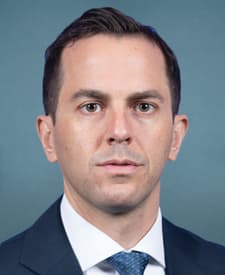
Republicans · 1
- John JoyceR-PA-13signed on Apr 1, 2025
Roll calls
Recorded votes on the measure. Most measures move by voice vote or unanimous consent, which record no individual positions.
- Jul 15, 2025· House· Passage· Passed 380–33
History
Every action as published, oldest first. Roll calls link to how each member voted.
- Feb 27, 2025Introduced in House
- Feb 27, 2025Introduced in House
- Feb 27, 2025 · HouseReferred to the House Committee on Energy and Commerce.
- Apr 8, 2025 · HouseCommittee Consideration and Mark-up Session Held
- Apr 8, 2025 · HouseOrdered to be Reported by the Yeas and Nays: 50 - 1.
- Jul 10, 2025Reported by the Committee on Energy and Commerce. H. Rept. 119-194.
- Jul 10, 2025 · HouseReported by the Committee on Energy and Commerce. H. Rept. 119-194.
- Jul 10, 2025 · HousePlaced on the Union Calendar, Calendar No. 158.
- Jul 14, 2025 · HouseMr. Latta moved to suspend the rules and pass the bill.
- Jul 14, 2025 · HouseConsidered under suspension of the rules. (consideration: CR H3218-3220)
- Jul 14, 2025 · HouseDEBATE - The House proceeded with forty minutes of debate on H.R. 1717.
- Jul 14, 2025 · HouseAt the conclusion of debate, the Yeas and Nays were demanded and ordered. Pursuant to the provisions of clause 8, rule XX, the Chair announced that further proceedings on the motion would be postponed.
- Jul 15, 2025 · HouseConsidered as unfinished business.
- Jul 15, 2025Passed/agreed to in House: On motion to suspend the rules and pass the bill Agreed to by the Yeas and Nays: (2/3 required): 380 - 33 (Roll no. 196).House · Roll call 196
- Jul 15, 2025 · HouseOn motion to suspend the rules and pass the bill Agreed to by the Yeas and Nays: (2/3 required): 380 - 33 (Roll no. 196). (text: 7/14/2025 CR 3218-3219)House · Roll call 196
- Jul 15, 2025 · HouseMotion to reconsider laid on the table Agreed to without objection.
- Jul 16, 2025 · SenateReceived in the Senate and Read twice and referred to the Committee on Commerce, Science, and Transportation.
Committees
Committees and subcommittees the measure was referred to.
Agencies in its committees' jurisdiction
Analisa's mapping of committee jurisdiction to federal agencies; the bill may touch others, or none of these.
- Consumer Product Safety Commission
- Department of Commerce
- Department of Energy
- Department of Health and Human Services
- Department of Transportation
- Environmental Protection Agency
- Federal Communications Commission
- Federal Maritime Commission
- Federal Trade Commission
- National Aeronautics and Space Administration
- National Science Foundation
- National Transportation Safety Board
- Nuclear Regulatory Commission
- Surface Transportation Board
Who lobbied on it
Organizations whose lobbying reports (LD-2) name this measure. Spending is what they reported for those quarters on all issues, not on this measure alone.
- Competitive Carriers Association6 reports$950K reported (all issues)
- WTA -- Advocates for Rural Broadband5 reports$585K reported (all issues)
- NCTA - THE INTERNET & TELEVISION ASSOCIATION2 reports$6.4M reported (all issues)
Reports filed in 2025, 2026.
Sources and method
Every figure on this page traces to these records.
- Bill status: bills and resolutions, sponsors, actions, subjects and CRS summaries (U.S. Government Publishing Office (GovInfo), from Congress.gov (Library of Congress))GovInfo Bill Status bulk data (Congress.gov; summaries by the Congressional Research Service) · data current to Oct 6, 2026 · loaded Oct 6, 2026 · license: Public domain (U.S. Government work, 17 U.S.C. § 105)
- Members of Congress, their terms, committees and identifiers (The @unitedstates project (from the Biographical Directory of the U.S. Congress, the House and the Senate))unitedstates/congress-legislators: legislators, committees and current committee membership · data current to Oct 3, 2026 · loaded Oct 3, 2026 · license: CC0 1.0 (public domain dedication)
- House roll-call votes (Office of the Clerk, U.S. House of Representatives)Office of the Clerk, U.S. House of Representatives, roll-call vote records · data current to Oct 3, 2026 · loaded Oct 3, 2026 · license: Public domain (U.S. Government work, 17 U.S.C. § 105)
- Senate roll-call votes and DW-NOMINATE scores (Voteview (UCLA Department of Political Science))Lewis, Jeffrey B., Keith Poole, Howard Rosenthal, Adam Boche, Aaron Rudkin, and Luke Sonnet (2026). Voteview: Congressional Roll-Call Votes Database. https://voteview.com/ · data current to Oct 3, 2026 · loaded Oct 3, 2026 · license: Free to use with the required citation
- Lobbying disclosures (LD-1 registrations, LD-2 quarterly reports, LD-203 contribution reports) (Clerk of the U.S. House of Representatives)Clerk of the House, Lobbying Disclosure Act filings (organizations only; lobbyists' names are not loaded) · data current to Oct 6, 2026 · loaded Oct 6, 2026 · license: Public domain (U.S. Government work, 17 U.S.C. § 105)
- Positions are shown only where a roll call recorded them; voice votes and unanimous consent record none.
- Money and votes are shown side by side; neither explains the other.