H.R. 2312 · 119th Congress
Tipped Employee Protection Act
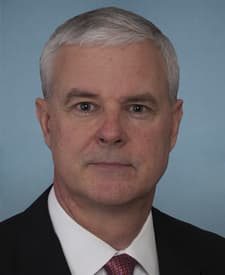
Introduced on Mar 24, 2025 by Steve Womack (R-AR-3). 6 cosponsors, all from the sponsor's party. Latest action (Jan 13, 2026): POSTPONED PROCEEDINGS - Pursuant to clause 1(c) of rule XIX, the Chair announced that further proceedings on H.R. 2312 is postponed.
- Stage
- Reported by committee
- Introduced
- Mar 24, 2025
- Cosponsors
- 6
- 0 from the other party
- Policy area
- Labor and Employment
Progress
The furthest stage the measure reached. Simple and concurrent resolutions do not go to the President.
- Introduced
- Reported by committee
- 3Passed one chamber
- 4Passed both chambers
- 5Sent to the President
- 6Became law
Official title
To amend the Fair Labor Standards Act of 1938 to revise the definition of the term "tipped employee", and for other purposes.
Subjects
- Labor standards
- Wages and earnings
Summary
By the Congressional Research Service (Reported to House, Dec 30, 2025). Public domain.
Tipped Employee Protection Act
This bill modifies the definition of a tipped employee under the Fair Labor Standards Act of 1938 (FLSA) to exclude consideration of an employee's duties when determining if the employee is a tipped employee.
Under current law, tipped employees may be paid less than the federal minimum wage (currently $7.25 an hour), but the total of their cash wage and tips must be at least equal to the federal minimum wage. Under the FLSA, a tipped employee is currently a worker who customarily and regularly receives more than $30 a month in tips.
The bill broadens the definition of tipped employee to include any worker who receives tips and other cash wages for a work period at a rate that is at least the federal minimum wage, without regard to the duties of the employee. Under the bill, the work period is a work period that is determined by the employer.
Sponsor and cosponsors
Cosponsors by party as of the day they signed on. Original cosponsors signed on the day of introduction.
Republicans · 6
- Michael BaumgartnerR-WA-5signed on Apr 9, 2025
- Pete SessionsR-TX-17signed on Oct 17, 2025
- Bruce WestermanR-AR-4signed on Oct 21, 2025
- Glenn GrothmanR-WI-6signed on Nov 7, 2025
- Julia LetlowR-LA-5signed on Nov 17, 2025
- Mark B. MessmerR-IN-8signed on Nov 17, 2025
Roll calls
Recorded votes on the measure. Most measures move by voice vote or unanimous consent, which record no individual positions.
- Jan 13, 2026· House· Procedural· Failed 209–215
History
Every action as published, oldest first. Roll calls link to how each member voted.
- Mar 24, 2025Introduced in House
- Mar 24, 2025Introduced in House
- Mar 24, 2025 · HouseReferred to the House Committee on Education and Workforce.
- Nov 20, 2025 · HouseCommittee Consideration and Mark-up Session Held
- Nov 20, 2025 · HouseOrdered to be Reported (Amended) by the Yeas and Nays: 19 - 15.
- Dec 30, 2025Reported (Amended) by the Committee on Education and Workforce. H. Rept. 119-420.
- Dec 30, 2025 · HouseReported (Amended) by the Committee on Education and Workforce. H. Rept. 119-420.
- Dec 30, 2025 · HousePlaced on the Union Calendar, Calendar No. 366.
- Jan 12, 2026 · HouseRules Committee Resolution H. Res. 988 Reported to House. Rule provides for consideration of H.R. 2988, H.R. 2262, H.R. 2270, H.R. 2312 and H.R. 4366. The resolution provides for consideration of H.R. 2988 under a structured rule, and H.R. 2262, H.R. 2270, H.R. 2312, and H.R. 4366 under a closed rule. The rule provides for one hour of general debate and one motion to recommit on each bill.
- Jan 13, 2026 · HouseConsidered under the provisions of rule H. Res. 988. (consideration: CR H685-691; text of amendment in the nature of a substitute: CR H685)
- Jan 13, 2026 · HouseRule provides for consideration of H.R. 2988, H.R. 2262, H.R. 2270, H.R. 2312 and H.R. 4366. The resolution provides for consideration of H.R. 2988 under a structured rule, and H.R. 2262, H.R. 2270, H.R. 2312, and H.R. 4366 under a closed rule. The rule provides for one hour of general debate and one motion to recommit on each bill.
- Jan 13, 2026 · HouseDEBATE - The House proceeded with one hour of debate on H.R. 2312.
- Jan 13, 2026 · HouseThe previous question was ordered pursuant to the rule.
- Jan 13, 2026 · HouseMs. Budzinski moved to recommit to the Committee on Education and Workforce. (text: CR H690-691)
- Jan 13, 2026 · HouseThe previous question on the motion to recommit was ordered pursuant to clause 2(b) of rule XIX.
- Jan 13, 2026 · HousePOSTPONED PROCEEDINGS - At the conclusion of debate on H.R. 2312, the Chair put the question on motion to recommit and by voice vote, announced the noes had prevailed. Ms. Budzinski demanded the yeas and nays and the Chair postponed further proceedings until a time to be announced.
- Jan 13, 2026 · HouseConsidered as unfinished business. (consideration: CR H694)
- Jan 13, 2026 · HouseOn motion to recommit Failed by the Yeas and Nays: 209 - 215 (Roll no. 21).House · Roll call 21
- Jan 13, 2026 · HousePOSTPONED PROCEEDINGS - Pursuant to clause 1(c) of rule XIX, the Chair announced that further proceedings on H.R. 2312 is postponed.
Committees
Committees and subcommittees the measure was referred to.
Agencies in its committees' jurisdiction
Analisa's mapping of committee jurisdiction to federal agencies; the bill may touch others, or none of these.
Who lobbied on it
Organizations whose lobbying reports (LD-2) name this measure. Spending is what they reported for those quarters on all issues, not on this measure alone.
- NATIONAL RESTAURANT ASSOCIATION6 reports$5M reported (all issues)Federal contractor: NATIONAL RESTAURANT ASSOCIATION EDUCATIONAL FOUNDATION$2M in contracts, FY2026AI match · 93%
- AFL-CIO3 reports$2.4M reported (all issues)Federal contractor: AFL-CIO WORKING FOR AMERICA INSTITUTE, INC. (THE)AI match · 92%
- National Retail Federation3 reports$5.8M reported (all issues)
- SMALL BUSINESS & ENTREPRENEURSHIP COUNCIL (SBE COUNCIL)2 reports$80K reported (all issues)
- Center for Law and Social Policy (CLASP)1 report
- United Automobile, Aerospace & Agricultural Implement Workers1 report$220K reported (all issues)
Reports filed in 2025, 2026.
Sources and method
Every figure on this page traces to these records.
- Bill status: bills and resolutions, sponsors, actions, subjects and CRS summaries (U.S. Government Publishing Office (GovInfo), from Congress.gov (Library of Congress))GovInfo Bill Status bulk data (Congress.gov; summaries by the Congressional Research Service) · data current to Oct 9, 2026 · loaded Oct 9, 2026 · license: Public domain (U.S. Government work, 17 U.S.C. § 105)
- Members of Congress, their terms, committees and identifiers (The @unitedstates project (from the Biographical Directory of the U.S. Congress, the House and the Senate))unitedstates/congress-legislators: legislators, committees and current committee membership · data current to Oct 3, 2026 · loaded Oct 3, 2026 · license: CC0 1.0 (public domain dedication)
- House roll-call votes (Office of the Clerk, U.S. House of Representatives)Office of the Clerk, U.S. House of Representatives, roll-call vote records · data current to Oct 3, 2026 · loaded Oct 3, 2026 · license: Public domain (U.S. Government work, 17 U.S.C. § 105)
- Senate roll-call votes and DW-NOMINATE scores (Voteview (UCLA Department of Political Science))Lewis, Jeffrey B., Keith Poole, Howard Rosenthal, Adam Boche, Aaron Rudkin, and Luke Sonnet (2026). Voteview: Congressional Roll-Call Votes Database. https://voteview.com/ · data current to Oct 3, 2026 · loaded Oct 3, 2026 · license: Free to use with the required citation
- Lobbying disclosures (LD-1 registrations, LD-2 quarterly reports, LD-203 contribution reports) (Clerk of the U.S. House of Representatives)Clerk of the House, Lobbying Disclosure Act filings (organizations only; lobbyists' names are not loaded) · data current to Oct 9, 2026 · loaded Oct 9, 2026 · license: Public domain (U.S. Government work, 17 U.S.C. § 105)
- Positions are shown only where a roll call recorded them; voice votes and unanimous consent record none.
- Money and votes are shown side by side; neither explains the other.