H.R. 3168 · 119th Congress
National Earthquake Hazards Reduction Program Reauthorization Act of 2025
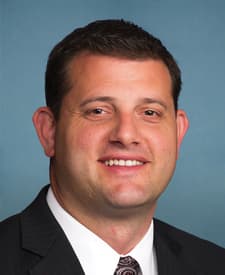
Introduced on May 1, 2025 by David G. Valadao (R-CA-22). 4 cosponsors, 3 of them from another party. Latest action (Jul 21, 2026): Ordered to be Reported in the Nature of a Substitute (Amended) by Voice Vote.
- Stage
- Reported by committee
- Introduced
- May 1, 2025
- Cosponsors
- 4
- 3 from the other party
- Policy area
- Emergency Management
Progress
The furthest stage the measure reached. Simple and concurrent resolutions do not go to the President.
- Introduced
- Reported by committee
- 3Passed one chamber
- 4Passed both chambers
- 5Sent to the President
- 6Became law
Official title
To reauthorize the Earthquake Hazards Reduction Act of 1977, and for other purposes.
Subjects
- Congressional oversight
- Disaster relief and insurance
- Geography and mapping
- Government studies and investigations
- Natural disasters
Summary
By the Congressional Research Service (Reported to House, Jan 12, 2026). Public domain.
National Earthquake Hazards Reduction Program Reauthorization Act of 2025
This bill reauthorizes through FY2030 the activities of the U.S. Geological Survey (USGS) under the National Earthquake Hazards Reduction Program (NEHRP). It also expands certain USGS activities under NEHRP relating to earthquake warnings and mapping and expands other NEHRP activities.
NEHRP is a coordinated earthquake hazards reduction program administered by four federal agencies: the National Institute of Standards and Technology, USGS, the Federal Emergency Management Agency, and the National Science Foundation. Under NEHRP, USGS is responsible for monitoring and early warnings (including operating the Advanced National Seismic System, a nationwide network of seismic stations), hazard assessments and mapping, and research regarding earthquakes. The bill reauthorizes such USGS activities through FY2030.
Additionally, the bill requires USGS to
- coordinate with the Federal Communications Commission to ensure alerts and early warnings are broadcast as rapidly as possible for maximum warning time,
- expand the early warning system to additional high-risk areas,
- issue forecasts for aftershocks following significant earthquakes, and
- include tsunamis and other hazards associated with earthquakes in seismic hazard maps.
Also, NEHRP activities to develop building codes and standards must include recovery objectives addressing post-earthquake occupancy and functionality of infrastructure.
Sponsor and cosponsors
Cosponsors by party as of the day they signed on. Original cosponsors signed on the day of introduction.
Democrats · 3
- Jim CostaD-CA-21original
- Eugene Simon VindmanD-VA-7signed on Sep 2, 2025
- Suzan K. DelBeneD-WA-1signed on Sep 23, 2025
Republicans · 1
- Brian K. FitzpatrickR-PA-1signed on Jun 9, 2025
Roll calls
Recorded votes on the measure. Most measures move by voice vote or unanimous consent, which record no individual positions.
No recorded roll call on this measure: it moved by voice vote or unanimous consent, or has not reached the floor.
History
Every action as published, oldest first. Roll calls link to how each member voted.
- May 1, 2025Introduced in House
- May 1, 2025Introduced in House
- May 1, 2025 · HouseReferred to the Committee on Science, Space, and Technology, and in addition to the Committees on Natural Resources, and Transportation and Infrastructure, for a period to be subsequently determined by the Speaker, in each case for consideration of such provisions as fall within the jurisdiction of the committee concerned.
- May 1, 2025 · HouseReferred to the Committee on Science, Space, and Technology, and in addition to the Committees on Natural Resources, and Transportation and Infrastructure, for a period to be subsequently determined by the Speaker, in each case for consideration of such provisions as fall within the jurisdiction of the committee concerned.
- May 1, 2025 · HouseReferred to the Committee on Science, Space, and Technology, and in addition to the Committees on Natural Resources, and Transportation and Infrastructure, for a period to be subsequently determined by the Speaker, in each case for consideration of such provisions as fall within the jurisdiction of the committee concerned.
- May 1, 2025 · HouseReferred to the Subcommittee on Economic Development, Public Buildings, and Emergency Management.
- May 13, 2025 · HouseReferred to the Subcommittee on Energy and Mineral Resources.
- May 20, 2025 · HouseSubcommittee Hearings Held
- Jun 25, 2025 · HouseSubcommittee on Energy and Mineral Resources Discharged
- Jun 25, 2025 · HouseCommittee Consideration and Mark-up Session Held
- Jun 25, 2025 · HouseOrdered to be Reported by Unanimous Consent.
- Jan 12, 2026Reported by the Committee on Natural Resources. H. Rept. 119-438, Part I.
- Jan 12, 2026 · HouseReported by the Committee on Natural Resources. H. Rept. 119-438, Part I.
- Jul 21, 2026 · HouseCommittee Consideration and Mark-up Session Held
- Jul 21, 2026 · HouseOrdered to be Reported in the Nature of a Substitute (Amended) by Voice Vote.
Committees
Committees and subcommittees the measure was referred to.
Agencies in its committees' jurisdiction
Analisa's mapping of committee jurisdiction to federal agencies; the bill may touch others, or none of these.
- Corps of Engineers - Civil Works
- Department of Commerce
- Department of Energy
- Department of Transportation
- Department of the Interior
- Environmental Protection Agency
- Federal Maritime Commission
- General Services Administration
- National Aeronautics and Space Administration
- National Science Foundation
- National Transportation Safety Board
- Surface Transportation Board
Who lobbied on it
Organizations whose lobbying reports (LD-2) name this measure. Spending is what they reported for those quarters on all issues, not on this measure alone.
- AMERICAN GEOPHYSICAL UNION5 reports$80K reported (all issues)
- American Society of Civil Engineers5 reports$1.5M reported (all issues)Federal contractor: AMERICAN SOCIETY OF CIVIL ENGINEERS$360.6K in contracts, FY2026AI match · 100%
- University of Washington4 reports$1.3M reported (all issues)Federal contractor: UNIVERSITY OF WASHINGTON$52.8M in contracts, FY2026AI match · 100%
- National Institute of Building Sciences1 report$20K reported (all issues)Federal contractor: NATIONAL INSTITUTE OF BUILDING SCIENCES$24.2M in contracts, FY2026AI match · 100%
- REINSURANCE ASSN OF AMERICA1 report$390K reported (all issues)
Reports filed in 2025, 2026.
Sources and method
Every figure on this page traces to these records.
- Bill status: bills and resolutions, sponsors, actions, subjects and CRS summaries (U.S. Government Publishing Office (GovInfo), from Congress.gov (Library of Congress))GovInfo Bill Status bulk data (Congress.gov; summaries by the Congressional Research Service) · data current to Oct 11, 2026 · loaded Oct 11, 2026 · license: Public domain (U.S. Government work, 17 U.S.C. § 105)
- Members of Congress, their terms, committees and identifiers (The @unitedstates project (from the Biographical Directory of the U.S. Congress, the House and the Senate))unitedstates/congress-legislators: legislators, committees and current committee membership · data current to Oct 3, 2026 · loaded Oct 3, 2026 · license: CC0 1.0 (public domain dedication)
- House roll-call votes (Office of the Clerk, U.S. House of Representatives)Office of the Clerk, U.S. House of Representatives, roll-call vote records · data current to Oct 3, 2026 · loaded Oct 3, 2026 · license: Public domain (U.S. Government work, 17 U.S.C. § 105)
- Senate roll-call votes and DW-NOMINATE scores (Voteview (UCLA Department of Political Science))Lewis, Jeffrey B., Keith Poole, Howard Rosenthal, Adam Boche, Aaron Rudkin, and Luke Sonnet (2026). Voteview: Congressional Roll-Call Votes Database. https://voteview.com/ · data current to Oct 3, 2026 · loaded Oct 3, 2026 · license: Free to use with the required citation
- Lobbying disclosures (LD-1 registrations, LD-2 quarterly reports, LD-203 contribution reports) (Clerk of the U.S. House of Representatives)Clerk of the House, Lobbying Disclosure Act filings (organizations only; lobbyists' names are not loaded) · data current to Oct 11, 2026 · loaded Oct 11, 2026 · license: Public domain (U.S. Government work, 17 U.S.C. § 105)
- Positions are shown only where a roll call recorded them; voice votes and unanimous consent record none.
- Money and votes are shown side by side; neither explains the other.