H.R. 5258 · 119th Congress
Lawsuit Abuse Reduction Act of 2025
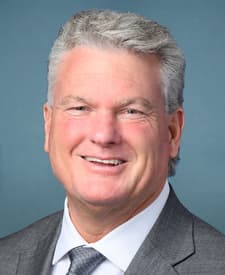
Introduced on Sep 10, 2025 by Mike Collins (R-GA-10). 6 cosponsors, all from the sponsor's party. Latest action (Sep 10, 2025): Referred to the House Committee on the Judiciary.
- Stage
- Introduced
- Introduced
- Sep 10, 2025
- Cosponsors
- 6
- 0 from the other party
- Policy area
- Law
Progress
The furthest stage the measure reached. Simple and concurrent resolutions do not go to the President.
- Introduced
- 2Reported by committee
- 3Passed one chamber
- 4Passed both chambers
- 5Sent to the President
- 6Became law
Official title
To amend Rule 11 of the Federal Rules of Civil Procedure to improve attorney accountability, and for other purposes.
Summary
By the Congressional Research Service (Introduced in House, Sep 10, 2025). Public domain.
Lawsuit Abuse Reduction Act of 2025
This bill strengthens the sanctions provisions under Rule 11 of the Federal Rules of Civil Procedure.
Rule 11 establishes standards for pleadings, written motions, and other papers that are presented to a district court and establishes sanctions for an attorney, law firm, or party who does not comply with the standards. Under the Rule 11 standards, a pleading, written motion, or other paper must not be presented for an improper purpose and must make contentions that are reasonably supported by fact and law.
Currently, the purpose of sanctions is to deter future violations of the Rule 11 standards. Rule 11 authorizes judges to impose sanctions on an attorney, law firm, or party who fails to comply with the standards; allows awards of compensation to an injured party only when necessary for effective deterrence; and requires a motion for sanctions to be served on a party 21 days before it is filed in court, creating a 21-day "safe harbor" within which a party may withdraw or correct a filing that allegedly violates Rule 11 standards.
This bill amends Rule 11 to expressly state that the purpose of sanctions is to compensate the injured party as well as to deter future violations. The bill mandates sanctions for violations of the Rule 11 standards; requires sanctions to include compensation for the injured party for reasonable expenses incurred as a result of the violation, including attorneys' fees; and eliminates the 21-day safe harbor.
Sponsor and cosponsors
Cosponsors by party as of the day they signed on. Original cosponsors signed on the day of introduction.
Republicans · 6
- Brandon GillR-TX-26original
- Harriet M. HagemanR-WYoriginal
- Thomas P. TiffanyR-WI-7original
- Tony WiedR-WI-8signed on Apr 22, 2026
- Lance GoodenR-TX-5signed on Apr 27, 2026
- Pat HarriganR-NC-10signed on May 13, 2026
Roll calls
Recorded votes on the measure. Most measures move by voice vote or unanimous consent, which record no individual positions.
No recorded roll call on this measure: it moved by voice vote or unanimous consent, or has not reached the floor.
History
Every action as published, oldest first. Roll calls link to how each member voted.
- Sep 10, 2025Introduced in House
- Sep 10, 2025Introduced in House
- Sep 10, 2025 · HouseReferred to the House Committee on the Judiciary.
Committees
Committees and subcommittees the measure was referred to.
Agencies in its committees' jurisdiction
Analisa's mapping of committee jurisdiction to federal agencies; the bill may touch others, or none of these.
Who lobbied on it
Organizations whose lobbying reports (LD-2) name this measure. Spending is what they reported for those quarters on all issues, not on this measure alone.
- AMERICAN TRUCKING ASSOCIATIONS INC.7 reports$2.5M reported (all issues)
- AMERICAN PROPERTY CASUALTY INSURANCE ASSOCIATION4 reports$6.4M reported (all issues)
- Chamber of Commerce of the U.S.A.4 reports$68.3M reported (all issues)
- American Property Casualty Insurance Association fka Property Casualty Insurers3 reports$150K reported (all issues)
- NFIB (National Federation of Independent Business)3 reports$4.1M reported (all issues)
- Sentry Insurance Company (Formerly Sentry Insurance a Mutual Company)3 reports$296K reported (all issues)
Reports filed in 2025, 2026.
Sources and method
Every figure on this page traces to these records.
- Bill status: bills and resolutions, sponsors, actions, subjects and CRS summaries (U.S. Government Publishing Office (GovInfo), from Congress.gov (Library of Congress))GovInfo Bill Status bulk data (Congress.gov; summaries by the Congressional Research Service) · data current to Oct 9, 2026 · loaded Oct 9, 2026 · license: Public domain (U.S. Government work, 17 U.S.C. § 105)
- Members of Congress, their terms, committees and identifiers (The @unitedstates project (from the Biographical Directory of the U.S. Congress, the House and the Senate))unitedstates/congress-legislators: legislators, committees and current committee membership · data current to Oct 3, 2026 · loaded Oct 3, 2026 · license: CC0 1.0 (public domain dedication)
- House roll-call votes (Office of the Clerk, U.S. House of Representatives)Office of the Clerk, U.S. House of Representatives, roll-call vote records · data current to Oct 3, 2026 · loaded Oct 3, 2026 · license: Public domain (U.S. Government work, 17 U.S.C. § 105)
- Senate roll-call votes and DW-NOMINATE scores (Voteview (UCLA Department of Political Science))Lewis, Jeffrey B., Keith Poole, Howard Rosenthal, Adam Boche, Aaron Rudkin, and Luke Sonnet (2026). Voteview: Congressional Roll-Call Votes Database. https://voteview.com/ · data current to Oct 3, 2026 · loaded Oct 3, 2026 · license: Free to use with the required citation
- Lobbying disclosures (LD-1 registrations, LD-2 quarterly reports, LD-203 contribution reports) (Clerk of the U.S. House of Representatives)Clerk of the House, Lobbying Disclosure Act filings (organizations only; lobbyists' names are not loaded) · data current to Oct 9, 2026 · loaded Oct 9, 2026 · license: Public domain (U.S. Government work, 17 U.S.C. § 105)
- Positions are shown only where a roll call recorded them; voice votes and unanimous consent record none.
- Money and votes are shown side by side; neither explains the other.