H.R. 5337 · 119th Congress
Motor Carrier Safety Selection Standard Act of 2024
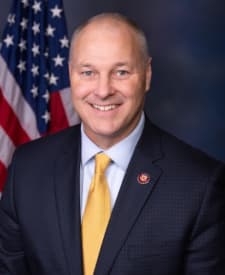
Introduced on Sep 11, 2025 by Pete Stauber (R-MN-8). 2 cosponsors, all from the sponsor's party. Latest action (Sep 12, 2025): Referred to the Subcommittee on Highways and Transit.
- Stage
- Introduced
- Introduced
- Sep 11, 2025
- Cosponsors
- 2
- 0 from the other party
- Policy area
- Transportation and Public Works
Progress
The furthest stage the measure reached. Simple and concurrent resolutions do not go to the President.
- Introduced
- 2Reported by committee
- 3Passed one chamber
- 4Passed both chambers
- 5Sent to the President
- 6Became law
Official title
To establish a national motor carrier safety selection standard for entities that contract with certain motor carriers to transport goods, and for other purposes.
Summary
By the Congressional Research Service (Introduced in House, Sep 11, 2025). Public domain.
Motor Carrier Safety Selection Standard Act of 2024
This bill establishes a standard of care for the selection of brokers and other entities that contract with motor carriers (e.g., trucking companies) for the shipment of goods or household goods. (A broker is the middle person between a shipper and a motor carrier. Brokers arrange for the transportation of property or household goods.)
Specifically, the bill requires such entities to verify that a transporting motor carrier (1) is properly registered with the Department of Transportation (DOT); (2) has obtained the minimum required insurance coverage; and (3) is in compliance with all Federal Motor Carrier Safety Administration safety standards, including through a public confirmation statement. Entities that comply with the verification requirements shall be considered reasonable and prudent in the selection of a covered motor carrier (for the purposes of a claim of negligent selection of a motor carrier).
Further, DOT must promulgate final regulations that revise the methodology for issuing motor carrier safety fitness determinations. The regulations must provide a procedure for DOT to determine whether a motor carrier is not fit to operate a commercial motor vehicle that is in, or affects, interstate commerce.
The bill exempts from the verification requirements an individual shipper (i.e., a shipper that owns the goods being transported and pays the tariff transportation charges) that contracts with a covered motor carrier.
Sponsor and cosponsors
Cosponsors by party as of the day they signed on. Original cosponsors signed on the day of introduction.
Roll calls
Recorded votes on the measure. Most measures move by voice vote or unanimous consent, which record no individual positions.
No recorded roll call on this measure: it moved by voice vote or unanimous consent, or has not reached the floor.
History
Every action as published, oldest first. Roll calls link to how each member voted.
- Sep 11, 2025Introduced in House
- Sep 11, 2025Introduced in House
- Sep 11, 2025 · HouseReferred to the House Committee on Transportation and Infrastructure.
- Sep 12, 2025 · HouseReferred to the Subcommittee on Highways and Transit.
Committees
Committees and subcommittees the measure was referred to.
Agencies in its committees' jurisdiction
Analisa's mapping of committee jurisdiction to federal agencies; the bill may touch others, or none of these.
Who lobbied on it
Organizations whose lobbying reports (LD-2) name this measure. Spending is what they reported for those quarters on all issues, not on this measure alone.
- NATIONAL ASSOCIATION OF MUTUAL INSURANCE COMPANIES4 reports$2M reported (all issues)
- American Association for Justice3 reports$5.1M reported (all issues)
- C.H. ROBINSON WORLDWIDE INC.2 reports
- NFIB (National Federation of Independent Business)1 report$1.7M reported (all issues)
Reports filed in 2025, 2026.
Sources and method
Every figure on this page traces to these records.
- Bill status: bills and resolutions, sponsors, actions, subjects and CRS summaries (U.S. Government Publishing Office (GovInfo), from Congress.gov (Library of Congress))GovInfo Bill Status bulk data (Congress.gov; summaries by the Congressional Research Service) · data current to Oct 10, 2026 · loaded Oct 10, 2026 · license: Public domain (U.S. Government work, 17 U.S.C. § 105)
- Members of Congress, their terms, committees and identifiers (The @unitedstates project (from the Biographical Directory of the U.S. Congress, the House and the Senate))unitedstates/congress-legislators: legislators, committees and current committee membership · data current to Oct 3, 2026 · loaded Oct 3, 2026 · license: CC0 1.0 (public domain dedication)
- House roll-call votes (Office of the Clerk, U.S. House of Representatives)Office of the Clerk, U.S. House of Representatives, roll-call vote records · data current to Oct 3, 2026 · loaded Oct 3, 2026 · license: Public domain (U.S. Government work, 17 U.S.C. § 105)
- Senate roll-call votes and DW-NOMINATE scores (Voteview (UCLA Department of Political Science))Lewis, Jeffrey B., Keith Poole, Howard Rosenthal, Adam Boche, Aaron Rudkin, and Luke Sonnet (2026). Voteview: Congressional Roll-Call Votes Database. https://voteview.com/ · data current to Oct 3, 2026 · loaded Oct 3, 2026 · license: Free to use with the required citation
- Lobbying disclosures (LD-1 registrations, LD-2 quarterly reports, LD-203 contribution reports) (Clerk of the U.S. House of Representatives)Clerk of the House, Lobbying Disclosure Act filings (organizations only; lobbyists' names are not loaded) · data current to Oct 10, 2026 · loaded Oct 10, 2026 · license: Public domain (U.S. Government work, 17 U.S.C. § 105)
- Positions are shown only where a roll call recorded them; voice votes and unanimous consent record none.
- Money and votes are shown side by side; neither explains the other.