H.R. 6956 · 119th Congress
BARCODE Efficiency Act
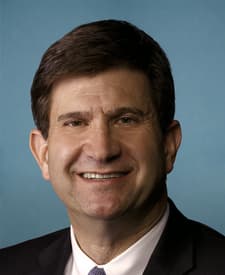
Introduced on Jan 7, 2026 by Bradley Scott Schneider (D-IL-10). One cosponsor. Latest action (Apr 28, 2026): Received in the Senate and Read twice and referred to the Committee on Finance.
- Stage
- Passed one chamber
- Introduced
- Jan 7, 2026
- Cosponsors
- 1
- 1 from the other party
- Policy area
- Taxation
Progress
The furthest stage the measure reached. Simple and concurrent resolutions do not go to the President.
- Introduced
- Reported by committee
- Passed one chamber
- 4Passed both chambers
- 5Sent to the President
- 6Became law
Official title
To require electronically prepared tax returns to include scannable code when submitted on paper, and to require the use of optical character recognition technology for paper documents received by the Internal Revenue Service.
Subjects
- Computers and information technology
- Digital media
- Government information and archives
- Tax administration and collection, taxpayers
Summary
By the Congressional Research Service (Introduced in House, Jan 7, 2026). Public domain.
Barcode Automation for Revenue Collection to Organize Disbursement and Enhance Efficiency Act or the BARCODE Efficiency Act
This bill requires the Internal Revenue Service (IRS) to use barcodes, barcode scanning technology, and optical character recognition (or similar) technology to digitize certain federal tax return information and correspondence, unless the technology is slower or less reliable than other IRS processes (subject to conditions).
Specifically, the bill requires a scannable barcode on electronically-prepared federal tax returns that are printed and filed in paper format with the IRS. The bill also requires the IRS to use barcode scanning technology to convert data included on such returns into an electronic format.
Further, the bill requires the IRS to use optical character recognition (or similar) technology to transcribe federal tax returns and correspondence received by the IRS that are not prepared electronically and are received in paper format.
However, under the bill, the use of barcodes, barcode scanning technology, and optical character recognition (or similar) technology is not required if (1) such technology is slower or less reliable than manual transcription or any other IRS process, and (2) the IRS provides a report to Congress regarding the determination to not use such technology.
Sponsor and cosponsors
Cosponsors by party as of the day they signed on. Original cosponsors signed on the day of introduction.
Republicans · 1
- Rudy Yakym IIIR-IN-2original
Roll calls
Recorded votes on the measure. Most measures move by voice vote or unanimous consent, which record no individual positions.
No recorded roll call on this measure: it moved by voice vote or unanimous consent, or has not reached the floor.
History
Every action as published, oldest first. Roll calls link to how each member voted.
- Jan 7, 2026Introduced in House
- Jan 7, 2026Introduced in House
- Jan 7, 2026 · HouseReferred to the House Committee on Ways and Means.
- Jan 14, 2026 · HouseCommittee Consideration and Mark-up Session Held
- Jan 14, 2026 · HouseOrdered to be Reported in the Nature of a Substitute by the Yeas and Nays: 42 - 0.
- Feb 20, 2026Reported (Amended) by the Committee on Ways and Means. H. Rept. 119-508.
- Feb 20, 2026 · HouseReported (Amended) by the Committee on Ways and Means. H. Rept. 119-508.
- Feb 20, 2026 · HousePlaced on the Union Calendar, Calendar No. 434.
- Apr 27, 2026 · HouseMr. Smith (MO) moved to suspend the rules and pass the bill, as amended.
- Apr 27, 2026 · HouseConsidered under suspension of the rules. (consideration: CR H3100-3101)
- Apr 27, 2026 · HouseDEBATE - The House proceeded with forty minutes of debate on H.R. 6956.
- Apr 27, 2026Passed/agreed to in House: On motion to suspend the rules and pass the bill, as amended Agreed to by voice vote. (text: CR H3100)
- Apr 27, 2026 · HouseOn motion to suspend the rules and pass the bill, as amended Agreed to by voice vote. (text: CR H3100)
- Apr 27, 2026 · HouseMotion to reconsider laid on the table Agreed to without objection.
- Apr 28, 2026 · SenateReceived in the Senate and Read twice and referred to the Committee on Finance.
Committees
Committees and subcommittees the measure was referred to.
Agencies in its committees' jurisdiction
Analisa's mapping of committee jurisdiction to federal agencies; the bill may touch others, or none of these.
Who lobbied on it
Organizations whose lobbying reports (LD-2) name this measure. Spending is what they reported for those quarters on all issues, not on this measure alone.
- Americans for Tax Reform2 reports$140K reported (all issues)
- Chamber of Commerce of the U.S.A.1 report$19.8M reported (all issues)
- National Taxpayers Union1 report$30K reported (all issues)
Reports filed in 2026.
Sources and method
Every figure on this page traces to these records.
- Bill status: bills and resolutions, sponsors, actions, subjects and CRS summaries (U.S. Government Publishing Office (GovInfo), from Congress.gov (Library of Congress))GovInfo Bill Status bulk data (Congress.gov; summaries by the Congressional Research Service) · data current to Oct 9, 2026 · loaded Oct 9, 2026 · license: Public domain (U.S. Government work, 17 U.S.C. § 105)
- Members of Congress, their terms, committees and identifiers (The @unitedstates project (from the Biographical Directory of the U.S. Congress, the House and the Senate))unitedstates/congress-legislators: legislators, committees and current committee membership · data current to Oct 3, 2026 · loaded Oct 3, 2026 · license: CC0 1.0 (public domain dedication)
- House roll-call votes (Office of the Clerk, U.S. House of Representatives)Office of the Clerk, U.S. House of Representatives, roll-call vote records · data current to Oct 3, 2026 · loaded Oct 3, 2026 · license: Public domain (U.S. Government work, 17 U.S.C. § 105)
- Senate roll-call votes and DW-NOMINATE scores (Voteview (UCLA Department of Political Science))Lewis, Jeffrey B., Keith Poole, Howard Rosenthal, Adam Boche, Aaron Rudkin, and Luke Sonnet (2026). Voteview: Congressional Roll-Call Votes Database. https://voteview.com/ · data current to Oct 3, 2026 · loaded Oct 3, 2026 · license: Free to use with the required citation
- Lobbying disclosures (LD-1 registrations, LD-2 quarterly reports, LD-203 contribution reports) (Clerk of the U.S. House of Representatives)Clerk of the House, Lobbying Disclosure Act filings (organizations only; lobbyists' names are not loaded) · data current to Oct 9, 2026 · loaded Oct 9, 2026 · license: Public domain (U.S. Government work, 17 U.S.C. § 105)
- Positions are shown only where a roll call recorded them; voice votes and unanimous consent record none.
- Money and votes are shown side by side; neither explains the other.