H.R. 8045 · 119th Congress
Student Loan Interest Elimination Act
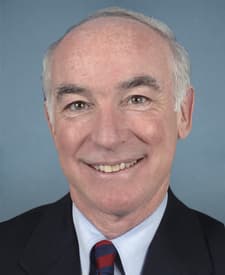
Introduced on Mar 24, 2026 by Joe Courtney (D-CT-2). 8 cosponsors, all from the sponsor's party. Latest action (Mar 24, 2026): Referred to the Committee on Education and Workforce, and in addition to the Committee on the Budget, for a period to be subsequently determined by the Speaker, in each case for consideration of such provisions as fall within the jurisdiction of the committee concerned.
- Stage
- Introduced
- Introduced
- Mar 24, 2026
- Cosponsors
- 8
- 0 from the other party
- Policy area
- Education
Progress
The furthest stage the measure reached. Simple and concurrent resolutions do not go to the President.
- Introduced
- 2Reported by committee
- 3Passed one chamber
- 4Passed both chambers
- 5Sent to the President
- 6Became law
Official title
To amend the Higher Education Act of 1965 to eliminate interest on student loans, establish the Education Affordability Trust Fund, increase annual and aggregate loan limits, and for other purposes.
Summary
By the Congressional Research Service (Introduced in House, Mar 24, 2026). Public domain.
Student Loan Interest Elimination Act
This bill eliminates interest on existing and new federal student loans beginning on July 1, 2026.
Specifically, for existing federal student loans, the bill directs the Department of Education (ED) to establish and implement procedures to (1) modify the terms of Federal Direct Loans so that beginning on July 1, 2026, no interest shall accrue on such a loan; and (2) allow a borrower to opt out of this loan modification.
Additionally, ED must establish and implement procedures to (1) refinance eligible loans that are not Federal Direct Loans (e.g., privately held Federal Family Education Loans and Perkins Loans), and (2) allow a borrower to opt out of this loan refinancing. The bill outlines the terms and conditions of these refinanced loans, including by prohibiting ED from charging origination fees and specifying that no interest shall accrue on these loans.
For new federal student loans made on or after July 1, 2026, the bill sets the applicable interest rate at 0%.
The bill establishes the Education Affordability Trust Fund. ED must deposit all payments made on federal student loans into this trust fund. The Education Affordability Trust Fund Board, as established by this bill, must transfer the assets from investments of this trust fund to ED to pay for the administrative costs of carrying out federal student loan programs.
The bill allows ED to use excess amounts of funds in the trust fund to carry out a Supplemental Pell Grant Program.
Sponsor and cosponsors
Cosponsors by party as of the day they signed on. Original cosponsors signed on the day of introduction.
Democrats · 8
- Eleanor Holmes NortonD-DCoriginal
- Dwight EvansD-PA-3signed on Apr 22, 2026
- Ted LieuD-CA-36signed on Apr 22, 2026
- Mike LevinD-CA-49signed on Apr 27, 2026
- Chellie PingreeD-ME-1signed on Jun 18, 2026
- Robert C. "Bobby" ScottD-VA-3signed on Jul 9, 2026
- Frederica S. WilsonD-FL-24signed on Jul 14, 2026
- Shomari FiguresD-AL-2signed on Jul 20, 2026
Roll calls
Recorded votes on the measure. Most measures move by voice vote or unanimous consent, which record no individual positions.
No recorded roll call on this measure: it moved by voice vote or unanimous consent, or has not reached the floor.
History
Every action as published, oldest first. Roll calls link to how each member voted.
- Mar 24, 2026Introduced in House
- Mar 24, 2026Introduced in House
- Mar 24, 2026 · HouseReferred to the Committee on Education and Workforce, and in addition to the Committee on the Budget, for a period to be subsequently determined by the Speaker, in each case for consideration of such provisions as fall within the jurisdiction of the committee concerned.
- Mar 24, 2026 · HouseReferred to the Committee on Education and Workforce, and in addition to the Committee on the Budget, for a period to be subsequently determined by the Speaker, in each case for consideration of such provisions as fall within the jurisdiction of the committee concerned.
Committees
Committees and subcommittees the measure was referred to.
Agencies in its committees' jurisdiction
Analisa's mapping of committee jurisdiction to federal agencies; the bill may touch others, or none of these.
Sources and method
Every figure on this page traces to these records.
- Bill status: bills and resolutions, sponsors, actions, subjects and CRS summaries (U.S. Government Publishing Office (GovInfo), from Congress.gov (Library of Congress))GovInfo Bill Status bulk data (Congress.gov; summaries by the Congressional Research Service) · data current to Oct 10, 2026 · loaded Oct 10, 2026 · license: Public domain (U.S. Government work, 17 U.S.C. § 105)
- Members of Congress, their terms, committees and identifiers (The @unitedstates project (from the Biographical Directory of the U.S. Congress, the House and the Senate))unitedstates/congress-legislators: legislators, committees and current committee membership · data current to Oct 3, 2026 · loaded Oct 3, 2026 · license: CC0 1.0 (public domain dedication)
- House roll-call votes (Office of the Clerk, U.S. House of Representatives)Office of the Clerk, U.S. House of Representatives, roll-call vote records · data current to Oct 3, 2026 · loaded Oct 3, 2026 · license: Public domain (U.S. Government work, 17 U.S.C. § 105)
- Senate roll-call votes and DW-NOMINATE scores (Voteview (UCLA Department of Political Science))Lewis, Jeffrey B., Keith Poole, Howard Rosenthal, Adam Boche, Aaron Rudkin, and Luke Sonnet (2026). Voteview: Congressional Roll-Call Votes Database. https://voteview.com/ · data current to Oct 3, 2026 · loaded Oct 3, 2026 · license: Free to use with the required citation
- Lobbying disclosures (LD-1 registrations, LD-2 quarterly reports, LD-203 contribution reports) (Clerk of the U.S. House of Representatives)Clerk of the House, Lobbying Disclosure Act filings (organizations only; lobbyists' names are not loaded) · data current to Oct 10, 2026 · loaded Oct 10, 2026 · license: Public domain (U.S. Government work, 17 U.S.C. § 105)
- Positions are shown only where a roll call recorded them; voice votes and unanimous consent record none.