H.R. 8078 · 119th Congress
Voter Empowerment Act of 2026
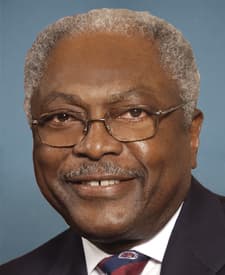
Introduced on Mar 25, 2026 by James E. Clyburn (D-SC-6). 3 cosponsors, all from the sponsor's party. Latest action (Mar 25, 2026): Referred to the Committee on House Administration, and in addition to the Committees on the Judiciary, Oversight and Government Reform, Science, Space, and Technology, Education and Workforce, and Energy and Commerce, for a period to be subsequently determined by the Speaker, in each case for consideration of such provisions as fall within the jurisdiction of the committee concerned.
- Stage
- Introduced
- Introduced
- Mar 25, 2026
- Cosponsors
- 3
- 0 from the other party
- Policy area
- Government Operations and Politics
Progress
The furthest stage the measure reached. Simple and concurrent resolutions do not go to the President.
- Introduced
- 2Reported by committee
- 3Passed one chamber
- 4Passed both chambers
- 5Sent to the President
- 6Became law
Official title
To modernize voter registration, promote access to voting for individuals with disabilities, protect the ability of individuals to exercise the right to vote in elections for Federal office, and for other purposes.
Summary
By the Congressional Research Service (Introduced in House, Mar 25, 2026). Public domain.
Voter Empowerment Act of 2026
This bill expands voter registration and voting access.
Specifically, the bill expands voter registration by requiring states to (1) make available online voter registration, (2) establish automatic voter registration systems, (3) permit same-day voter registration, and (4) accept voter registration applications from individuals under age 18.
Further, the bill limits removing voters from voter rolls and prohibits interference with voter registration or voting.
Next, the bill requires states to allow individuals with disabilities to use absentee registration procedures and to vote by absentee ballot in federal elections.
The bill also prohibits voter caging (the practice of sending mail to addresses on voter rolls, compiling a list of the undeliverable mail, and using the list to remove registered voters from voter rolls).
Next, the bill expands voting access by requiring states to allow early voting and voting by mail without additional conditions. It also requires states to provide secured drop boxes at which individuals may drop off their completed absentee ballots.
In addition, the bill declares that the right of a U.S. citizen to vote in any federal election shall not be denied or abridged because that individual has been convicted of a criminal offense unless, at the time of the election, such individual is serving a felony sentence.
Finally, the bill permanently reauthorizes the Election Assistance Commission (EAC). It also directs the EAC to make grants to states for specified activities, including to implement automatic voter registration systems.
Sponsor and cosponsors
Cosponsors by party as of the day they signed on. Original cosponsors signed on the day of introduction.
Democrats · 3
- Bonnie Watson ColemanD-NJ-12signed on Mar 26, 2026
- Gabe AmoD-RI-1signed on Apr 14, 2026
- Troy A. CarterD-LA-2signed on Aug 31, 2026
Roll calls
Recorded votes on the measure. Most measures move by voice vote or unanimous consent, which record no individual positions.
No recorded roll call on this measure: it moved by voice vote or unanimous consent, or has not reached the floor.
History
Every action as published, oldest first. Roll calls link to how each member voted.
- Mar 25, 2026Introduced in House
- Mar 25, 2026Introduced in House
- Mar 25, 2026 · HouseReferred to the Committee on House Administration, and in addition to the Committees on the Judiciary, Oversight and Government Reform, Science, Space, and Technology, Education and Workforce, and Energy and Commerce, for a period to be subsequently determined by the Speaker, in each case for consideration of such provisions as fall within the jurisdiction of the committee concerned.
- Mar 25, 2026 · HouseReferred to the Committee on House Administration, and in addition to the Committees on the Judiciary, Oversight and Government Reform, Science, Space, and Technology, Education and Workforce, and Energy and Commerce, for a period to be subsequently determined by the Speaker, in each case for consideration of such provisions as fall within the jurisdiction of the committee concerned.
- Mar 25, 2026 · HouseReferred to the Committee on House Administration, and in addition to the Committees on the Judiciary, Oversight and Government Reform, Science, Space, and Technology, Education and Workforce, and Energy and Commerce, for a period to be subsequently determined by the Speaker, in each case for consideration of such provisions as fall within the jurisdiction of the committee concerned.
- Mar 25, 2026 · HouseReferred to the Committee on House Administration, and in addition to the Committees on the Judiciary, Oversight and Government Reform, Science, Space, and Technology, Education and Workforce, and Energy and Commerce, for a period to be subsequently determined by the Speaker, in each case for consideration of such provisions as fall within the jurisdiction of the committee concerned.
- Mar 25, 2026 · HouseReferred to the Committee on House Administration, and in addition to the Committees on the Judiciary, Oversight and Government Reform, Science, Space, and Technology, Education and Workforce, and Energy and Commerce, for a period to be subsequently determined by the Speaker, in each case for consideration of such provisions as fall within the jurisdiction of the committee concerned.
- Mar 25, 2026 · HouseReferred to the Committee on House Administration, and in addition to the Committees on the Judiciary, Oversight and Government Reform, Science, Space, and Technology, Education and Workforce, and Energy and Commerce, for a period to be subsequently determined by the Speaker, in each case for consideration of such provisions as fall within the jurisdiction of the committee concerned.
Committees
Committees and subcommittees the measure was referred to.
Agencies in its committees' jurisdiction
Analisa's mapping of committee jurisdiction to federal agencies; the bill may touch others, or none of these.
- Consumer Product Safety Commission
- Department of Commerce
- Department of Education
- Department of Energy
- Department of Health and Human Services
- Department of Justice
- Department of Labor
- Election Assistance Commission
- Environmental Protection Agency
- Executive Office of the President
- Federal Communications Commission
- Federal Election Commission
- Federal Trade Commission
- General Services Administration
- LABOR, DEPARTMENT OF
- Library of Congress
- National Aeronautics and Space Administration
- National Archives and Records Administration
- National Labor Relations Board
- National Science Foundation
- Nuclear Regulatory Commission
- Office of Personnel Management
- Pension Benefit Guaranty Corporation
- Smithsonian Institution
- U.S. Postal Service
Sources and method
Every figure on this page traces to these records.
- Bill status: bills and resolutions, sponsors, actions, subjects and CRS summaries (U.S. Government Publishing Office (GovInfo), from Congress.gov (Library of Congress))GovInfo Bill Status bulk data (Congress.gov; summaries by the Congressional Research Service) · data current to Oct 3, 2026 · loaded Oct 3, 2026 · license: Public domain (U.S. Government work, 17 U.S.C. § 105)
- Members of Congress, their terms, committees and identifiers (The @unitedstates project (from the Biographical Directory of the U.S. Congress, the House and the Senate))unitedstates/congress-legislators: legislators, committees and current committee membership · data current to Oct 3, 2026 · loaded Oct 3, 2026 · license: CC0 1.0 (public domain dedication)
- House roll-call votes (Office of the Clerk, U.S. House of Representatives)Office of the Clerk, U.S. House of Representatives, roll-call vote records · data current to Oct 3, 2026 · loaded Oct 3, 2026 · license: Public domain (U.S. Government work, 17 U.S.C. § 105)
- Senate roll-call votes and DW-NOMINATE scores (Voteview (UCLA Department of Political Science))Lewis, Jeffrey B., Keith Poole, Howard Rosenthal, Adam Boche, Aaron Rudkin, and Luke Sonnet (2026). Voteview: Congressional Roll-Call Votes Database. https://voteview.com/ · data current to Oct 3, 2026 · loaded Oct 3, 2026 · license: Free to use with the required citation
- Lobbying disclosures (LD-1 registrations, LD-2 quarterly reports, LD-203 contribution reports) (Clerk of the U.S. House of Representatives)Clerk of the House, Lobbying Disclosure Act filings (organizations only; lobbyists' names are not loaded) · data current to Oct 6, 2026 · loaded Oct 6, 2026 · license: Public domain (U.S. Government work, 17 U.S.C. § 105)
- Positions are shown only where a roll call recorded them; voice votes and unanimous consent record none.