H.R. 8463 · 119th Congress
Pre-Payment Fraud Prevention and Treasury Data Access Act
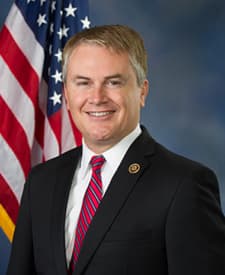
Introduced on Apr 23, 2026 by James Comer (R-KY-1). 3 cosponsors, 1 of them from another party. Latest action (Jun 9, 2026): Received in the Senate.
- Stage
- Passed one chamber
- Introduced
- Apr 23, 2026
- Cosponsors
- 3
- 1 from the other party
- Policy area
- Government Operations and Politics
Progress
The furthest stage the measure reached. Simple and concurrent resolutions do not go to the President.
- Introduced
- Reported by committee
- Passed one chamber
- 4Passed both chambers
- 5Sent to the President
- 6Became law
Official title
To establish governmentwide requirements for pre-payment fraud prevention actions, to provide the U.S. Treasury appropriate data resources, to facilitate participation in governmentwide anti-fraud data sharing, and for other purposes.
Subjects
- Administrative law and regulatory procedures
- Congressional oversight
- Data collection, sharing, protection
- Department of the Treasury
- Fraud offenses and financial crimes
- Government information and archives
- Intergovernmental relations
- Office of Management and Budget (OMB)
- Right of privacy
- Social security and elderly assistance
- State and local government operations
- Tax administration and collection, taxpayers
Summary
By the Congressional Research Service (Introduced in House, Apr 23, 2026). Public domain.
Pre-Payment Fraud Prevention and Treasury Data Access Act
This bill expands efforts to identify, prevent, and recover improper payments of federal funds (e.g., overpayments, underpayments, payments to ineligible recipients).
Specifically, the Department of the Treasury must establish certain requirements that agencies must meet before directing Treasury to make a payment of federal funds. These pre-payment requirements must include verification of payee information, payment details, and fund availability. Further, agencies must, to the extent practicable, verify the accuracy of payee bank account information before directing Treasury to make a payment.
The bill also expands the Do Not Pay system, which provides agencies with access to centralized data for the purpose of verifying payee eligibility, and provides statutory authority for Treasury’s role as administrator of the system. The bill requires specified data assets to be added to the system and authorizes Treasury to (1) designate additional data assets for inclusion, and (2) access certain taxpayer and Social Security information for the system. The bill specifies that information obtained through the system may only be used to prevent and recover improper payments and establishes penalties for the unlawful disclosure of such information.
The bill explicitly requires executive agencies and state and local governments administering federally funded programs to screen payees against all appropriate Do Not Pay data assets and risk tools before making an award or directing a payment.
Finally, the bill establishes post-award reporting requirements for certain first-time fund recipients under federal programs for awards of $50,000 or more.
Sponsor and cosponsors
Cosponsors by party as of the day they signed on. Original cosponsors signed on the day of introduction.
Democrats · 1
- Robert GarciaD-CA-42signed on Jun 3, 2026
Republicans · 2
- Jodey C. ArringtonR-TX-19original
- Ken CalvertR-CA-41signed on Jun 3, 2026
Roll calls
Recorded votes on the measure. Most measures move by voice vote or unanimous consent, which record no individual positions.
No recorded roll call on this measure: it moved by voice vote or unanimous consent, or has not reached the floor.
History
Every action as published, oldest first. Roll calls link to how each member voted.
- Apr 23, 2026Introduced in House
- Apr 23, 2026Introduced in House
- Apr 23, 2026 · HouseReferred to the Committee on Oversight and Government Reform, and in addition to the Committee on Ways and Means, for a period to be subsequently determined by the Speaker, in each case for consideration of such provisions as fall within the jurisdiction of the committee concerned.
- Apr 23, 2026 · HouseReferred to the Committee on Oversight and Government Reform, and in addition to the Committee on Ways and Means, for a period to be subsequently determined by the Speaker, in each case for consideration of such provisions as fall within the jurisdiction of the committee concerned.
- Apr 29, 2026 · HouseCommittee Consideration and Mark-up Session Held
- Apr 29, 2026 · HouseOrdered to be Reported (Amended) by the Yeas and Nays: 35 - 1.
- Jun 8, 2026Reported (Amended) by the Committee on Oversight and Government Reform. H. Rept. 119-688, Part I.
- Jun 8, 2026 · HouseReported (Amended) by the Committee on Oversight and Government Reform. H. Rept. 119-688, Part I.
- Jun 8, 2026Committee on Ways and Means discharged.
- Jun 8, 2026 · HouseCommittee on Ways and Means discharged.
- Jun 8, 2026 · HousePlaced on the Union Calendar, Calendar No. 600.
- Jun 8, 2026 · HouseMr. Gill (TX) moved to suspend the rules and pass the bill, as amended.
- Jun 8, 2026 · HouseConsidered under suspension of the rules. (consideration: CR H3919-3923)
- Jun 8, 2026 · HouseDEBATE - The House proceeded with forty minutes of debate on H.R. 8463.
- Jun 8, 2026Passed/agreed to in House: On motion to suspend the rules and pass the bill, as amended Agreed to by voice vote. (text: CR H3919-3922)
- Jun 8, 2026 · HouseOn motion to suspend the rules and pass the bill, as amended Agreed to by voice vote. (text: CR H3919-3922)
- Jun 8, 2026 · HouseMotion to reconsider laid on the table Agreed to without objection.
- Jun 9, 2026 · SenateReceived in the Senate.
Committees
Committees and subcommittees the measure was referred to.
Agencies in its committees' jurisdiction
Analisa's mapping of committee jurisdiction to federal agencies; the bill may touch others, or none of these.
Who lobbied on it
Organizations whose lobbying reports (LD-2) name this measure. Spending is what they reported for those quarters on all issues, not on this measure alone.
- AARP1 report$4.1M reported (all issues)
- National Council of Nonprofits (formerly known as the National Council of Nonpro1 report$95.5K reported (all issues)
- National Taxpayers Union1 report$30K reported (all issues)
- RSM US LLP (formerly known as McGladrey LLP)1 report$150K reported (all issues)
- Service Employees International Union CTW-CLC1 report$300K reported (all issues)
Reports filed in 2026.
Sources and method
Every figure on this page traces to these records.
- Bill status: bills and resolutions, sponsors, actions, subjects and CRS summaries (U.S. Government Publishing Office (GovInfo), from Congress.gov (Library of Congress))GovInfo Bill Status bulk data (Congress.gov; summaries by the Congressional Research Service) · data current to Oct 7, 2026 · loaded Oct 7, 2026 · license: Public domain (U.S. Government work, 17 U.S.C. § 105)
- Members of Congress, their terms, committees and identifiers (The @unitedstates project (from the Biographical Directory of the U.S. Congress, the House and the Senate))unitedstates/congress-legislators: legislators, committees and current committee membership · data current to Oct 3, 2026 · loaded Oct 3, 2026 · license: CC0 1.0 (public domain dedication)
- House roll-call votes (Office of the Clerk, U.S. House of Representatives)Office of the Clerk, U.S. House of Representatives, roll-call vote records · data current to Oct 3, 2026 · loaded Oct 3, 2026 · license: Public domain (U.S. Government work, 17 U.S.C. § 105)
- Senate roll-call votes and DW-NOMINATE scores (Voteview (UCLA Department of Political Science))Lewis, Jeffrey B., Keith Poole, Howard Rosenthal, Adam Boche, Aaron Rudkin, and Luke Sonnet (2026). Voteview: Congressional Roll-Call Votes Database. https://voteview.com/ · data current to Oct 3, 2026 · loaded Oct 3, 2026 · license: Free to use with the required citation
- Lobbying disclosures (LD-1 registrations, LD-2 quarterly reports, LD-203 contribution reports) (Clerk of the U.S. House of Representatives)Clerk of the House, Lobbying Disclosure Act filings (organizations only; lobbyists' names are not loaded) · data current to Oct 7, 2026 · loaded Oct 7, 2026 · license: Public domain (U.S. Government work, 17 U.S.C. § 105)
- Positions are shown only where a roll call recorded them; voice votes and unanimous consent record none.
- Money and votes are shown side by side; neither explains the other.