H.R. 8467 · 119th Congress
ZOMBIE Act
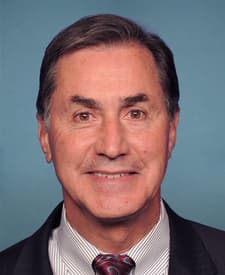
Introduced on Apr 23, 2026 by Gary J. Palmer (R-AL-6). Latest action (Jun 11, 2026): Received in the Senate.
- Stage
- Passed one chamber
- Introduced
- Apr 23, 2026
- Cosponsors
- 0
- Policy area
- Government Operations and Politics
Progress
The furthest stage the measure reached. Simple and concurrent resolutions do not go to the President.
- Introduced
- Reported by committee
- Passed one chamber
- 4Passed both chambers
- 5Sent to the President
- 6Became law
Official title
To reform the Payment Integrity Information Act of 2019 to ensure executive agencies focus on fraud prevention, and for other purposes.
Subjects
- Accounting and auditing
- Congressional oversight
- Fraud offenses and financial crimes
- Government information and archives
Summary
By the Congressional Research Service (Introduced in House, Apr 23, 2026). Public domain.
Zeroing Out Monetary Benefits Improperly Expended Act or the ZOMBIE Act
This bill focuses requirements governing the assessment, tracking, and reporting of improper payments made by federal agencies on improper payments that result in financial loss to the government.
The bill defines financial loss to the government as any payment (or part of a payment) in excess of the correct amount that results in a financial loss to the government, but excludes any payment (or part of a payment) that is made to the correct recipient for the correct amount but fails to meet administrative procedures (other than those required to verify the validity of the payment).
The bill requires agencies to assess programs and activities every three years for the risk of improper payments resulting in financial loss to the government. The bill also generally modifies other reporting requirements to focus on such improper payments, including by expanding reporting requirements to include information about actions taken by agencies to prevent such payments (e.g., use of the Do Not Pay system) and to implement certain best practices.
The bill also
- requires an estimate of such improper payments in agencies’ annual budget justification,
- requires the Department of the Treasury to develop risk assessment guidance, and
- allows up to 75% of funds that are recovered through audits to be directed back to the original program or activity (currently, up to 25% of such funds may be directed back to the original program or activity).
Sponsor and cosponsors
Cosponsors by party as of the day they signed on. Original cosponsors signed on the day of introduction.
No cosponsors.
Roll calls
Recorded votes on the measure. Most measures move by voice vote or unanimous consent, which record no individual positions.
No recorded roll call on this measure: it moved by voice vote or unanimous consent, or has not reached the floor.
History
Every action as published, oldest first. Roll calls link to how each member voted.
- Apr 23, 2026Introduced in House
- Apr 23, 2026Introduced in House
- Apr 23, 2026 · HouseReferred to the House Committee on Oversight and Government Reform.
- Apr 29, 2026 · HouseCommittee Consideration and Mark-up Session Held
- Apr 29, 2026 · HouseOrdered to be Reported (Amended) by the Yeas and Nays: 40 - 0.
- Jun 8, 2026 · HouseMr. Gill (TX) moved to suspend the rules and pass the bill, as amended.
- Jun 8, 2026 · HouseConsidered under suspension of the rules. (consideration: CR H3925-3928; text: CR H3925-3928)
- Jun 8, 2026 · HouseDEBATE - The House proceeded with forty minutes of debate on H.R. 8467.
- Jun 8, 2026 · HouseAt the conclusion of debate, the chair put the question on the motion to suspend the rules. Mr. Gill (TX) objected to the vote on the grounds that a quorum was not present. Further proceedings on the motion were postponed. The point of no quorum was considered as withdrawn.
- Jun 10, 2026 · HouseConsidered as unfinished business. (consideration: CR H4079)
- Jun 10, 2026Passed/agreed to in House: On motion to suspend the rules and pass the bill, as amended Agreed to by voice vote.
- Jun 10, 2026 · HouseOn motion to suspend the rules and pass the bill, as amended Agreed to by voice vote.
- Jun 10, 2026 · HouseMotion to reconsider laid on the table Agreed to without objection.
- Jun 11, 2026 · SenateReceived in the Senate.
Committees
Committees and subcommittees the measure was referred to.
Agencies in its committees' jurisdiction
Analisa's mapping of committee jurisdiction to federal agencies; the bill may touch others, or none of these.
Who lobbied on it
Organizations whose lobbying reports (LD-2) name this measure. Spending is what they reported for those quarters on all issues, not on this measure alone.
- National Council of Nonprofits (formerly known as the National Council of Nonpro1 report$95.5K reported (all issues)
- National Taxpayers Union1 report$30K reported (all issues)
- RSM US LLP (formerly known as McGladrey LLP)1 report$150K reported (all issues)
Reports filed in 2026.
Sources and method
Every figure on this page traces to these records.
- Bill status: bills and resolutions, sponsors, actions, subjects and CRS summaries (U.S. Government Publishing Office (GovInfo), from Congress.gov (Library of Congress))GovInfo Bill Status bulk data (Congress.gov; summaries by the Congressional Research Service) · data current to Oct 9, 2026 · loaded Oct 9, 2026 · license: Public domain (U.S. Government work, 17 U.S.C. § 105)
- Members of Congress, their terms, committees and identifiers (The @unitedstates project (from the Biographical Directory of the U.S. Congress, the House and the Senate))unitedstates/congress-legislators: legislators, committees and current committee membership · data current to Oct 3, 2026 · loaded Oct 3, 2026 · license: CC0 1.0 (public domain dedication)
- House roll-call votes (Office of the Clerk, U.S. House of Representatives)Office of the Clerk, U.S. House of Representatives, roll-call vote records · data current to Oct 3, 2026 · loaded Oct 3, 2026 · license: Public domain (U.S. Government work, 17 U.S.C. § 105)
- Senate roll-call votes and DW-NOMINATE scores (Voteview (UCLA Department of Political Science))Lewis, Jeffrey B., Keith Poole, Howard Rosenthal, Adam Boche, Aaron Rudkin, and Luke Sonnet (2026). Voteview: Congressional Roll-Call Votes Database. https://voteview.com/ · data current to Oct 3, 2026 · loaded Oct 3, 2026 · license: Free to use with the required citation
- Lobbying disclosures (LD-1 registrations, LD-2 quarterly reports, LD-203 contribution reports) (Clerk of the U.S. House of Representatives)Clerk of the House, Lobbying Disclosure Act filings (organizations only; lobbyists' names are not loaded) · data current to Oct 9, 2026 · loaded Oct 9, 2026 · license: Public domain (U.S. Government work, 17 U.S.C. § 105)
- Positions are shown only where a roll call recorded them; voice votes and unanimous consent record none.
- Money and votes are shown side by side; neither explains the other.