H.R. 8481 · 119th Congress
Kayleigh’s Law Act of 2026
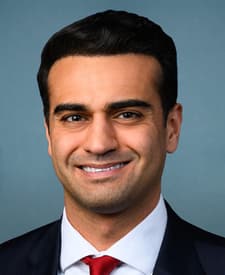
Introduced on Apr 23, 2026 by Abraham J. Hamadeh (R-AZ-8). 21 cosponsors, all from the sponsor's party. Latest action (Sep 14, 2026): Received in the Senate and Read twice and referred to the Committee on the Judiciary.
- Stage
- Passed one chamber
- Introduced
- Apr 23, 2026
- Cosponsors
- 21
- 0 from the other party
- Policy area
- Crime and Law Enforcement
Progress
The furthest stage the measure reached. Simple and concurrent resolutions do not go to the President.
- Introduced
- Reported by committee
- Passed one chamber
- 4Passed both chambers
- 5Sent to the President
- 6Became law
Official title
To amend title 18, United States Code, to provide for the issuance of natural lifetime injunctions for certain victims.
Subjects
- Crime victims
- Criminal procedure and sentencing
- Violent crime
Summary
By the Congressional Research Service (Reported to House, Jul 6, 2026). Public domain.
Kayleigh’s Law Act of 2026
This bill establishes a federal statutory framework to require federal courts to issue an order prohibiting contact with a victim (i.e., a no-contact order) in the case of a defendant who is convicted of certain violent crimes or sex crimes.
Specifically, in the case of a defendant convicted of a felony offense that is a crime of violence or that involves a sexual act or sexual conduct, on a motion by the victim or federal government, the court must issue a no-contact order.
Under the framework, the no-contact order must be imposed at sentencing and be in effect for the lifetime of the defendant unless it is terminated or suspended in accordance with specified procedures. Additionally, no fee may be assessed or collected from a victim in connection with the issuance of a no-contact order.
Sponsor and cosponsors
Cosponsors by party as of the day they signed on. Original cosponsors signed on the day of introduction.
Republicans · 21
- Brian BabinR-TX-36original
- Andy BiggsR-AZ-5original
- Tim BurchettR-TN-2original
- Juan CiscomaniR-AZ-6original
- Elijah CraneR-AZ-2original
- Troy DowningR-MT-2original
- Paul A. GosarR-AZ-9original
- David P. JoyceR-OH-14original
- Kimberlyn King-HindsR-MPoriginal
- Nancy MaceR-SC-1original
- Daniel MeuserR-PA-9original
- Barry MooreR-AL-1original
- Gary J. PalmerR-AL-6original
- David SchweikertR-AZ-1original
- W. Gregory SteubeR-FL-17original
- Marlin A. StutzmanR-IN-3original
- David J. TaylorR-OH-2original
- Mike EzellR-MS-4signed on Apr 27, 2026
- Christopher H. SmithR-NJ-4signed on Apr 27, 2026
- Brandon GillR-TX-26signed on Apr 28, 2026
- Ken CalvertR-CA-41signed on Jun 3, 2026
Roll calls
Recorded votes on the measure. Most measures move by voice vote or unanimous consent, which record no individual positions.
No recorded roll call on this measure: it moved by voice vote or unanimous consent, or has not reached the floor.
History
Every action as published, oldest first. Roll calls link to how each member voted.
- Apr 23, 2026Introduced in House
- Apr 23, 2026Introduced in House
- Apr 23, 2026 · HouseReferred to the House Committee on the Judiciary.
- Jun 3, 2026 · HouseCommittee Consideration and Mark-up Session Held
- Jun 3, 2026 · HouseOrdered to be Reported (Amended) by the Yeas and Nays: 23 - 0.
- Jul 6, 2026Reported (Amended) by the Committee on Judiciary. H. Rept. 119-731.
- Jul 6, 2026 · HouseReported (Amended) by the Committee on Judiciary. H. Rept. 119-731.
- Jul 6, 2026 · HousePlaced on the Union Calendar, Calendar No. 636.
- Aug 31, 2026 · HouseMs. Lee (FL) moved to suspend the rules and pass the bill, as amended.
- Aug 31, 2026 · HouseConsidered under suspension of the rules. (consideration: CR H5270-5272)
- Aug 31, 2026 · HouseDEBATE - The House proceeded with forty minutes of debate on H.R. 8481.
- Aug 31, 2026Passed/agreed to in House: On motion to suspend the rules and pass the bill, as amended Agreed to by voice vote. (text: CR H5270-5271)
- Aug 31, 2026 · HouseOn motion to suspend the rules and pass the bill, as amended Agreed to by voice vote. (text: CR H5270-5271)
- Aug 31, 2026 · HouseMotion to reconsider laid on the table Agreed to without objection.
- Sep 14, 2026 · SenateReceived in the Senate and Read twice and referred to the Committee on the Judiciary.
Committees
Committees and subcommittees the measure was referred to.
Agencies in its committees' jurisdiction
Analisa's mapping of committee jurisdiction to federal agencies; the bill may touch others, or none of these.
Sources and method
Every figure on this page traces to these records.
- Bill status: bills and resolutions, sponsors, actions, subjects and CRS summaries (U.S. Government Publishing Office (GovInfo), from Congress.gov (Library of Congress))GovInfo Bill Status bulk data (Congress.gov; summaries by the Congressional Research Service) · data current to Oct 9, 2026 · loaded Oct 9, 2026 · license: Public domain (U.S. Government work, 17 U.S.C. § 105)
- Members of Congress, their terms, committees and identifiers (The @unitedstates project (from the Biographical Directory of the U.S. Congress, the House and the Senate))unitedstates/congress-legislators: legislators, committees and current committee membership · data current to Oct 3, 2026 · loaded Oct 3, 2026 · license: CC0 1.0 (public domain dedication)
- House roll-call votes (Office of the Clerk, U.S. House of Representatives)Office of the Clerk, U.S. House of Representatives, roll-call vote records · data current to Oct 3, 2026 · loaded Oct 3, 2026 · license: Public domain (U.S. Government work, 17 U.S.C. § 105)
- Senate roll-call votes and DW-NOMINATE scores (Voteview (UCLA Department of Political Science))Lewis, Jeffrey B., Keith Poole, Howard Rosenthal, Adam Boche, Aaron Rudkin, and Luke Sonnet (2026). Voteview: Congressional Roll-Call Votes Database. https://voteview.com/ · data current to Oct 3, 2026 · loaded Oct 3, 2026 · license: Free to use with the required citation
- Lobbying disclosures (LD-1 registrations, LD-2 quarterly reports, LD-203 contribution reports) (Clerk of the U.S. House of Representatives)Clerk of the House, Lobbying Disclosure Act filings (organizations only; lobbyists' names are not loaded) · data current to Oct 9, 2026 · loaded Oct 9, 2026 · license: Public domain (U.S. Government work, 17 U.S.C. § 105)
- Positions are shown only where a roll call recorded them; voice votes and unanimous consent record none.