H.R. 8705 · 119th Congress
CHARLIE Act
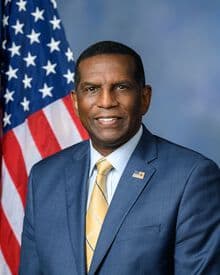
Introduced on May 7, 2026 by Burgess Owens (R-UT-4). One cosponsor. Latest action (May 21, 2026): Ordered to be Reported (Amended) by the Yeas and Nays: 19 - 15.
- Stage
- Introduced
- Introduced
- May 7, 2026
- Cosponsors
- 1
- 0 from the other party
- Policy area
- Education
Progress
The furthest stage the measure reached. Simple and concurrent resolutions do not go to the President.
- Introduced
- 2Reported by committee
- 3Passed one chamber
- 4Passed both chambers
- 5Sent to the President
- 6Became law
Official title
To amend the Elementary and Secondary Education Act of 1965 to prevent the American History and Civics program from funding radical indoctrination, and for other purposes.
Subjects
- Education programs funding
- Elementary and secondary education
- Sex, gender, sexual orientation discrimination
- Teaching, teachers, curricula
Summary
By the Congressional Research Service (Introduced in House, May 7, 2026). Public domain.
Civics and History Advancement to Restore Learning, Integrity, and Education Act or the CHARLIE Act
This bill prohibits the use of federal funding made available for the American History and Civics Education program to fund discriminatory equity ideology or gender ideology, as defined in certain executive orders. Further, in awarding grants under this program, the Department of Education may not give priority to an eligible entity on the basis of race, sex, sexual orientation, gender identity, or immigration status.
The bill defines discriminatory equity ideology in accordance with Executive Order 14190, which was published on January 29, 2025. This definition refers to ideology that treats individuals as members of preferred or disfavored groups rather than as individuals, including listed ideologies (e.g., an ideology that members of one race, color, sex, or national origin are morally or inherently superior to members of another race, color, sex, or national origin, or that an individual is inherently racist, sexist, or oppressive by virtue of the individual's race, color, sex, or national origin).
The bill defines gender ideology in accordance with Executive Order 14168, which was published on January 20, 2025. This definition refers to an ideology that replaces categories of biological sex with gender identity.
Sponsor and cosponsors
Cosponsors by party as of the day they signed on. Original cosponsors signed on the day of introduction.
Republicans · 1
- Ken CalvertR-CA-41signed on Sep 16, 2026
Roll calls
Recorded votes on the measure. Most measures move by voice vote or unanimous consent, which record no individual positions.
No recorded roll call on this measure: it moved by voice vote or unanimous consent, or has not reached the floor.
History
Every action as published, oldest first. Roll calls link to how each member voted.
- May 7, 2026Introduced in House
- May 7, 2026Introduced in House
- May 7, 2026 · HouseReferred to the House Committee on Education and Workforce.
- May 21, 2026 · HouseCommittee Consideration and Mark-up Session Held
- May 21, 2026 · HouseOrdered to be Reported (Amended) by the Yeas and Nays: 19 - 15.
Committees
Committees and subcommittees the measure was referred to.
Agencies in its committees' jurisdiction
Analisa's mapping of committee jurisdiction to federal agencies; the bill may touch others, or none of these.
Who lobbied on it
Organizations whose lobbying reports (LD-2) name this measure. Spending is what they reported for those quarters on all issues, not on this measure alone.
- American Library Association1 report$71.3K reported (all issues)
- HUMAN RIGHTS CAMPAIGN1 report$223.7K reported (all issues)
- PEN AMERICA1 report$10K reported (all issues)
Reports filed in 2026.
Sources and method
Every figure on this page traces to these records.
- Bill status: bills and resolutions, sponsors, actions, subjects and CRS summaries (U.S. Government Publishing Office (GovInfo), from Congress.gov (Library of Congress))GovInfo Bill Status bulk data (Congress.gov; summaries by the Congressional Research Service) · data current to Oct 9, 2026 · loaded Oct 9, 2026 · license: Public domain (U.S. Government work, 17 U.S.C. § 105)
- Members of Congress, their terms, committees and identifiers (The @unitedstates project (from the Biographical Directory of the U.S. Congress, the House and the Senate))unitedstates/congress-legislators: legislators, committees and current committee membership · data current to Oct 3, 2026 · loaded Oct 3, 2026 · license: CC0 1.0 (public domain dedication)
- House roll-call votes (Office of the Clerk, U.S. House of Representatives)Office of the Clerk, U.S. House of Representatives, roll-call vote records · data current to Oct 3, 2026 · loaded Oct 3, 2026 · license: Public domain (U.S. Government work, 17 U.S.C. § 105)
- Senate roll-call votes and DW-NOMINATE scores (Voteview (UCLA Department of Political Science))Lewis, Jeffrey B., Keith Poole, Howard Rosenthal, Adam Boche, Aaron Rudkin, and Luke Sonnet (2026). Voteview: Congressional Roll-Call Votes Database. https://voteview.com/ · data current to Oct 3, 2026 · loaded Oct 3, 2026 · license: Free to use with the required citation
- Lobbying disclosures (LD-1 registrations, LD-2 quarterly reports, LD-203 contribution reports) (Clerk of the U.S. House of Representatives)Clerk of the House, Lobbying Disclosure Act filings (organizations only; lobbyists' names are not loaded) · data current to Oct 9, 2026 · loaded Oct 9, 2026 · license: Public domain (U.S. Government work, 17 U.S.C. § 105)
- Positions are shown only where a roll call recorded them; voice votes and unanimous consent record none.
- Money and votes are shown side by side; neither explains the other.