H.R. 8790 · 119th Congress
Next-Generation Geothermal Research and Development Act
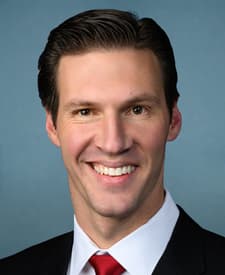
Introduced on May 13, 2026 by Pat Harrigan (R-NC-10). One cosponsor. Latest action (Jul 21, 2026): Received in the Senate and Read twice and referred to the Committee on Energy and Natural Resources.
- Stage
- Passed one chamber
- Introduced
- May 13, 2026
- Cosponsors
- 1
- 1 from the other party
- Policy area
- Energy
Progress
The furthest stage the measure reached. Simple and concurrent resolutions do not go to the President.
- Introduced
- Reported by committee
- Passed one chamber
- 4Passed both chambers
- 5Sent to the President
- 6Became law
Official title
To amend the Energy Independence and Security Act of 2007 to direct research, development, demonstration, and commercial application activities in support of next-generation geothermal and closed-loop geothermal systems in various conditions, and for other purposes.
Subjects
- Alternative and renewable resources
- Electric power generation and transmission
- Energy research
- Geography and mapping
- Government lending and loan guarantees
- Government studies and investigations
- Technology transfer and commercialization
- Water use and supply
Summary
By the Congressional Research Service (Introduced in House, May 13, 2026). Public domain.
Next-Generation Geothermal Research and Development Act
This bill directs the Department of Energy (DOE) to support the development of next-generation geothermal systems, such as closed-loop geothermal systems in supercritical conditions. Specifically, the bill expands the Energy Independence and Security Act of 2007 to modify and establish geothermal energy programs, such as programs concerning research and development, grants, and data management.
DOE must support a program of research, development, demonstration, and commercial application for next-generation geothermal systems. DOE may administer grants for carrying out certain focus areas of the program. DOE must also ensure that at least one Frontier Observatory for Research in Geothermal Energy (FORGE) field research site has the capabilities to include next-generation geothermal testing.
Additionally, DOE must provide grants for (1) the continuation and expansion of research, development, demonstration, testing, and commercial application activities applicable to FORGE sites; and (2) the establishment of a next-generation geothermal systems center of excellence.
DOE must also provide grants to accelerate the development, testing, and implementation of innovative technologies to improve the commercial-readiness of geothermal energy projects using next-generation geothermal systems.
DOE must expand its repository of geothermal drilling information to include publicly available subsurface data, including data reported as part of fossil fuel and mining operations. DOE must also periodically update the repository to improve its functionality and usability.
The bill authorizes the Department of the Interior to commission the drilling of supercritical geothermal exploration boreholes in certain areas to provide control points for deep heat mapping and geothermal development.
Sponsor and cosponsors
Cosponsors by party as of the day they signed on. Original cosponsors signed on the day of introduction.
Democrats · 1
- Andrea SalinasD-OR-6original
Roll calls
Recorded votes on the measure. Most measures move by voice vote or unanimous consent, which record no individual positions.
No recorded roll call on this measure: it moved by voice vote or unanimous consent, or has not reached the floor.
History
Every action as published, oldest first. Roll calls link to how each member voted.
- May 13, 2026Introduced in House
- May 13, 2026Introduced in House
- May 13, 2026 · HouseReferred to the Committee on Science, Space, and Technology, and in addition to the Committee on Natural Resources, for a period to be subsequently determined by the Speaker, in each case for consideration of such provisions as fall within the jurisdiction of the committee concerned.
- May 13, 2026 · HouseReferred to the Committee on Science, Space, and Technology, and in addition to the Committee on Natural Resources, for a period to be subsequently determined by the Speaker, in each case for consideration of such provisions as fall within the jurisdiction of the committee concerned.
- May 20, 2026 · HouseCommittee Consideration and Mark-up Session Held
- May 20, 2026 · HouseOrdered to be Reported (Amended) by Voice Vote.
- Jul 16, 2026Reported (Amended) by the Committee on Science, Space, and Technology. H. Rept. 119-752, Part I.
- Jul 16, 2026 · HouseReported (Amended) by the Committee on Science, Space, and Technology. H. Rept. 119-752, Part I.
- Jul 16, 2026Committee on Natural Resources discharged.
- Jul 16, 2026 · HouseCommittee on Natural Resources discharged.
- Jul 16, 2026 · HousePlaced on the Union Calendar, Calendar No. 655.
- Jul 20, 2026 · HouseMr. Babin moved to suspend the rules and pass the bill, as amended.
- Jul 20, 2026 · HouseConsidered under suspension of the rules. (consideration: CR H4667-4670)
- Jul 20, 2026 · HouseDEBATE - The House proceeded with forty minutes of debate on H.R. 8790.
- Jul 20, 2026Passed/agreed to in House: On motion to suspend the rules and pass the bill, as amended Agreed to by voice vote. (text: CR H4667-4668)
- Jul 20, 2026 · HouseOn motion to suspend the rules and pass the bill, as amended Agreed to by voice vote. (text: CR H4667-4668)
- Jul 20, 2026 · HouseMotion to reconsider laid on the table Agreed to without objection.
- Jul 21, 2026 · SenateReceived in the Senate and Read twice and referred to the Committee on Energy and Natural Resources.
Committees
Committees and subcommittees the measure was referred to.
Agencies in its committees' jurisdiction
Analisa's mapping of committee jurisdiction to federal agencies; the bill may touch others, or none of these.
Who lobbied on it
Organizations whose lobbying reports (LD-2) name this measure. Spending is what they reported for those quarters on all issues, not on this measure alone.
- Chamber of Commerce of the U.S.A.1 report$17M reported (all issues)
- Cornell University1 report$360K reported (all issues)Federal contractor: CORNELL UNIVERSITY$4.4M in contracts, FY2026AI match · 100%
Reports filed in 2026.
Sources and method
Every figure on this page traces to these records.
- Bill status: bills and resolutions, sponsors, actions, subjects and CRS summaries (U.S. Government Publishing Office (GovInfo), from Congress.gov (Library of Congress))GovInfo Bill Status bulk data (Congress.gov; summaries by the Congressional Research Service) · data current to Oct 9, 2026 · loaded Oct 9, 2026 · license: Public domain (U.S. Government work, 17 U.S.C. § 105)
- Members of Congress, their terms, committees and identifiers (The @unitedstates project (from the Biographical Directory of the U.S. Congress, the House and the Senate))unitedstates/congress-legislators: legislators, committees and current committee membership · data current to Oct 3, 2026 · loaded Oct 3, 2026 · license: CC0 1.0 (public domain dedication)
- House roll-call votes (Office of the Clerk, U.S. House of Representatives)Office of the Clerk, U.S. House of Representatives, roll-call vote records · data current to Oct 3, 2026 · loaded Oct 3, 2026 · license: Public domain (U.S. Government work, 17 U.S.C. § 105)
- Senate roll-call votes and DW-NOMINATE scores (Voteview (UCLA Department of Political Science))Lewis, Jeffrey B., Keith Poole, Howard Rosenthal, Adam Boche, Aaron Rudkin, and Luke Sonnet (2026). Voteview: Congressional Roll-Call Votes Database. https://voteview.com/ · data current to Oct 3, 2026 · loaded Oct 3, 2026 · license: Free to use with the required citation
- Lobbying disclosures (LD-1 registrations, LD-2 quarterly reports, LD-203 contribution reports) (Clerk of the U.S. House of Representatives)Clerk of the House, Lobbying Disclosure Act filings (organizations only; lobbyists' names are not loaded) · data current to Oct 9, 2026 · loaded Oct 9, 2026 · license: Public domain (U.S. Government work, 17 U.S.C. § 105)
- Positions are shown only where a roll call recorded them; voice votes and unanimous consent record none.
- Money and votes are shown side by side; neither explains the other.