H.R. 9086 · 119th Congress
Foreign Service Modernization Act
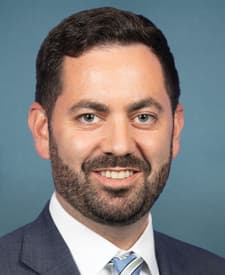
Introduced on Jun 2, 2026 by Michael Lawler (R-NY-17). 3 cosponsors, all from the sponsor's party. Latest action (Sep 17, 2026): Received in the Senate and Read twice and referred to the Committee on Foreign Relations.
- Stage
- Passed one chamber
- Introduced
- Jun 2, 2026
- Cosponsors
- 3
- 0 from the other party
- Policy area
- International Affairs
Progress
The furthest stage the measure reached. Simple and concurrent resolutions do not go to the President.
- Introduced
- Reported by committee
- Passed one chamber
- 4Passed both chambers
- 5Sent to the President
- 6Became law
Official title
To amend the Foreign Service Act of 1980 to modify and improve that Act.
Subjects
- Administrative law and regulatory procedures
- Advisory bodies
- Asia
- Australia
- Business records
- China
- Computer security and identity theft
- Computers and information technology
- Congressional oversight
- Department of State
- Diplomacy, foreign officials, Americans abroad
- Drug trafficking and controlled substances
- Employee hiring
- Employment and training programs
- Europe
- Executive agency funding and structure
- Federal officials
- Foreign aid and international relief
- Foreign language and bilingual programs
- Fraud offenses and financial crimes
- Government employee pay, benefits, personnel management
- Government ethics and transparency, public corruption
- Human trafficking
- Law enforcement officers
- Oceania
- Organized crime
- Racial and ethnic relations
- Rule of law and government transparency
- Smuggling and trafficking
- Strategic materials and reserves
- Supply chain
- United Kingdom
- Veterans' education, employment, rehabilitation
Summary
By the Congressional Research Service (Introduced in House, Jun 2, 2026). Public domain.
Foreign Service Modernization Act
This bill requires or authorizes certain actions related to U.S. Foreign Service (FS) management and operations, including an increased focus on expeditionary diplomacy (a concept that emphasizes diplomats conducting direct diplomacy in high-risk environments outside of the embassy), expanded hiring pathways, and additional training requirements.
For example, the bill requires the Department of State to establish
- a team to develop a plan to improve the capability and willingness of FS members and leaders to engage in expeditionary diplomacy;
- a program to recruit qualified veterans and separating military personnel into the FS, including by integrating FS recruitment into military transition programs; and
- a Diplomatic Reserve Corps pilot program to assess the feasibility and effectiveness of a trained reserve cadre providing a surge workforce to support foreign affairs contingencies.
Additionally, the State Department is authorized to establish a structured training framework that is integrated into normal career progression with protected training periods (similar to the Armed Forces' professional military education model).
The bill specifies that FS members
- must successfully complete specified leadership and management training prior to assuming leadership assignments;
- who participate in approved external training, education, or details shall have certain employment protections (such as eligibility for promotions and pay increases on the same basis as those not on such assignments); and
- who undergo full-time, department-funded language training for more than six months must serve at least three consecutive tours in positions requiring proficiency in that language, with assignments beginning immediately after such language training.
Sponsor and cosponsors
Cosponsors by party as of the day they signed on. Original cosponsors signed on the day of introduction.
Republicans · 3
- Brian J. MastR-FL-21original
- Ryan MackenzieR-PA-7signed on Jun 8, 2026
- Craig A. GoldmanR-TX-12signed on Jun 30, 2026
Roll calls
Recorded votes on the measure. Most measures move by voice vote or unanimous consent, which record no individual positions.
No recorded roll call on this measure: it moved by voice vote or unanimous consent, or has not reached the floor.
History
Every action as published, oldest first. Roll calls link to how each member voted.
- Jun 2, 2026Introduced in House
- Jun 2, 2026Introduced in House
- Jun 2, 2026 · HouseReferred to the Committee on Foreign Affairs, and in addition to the Committee on Ways and Means, for a period to be subsequently determined by the Speaker, in each case for consideration of such provisions as fall within the jurisdiction of the committee concerned.
- Jun 2, 2026 · HouseReferred to the Committee on Foreign Affairs, and in addition to the Committee on Ways and Means, for a period to be subsequently determined by the Speaker, in each case for consideration of such provisions as fall within the jurisdiction of the committee concerned.
- Sep 16, 2026 · HouseMr. Lawler moved to suspend the rules and pass the bill, as amended.
- Sep 16, 2026 · HouseConsidered under suspension of the rules. (consideration: CR H5913-5924)
- Sep 16, 2026 · HouseDEBATE - The House proceeded with forty minutes of debate on H.R. 9086.
- Sep 16, 2026Passed/agreed to in House: On motion to suspend the rules and pass the bill, as amended Agreed to by voice vote.
- Sep 16, 2026 · HouseOn motion to suspend the rules and pass the bill, as amended Agreed to by voice vote. (text: CR H5913-5922)
- Sep 16, 2026 · HouseMotion to reconsider laid on the table Agreed to without objection.
- Sep 17, 2026 · SenateReceived in the Senate and Read twice and referred to the Committee on Foreign Relations.
Committees
Committees and subcommittees the measure was referred to.
Agencies in its committees' jurisdiction
Analisa's mapping of committee jurisdiction to federal agencies; the bill may touch others, or none of these.
Who lobbied on it
Organizations whose lobbying reports (LD-2) name this measure. Spending is what they reported for those quarters on all issues, not on this measure alone.
- AMERICAN FOREIGN SERVICE ASSOCIATION1 report$120K reported (all issues)
Reports filed in 2026.
Sources and method
Every figure on this page traces to these records.
- Bill status: bills and resolutions, sponsors, actions, subjects and CRS summaries (U.S. Government Publishing Office (GovInfo), from Congress.gov (Library of Congress))GovInfo Bill Status bulk data (Congress.gov; summaries by the Congressional Research Service) · data current to Oct 9, 2026 · loaded Oct 9, 2026 · license: Public domain (U.S. Government work, 17 U.S.C. § 105)
- Members of Congress, their terms, committees and identifiers (The @unitedstates project (from the Biographical Directory of the U.S. Congress, the House and the Senate))unitedstates/congress-legislators: legislators, committees and current committee membership · data current to Oct 3, 2026 · loaded Oct 3, 2026 · license: CC0 1.0 (public domain dedication)
- House roll-call votes (Office of the Clerk, U.S. House of Representatives)Office of the Clerk, U.S. House of Representatives, roll-call vote records · data current to Oct 3, 2026 · loaded Oct 3, 2026 · license: Public domain (U.S. Government work, 17 U.S.C. § 105)
- Senate roll-call votes and DW-NOMINATE scores (Voteview (UCLA Department of Political Science))Lewis, Jeffrey B., Keith Poole, Howard Rosenthal, Adam Boche, Aaron Rudkin, and Luke Sonnet (2026). Voteview: Congressional Roll-Call Votes Database. https://voteview.com/ · data current to Oct 3, 2026 · loaded Oct 3, 2026 · license: Free to use with the required citation
- Lobbying disclosures (LD-1 registrations, LD-2 quarterly reports, LD-203 contribution reports) (Clerk of the U.S. House of Representatives)Clerk of the House, Lobbying Disclosure Act filings (organizations only; lobbyists' names are not loaded) · data current to Oct 9, 2026 · loaded Oct 9, 2026 · license: Public domain (U.S. Government work, 17 U.S.C. § 105)
- Positions are shown only where a roll call recorded them; voice votes and unanimous consent record none.
- Money and votes are shown side by side; neither explains the other.