H.R. 9129 · 119th Congress
GUARD Act of 2026
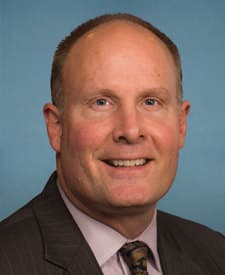
Introduced on Jun 3, 2026 by John R. Moolenaar (R-MI-2). 7 cosponsors, 3 of them from another party. Latest action (Sep 1, 2026): Forwarded by Subcommittee to Full Committee by Voice Vote.
- Stage
- Introduced
- Introduced
- Jun 3, 2026
- Cosponsors
- 7
- 3 from the other party
- Policy area
- Science, Technology, Communications
Progress
The furthest stage the measure reached. Simple and concurrent resolutions do not go to the President.
- Introduced
- 2Reported by committee
- 3Passed one chamber
- 4Passed both chambers
- 5Sent to the President
- 6Became law
Official title
To provide for certain humanoid and quadruped robotics communications equipment or services to be placed on the covered list of the Federal Communications Commission, and for other purposes.
Subjects
- Administrative law and regulatory procedures
- Advanced technology and technological innovations
- Advisory bodies
- Computers and information technology
- Federal Communications Commission (FCC)
- Government information and archives
- Telephone and wireless communication
Summary
By the Congressional Research Service (Introduced in House, Jun 3, 2026). Public domain.
Guarding the U.S. against Adversarial Robotics Dominance Act of 2026 or the GUARD Act of 2026
This bill requires robotics communications equipment and services associated with certain countries of concern to be reviewed for potential risk to U.S. national security. Equipment or services found to pose an unacceptable risk must be added to the Federal Communications Commission’s Covered List. Under current law, equipment and services on this list are subject to various restrictions, including a general prohibition on the import or sale of listed equipment in the United States.
Under the bill, covered robotics communications equipment or services means any humanoid or quadruped robot, or related software, that is (1) communications software or equipment, and (2) produced or provided by an entity located in or subject to the influence or control of China, Cuba, Iran, North Korea, Russia, or Syria (or an affiliate of such an entity).
Specifically, within one year of enactment, one of several specified national security agencies must review all covered robotics communications equipment or services and determine if they pose an unacceptable risk to U.S. national security or the safety of U.S. persons. Equipment or services determined to pose an unacceptable risk must be added to the Covered List within 30 days. Any determination that equipment or services do not pose an unacceptable risk must be reviewed by other national security agencies.
If an agency does not make a required determination within one year, all covered equipment and services must be added to the list.
Sponsor and cosponsors
Cosponsors by party as of the day they signed on. Original cosponsors signed on the day of introduction.
Democrats · 3
- Jennifer L. McClellanD-VA-4original
- Andrea SalinasD-OR-6signed on Jul 9, 2026
- Debbie DingellD-MI-6signed on Sep 8, 2026
Republicans · 4
- Jay ObernolteR-CA-23original
- Robert E. LattaR-OH-5signed on Jun 23, 2026
- Gus M. BilirakisR-FL-12signed on Jun 30, 2026
- Tim WalbergR-MI-5signed on Aug 3, 2026
Roll calls
Recorded votes on the measure. Most measures move by voice vote or unanimous consent, which record no individual positions.
No recorded roll call on this measure: it moved by voice vote or unanimous consent, or has not reached the floor.
History
Every action as published, oldest first. Roll calls link to how each member voted.
- Jun 3, 2026Introduced in House
- Jun 3, 2026Introduced in House
- Jun 3, 2026 · HouseReferred to the House Committee on Energy and Commerce.
- Jun 3, 2026 · HouseReferred to the Subcommittee on Communications and Technology.
- Sep 1, 2026 · HouseSubcommittee Consideration and Mark-up Session Held
- Sep 1, 2026 · HouseForwarded by Subcommittee to Full Committee by Voice Vote.
Committees
Committees and subcommittees the measure was referred to.
Agencies in its committees' jurisdiction
Analisa's mapping of committee jurisdiction to federal agencies; the bill may touch others, or none of these.
Who lobbied on it
Organizations whose lobbying reports (LD-2) name this measure. Spending is what they reported for those quarters on all issues, not on this measure alone.
- TERADYNE INC.3 reports$270K reported (all issues)Federal contractor: TERADYNE, INC.$31.2M in contracts, FY2026AI match · 100%
- APPTRONIK INC.1 report
- Agility Robotics, Inc.1 report
- Association For Uncrewed Vehicle Systems International1 report$150K reported (all issues)
- Boston Dynamics, Inc.1 report$270K reported (all issues)Federal contractor: BOSTON DYNAMICS, INC.$849.6K in contracts, FY2026AI match · 100%
- FDD Action1 report$240K reported (all issues)
Reports filed in 2026.
Sources and method
Every figure on this page traces to these records.
- Bill status: bills and resolutions, sponsors, actions, subjects and CRS summaries (U.S. Government Publishing Office (GovInfo), from Congress.gov (Library of Congress))GovInfo Bill Status bulk data (Congress.gov; summaries by the Congressional Research Service) · data current to Oct 7, 2026 · loaded Oct 7, 2026 · license: Public domain (U.S. Government work, 17 U.S.C. § 105)
- Members of Congress, their terms, committees and identifiers (The @unitedstates project (from the Biographical Directory of the U.S. Congress, the House and the Senate))unitedstates/congress-legislators: legislators, committees and current committee membership · data current to Oct 3, 2026 · loaded Oct 3, 2026 · license: CC0 1.0 (public domain dedication)
- House roll-call votes (Office of the Clerk, U.S. House of Representatives)Office of the Clerk, U.S. House of Representatives, roll-call vote records · data current to Oct 3, 2026 · loaded Oct 3, 2026 · license: Public domain (U.S. Government work, 17 U.S.C. § 105)
- Senate roll-call votes and DW-NOMINATE scores (Voteview (UCLA Department of Political Science))Lewis, Jeffrey B., Keith Poole, Howard Rosenthal, Adam Boche, Aaron Rudkin, and Luke Sonnet (2026). Voteview: Congressional Roll-Call Votes Database. https://voteview.com/ · data current to Oct 3, 2026 · loaded Oct 3, 2026 · license: Free to use with the required citation
- Lobbying disclosures (LD-1 registrations, LD-2 quarterly reports, LD-203 contribution reports) (Clerk of the U.S. House of Representatives)Clerk of the House, Lobbying Disclosure Act filings (organizations only; lobbyists' names are not loaded) · data current to Oct 7, 2026 · loaded Oct 7, 2026 · license: Public domain (U.S. Government work, 17 U.S.C. § 105)
- Positions are shown only where a roll call recorded them; voice votes and unanimous consent record none.
- Money and votes are shown side by side; neither explains the other.