H.R. 9333 · 119th Congress
AI Flaw Reporting and Security Enhancement Act
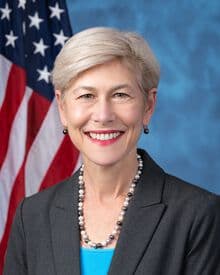
Introduced on Jun 18, 2026 by Deborah K. Ross (D-NC-2). 2 cosponsors, 1 of them from another party. Latest action (Jun 25, 2026): Ordered to be Reported in the Nature of a Substitute by the Yeas and Nays: 35 - 0.
- Stage
- Introduced
- Introduced
- Jun 18, 2026
- Cosponsors
- 2
- 1 from the other party
- Policy area
- Science, Technology, Communications
Progress
The furthest stage the measure reached. Simple and concurrent resolutions do not go to the President.
- Introduced
- 2Reported by committee
- 3Passed one chamber
- 4Passed both chambers
- 5Sent to the President
- 6Became law
Official title
To direct the Director of the National Institute of Standards and Technology to develop a program for the voluntary reporting of artificial intelligence flaws and the acceleration of detection and monitoring of such flaws, and for other purposes.
Subjects
- Computer security and identity theft
- Computers and information technology
- Consumer affairs
- Data collection, sharing, protection
- Performance measurement
- Product safety and quality
- Technology assessment
Summary
By the Congressional Research Service (Introduced in House, Jun 18, 2026). Public domain.
AI Flaw Reporting and Security Enhancement Act
This bill establishes a program to facilitate the voluntary reporting and tracking of artificial intelligence (AI) flaws, to be administered by the National Institute of Standards and Technology (NIST).
In carrying out this program, NIST must seek to convene various stakeholders to establish common definitions for terms related to AI flaws and criteria for the classification of AI flaws (e.g., security-related flaws and safety-related flaws). The group must also support the development of technical standards and guidance related to detecting, managing, and disclosing AI flaws and prioritizing the remediation of such flaws.
Further, NIST must develop, or enter into cooperative agreements with institutions of higher education or research institutions to develop, infrastructure for the voluntary reporting, collection, and tracking of AI flaws. This must include a national database of AI flaws or the modification of an existing national database to account for AI flaws. (NIST currently administers a national database of cybersecurity vulnerabilities.) NIST must consider certain topics when developing this infrastructure, including the interoperability of the infrastructure with relevant existing systems, standards, and best practices.
Within three years of the bill’s enactment, NIST must report to Congress on the implementation of these provisions.
Under the bill, an AI flaw is a set of conditions or behaviors that allow for the violation of certain policies (e.g., safety or security policies) and is not necessarily associated with malicious intent.
Sponsor and cosponsors
Cosponsors by party as of the day they signed on. Original cosponsors signed on the day of introduction.
Democrats · 1
- Donald S. Beyer, Jr.D-VA-8original
Republicans · 1
- Jeff HurdR-CO-3original
Roll calls
Recorded votes on the measure. Most measures move by voice vote or unanimous consent, which record no individual positions.
No recorded roll call on this measure: it moved by voice vote or unanimous consent, or has not reached the floor.
History
Every action as published, oldest first. Roll calls link to how each member voted.
- Jun 18, 2026Introduced in House
- Jun 18, 2026Introduced in House
- Jun 18, 2026 · HouseReferred to the House Committee on Science, Space, and Technology.
- Jun 25, 2026 · HouseCommittee Consideration and Mark-up Session Held
- Jun 25, 2026 · HouseOrdered to be Reported in the Nature of a Substitute by the Yeas and Nays: 35 - 0.
Committees
Committees and subcommittees the measure was referred to.
Agencies in its committees' jurisdiction
Analisa's mapping of committee jurisdiction to federal agencies; the bill may touch others, or none of these.
Sources and method
Every figure on this page traces to these records.
- Bill status: bills and resolutions, sponsors, actions, subjects and CRS summaries (U.S. Government Publishing Office (GovInfo), from Congress.gov (Library of Congress))GovInfo Bill Status bulk data (Congress.gov; summaries by the Congressional Research Service) · data current to Oct 10, 2026 · loaded Oct 10, 2026 · license: Public domain (U.S. Government work, 17 U.S.C. § 105)
- Members of Congress, their terms, committees and identifiers (The @unitedstates project (from the Biographical Directory of the U.S. Congress, the House and the Senate))unitedstates/congress-legislators: legislators, committees and current committee membership · data current to Oct 3, 2026 · loaded Oct 3, 2026 · license: CC0 1.0 (public domain dedication)
- House roll-call votes (Office of the Clerk, U.S. House of Representatives)Office of the Clerk, U.S. House of Representatives, roll-call vote records · data current to Oct 3, 2026 · loaded Oct 3, 2026 · license: Public domain (U.S. Government work, 17 U.S.C. § 105)
- Senate roll-call votes and DW-NOMINATE scores (Voteview (UCLA Department of Political Science))Lewis, Jeffrey B., Keith Poole, Howard Rosenthal, Adam Boche, Aaron Rudkin, and Luke Sonnet (2026). Voteview: Congressional Roll-Call Votes Database. https://voteview.com/ · data current to Oct 3, 2026 · loaded Oct 3, 2026 · license: Free to use with the required citation
- Lobbying disclosures (LD-1 registrations, LD-2 quarterly reports, LD-203 contribution reports) (Clerk of the U.S. House of Representatives)Clerk of the House, Lobbying Disclosure Act filings (organizations only; lobbyists' names are not loaded) · data current to Oct 10, 2026 · loaded Oct 10, 2026 · license: Public domain (U.S. Government work, 17 U.S.C. § 105)
- Positions are shown only where a roll call recorded them; voice votes and unanimous consent record none.