H.R. 9363 · 119th Congress
AI Security and Innovation Act
Introduced on Jun 18, 2026 by Jay Obernolte (R-CA-23). 7 cosponsors, 2 of them from another party. Latest action (Jun 25, 2026): Ordered to be Reported in the Nature of a Substitute (Amended) by the Yeas and Nays: 29 - 0.
- Stage
- Introduced
- Introduced
- Jun 18, 2026
- Cosponsors
- 7
- 2 from the other party
- Policy area
- Science, Technology, Communications
Progress
The furthest stage the measure reached. Simple and concurrent resolutions do not go to the President.
- Introduced
- 2Reported by committee
- 3Passed one chamber
- 4Passed both chambers
- 5Sent to the President
- 6Became law
Official title
To amend the National Artificial Intelligence Initiative Act of 2020 to establish a center on artificial intelligence to ensure continued United States leadership in research, development, and evaluation of artificial intelligence systems, and for other purposes.
Subjects
- Advanced technology and technological innovations
- Computer security and identity theft
- Computers and information technology
- Data collection, sharing, protection
- Employment and training programs
- Research and development
Summary
By the Congressional Research Service (Introduced in House, Jun 18, 2026). Public domain.
AI Security and Innovation Act
This bill establishes a Center for Artificial Intelligence (AI) Security and Innovation within the National Institute of Standards and Technology (NIST) to evaluate and address AI-related security risks. The bill provides statutory authority for many of the functions of NIST’s existing Center for Advancing Innovation and Standards for Super Intelligence.
Under the bill, the center must establish criteria to identify AI systems for evaluation. The center must enter into voluntary agreements with appropriate entities to evaluate these systems for potential risks to national or economic security. The center must assess systems developed in the United States and in certain foreign adversary nations (i.e., China, Iran, North Korea, and Russia).
The center must carry out a program for benchmarking AI capabilities and limitations over time. (A June 2026 executive order directs other federal agencies, in consultation with NIST, to develop a similar, classified benchmarking process to designate AI models that are eligible for voluntary security evaluations.)
The center must also support NIST efforts to develop voluntary standards and best practices for measuring and improving AI security generally and for evaluating applicable systems. Further, the center must be included in any interagency process convened by the Executive Office of the President related to AI policy.
The bill’s requirements sunset five years after enactment.
Sponsor and cosponsors
Cosponsors by party as of the day they signed on. Original cosponsors signed on the day of introduction.
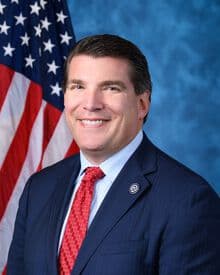
Democrats · 2
- Valerie P. FousheeD-NC-4original
- Lori TrahanD-MA-3signed on Jun 22, 2026
Republicans · 5
- Brian BabinR-TX-36original
- Scott FranklinR-FL-18original
- Tracey MannR-KS-1original
- Erin HouchinR-IN-9signed on Jun 22, 2026
- Eric A. "Rick" CrawfordR-AR-1signed on Jul 14, 2026
Roll calls
Recorded votes on the measure. Most measures move by voice vote or unanimous consent, which record no individual positions.
No recorded roll call on this measure: it moved by voice vote or unanimous consent, or has not reached the floor.
History
Every action as published, oldest first. Roll calls link to how each member voted.
- Jun 18, 2026Introduced in House
- Jun 18, 2026Introduced in House
- Jun 18, 2026 · HouseReferred to the House Committee on Science, Space, and Technology.
- Jun 25, 2026 · HouseCommittee Consideration and Mark-up Session Held
- Jun 25, 2026 · HouseOrdered to be Reported in the Nature of a Substitute (Amended) by the Yeas and Nays: 29 - 0.
Committees
Committees and subcommittees the measure was referred to.
Agencies in its committees' jurisdiction
Analisa's mapping of committee jurisdiction to federal agencies; the bill may touch others, or none of these.
Who lobbied on it
Organizations whose lobbying reports (LD-2) name this measure. Spending is what they reported for those quarters on all issues, not on this measure alone.
- DELL TECHNOLOGIES, INC.2 reports
- NATIONAL ASSOCIATION OF MUTUAL INSURANCE COMPANIES2 reports$1.1M reported (all issues)
- AFL-CIO1 report$760K reported (all issues)Federal contractor: AFL-CIO WORKING FOR AMERICA INSTITUTE, INC. (THE)AI match · 92%
- FEDEX CORPORATION1 report$2.9M reported (all issues)Federal contractor: FEDEX SUPPLY CHAIN DISTRIBUTION SYSTEM, INC.$408.9M in contracts, FY2026AI match · 100%
Reports filed in 2026.
Sources and method
Every figure on this page traces to these records.
- Bill status: bills and resolutions, sponsors, actions, subjects and CRS summaries (U.S. Government Publishing Office (GovInfo), from Congress.gov (Library of Congress))GovInfo Bill Status bulk data (Congress.gov; summaries by the Congressional Research Service) · data current to Nov 26, 2026 · loaded Nov 26, 2026 · license: Public domain (U.S. Government work, 17 U.S.C. § 105)
- Members of Congress, their terms, committees and identifiers (The @unitedstates project (from the Biographical Directory of the U.S. Congress, the House and the Senate))unitedstates/congress-legislators: legislators, committees and current committee membership · data current to Sep 24, 2026 · loaded Oct 13, 2026 · license: CC0 1.0 (public domain dedication)
- House roll-call votes (Office of the Clerk, U.S. House of Representatives)Office of the Clerk, U.S. House of Representatives, roll-call vote records · data current to Nov 19, 2026 · loaded Nov 20, 2026 · license: Public domain (U.S. Government work, 17 U.S.C. § 105)
- Senate roll-call votes and DW-NOMINATE scores (Voteview (UCLA Department of Political Science))Lewis, Jeffrey B., Keith Poole, Howard Rosenthal, Adam Boche, Aaron Rudkin, and Luke Sonnet (2026). Voteview: Congressional Roll-Call Votes Database. https://voteview.com/ · data current to Nov 20, 2026 · loaded Nov 21, 2026 · license: Free to use with the required citation
- Lobbying disclosures (LD-1 registrations, LD-2 quarterly reports, LD-203 contribution reports) (Clerk of the U.S. House of Representatives)Clerk of the House, Lobbying Disclosure Act filings (organizations only; lobbyists' names are not loaded) · data current to Nov 28, 2026 · loaded Nov 28, 2026 · license: Public domain (U.S. Government work, 17 U.S.C. § 105)
- Positions are shown only where a roll call recorded them; voice votes and unanimous consent record none.
- Money and votes are shown side by side; neither explains the other.