H.R. 9611 · 119th Congress
Less Bureaucracy, Better Higher Education Act
Introduced on Jul 9, 2026 by Mark Harris (R-NC-8). One cosponsor. Latest action (Jul 15, 2026): Ordered to be Reported (Amended) by the Yeas and Nays: 20 - 16.
- Stage
- Introduced
- Introduced
- Jul 9, 2026
- Cosponsors
- 1
- 0 from the other party
- Policy area
- Education
Progress
The furthest stage the measure reached. Simple and concurrent resolutions do not go to the President.
- Introduced
- 2Reported by committee
- 3Passed one chamber
- 4Passed both chambers
- 5Sent to the President
- 6Became law
Official title
To ensure the Department of Labor will manage certain postsecondary education programs, and for other purposes.
Subjects
- Department of Education
- Department of Labor
- Disability assistance
- Executive agency funding and structure
- Higher education
- Minority education
- Science and engineering education
- Student aid and college costs
Summary
By the Congressional Research Service (Introduced in House, Jul 9, 2026). Public domain.
Less Bureaucracy, Better Higher Education Act
This bill transfers specified functions relating to postsecondary education programs from the Department of Education (ED) to the Department of Labor's Employment and Training Administration (ETA).
Specifically, the bill transfers to the ETA all the functions and authorities exercised by ED before the bill's effective date related to postsecondary education programs. These programs include, among others, TRIO programs and the Fund for the Improvement of Postsecondary Education. (On November 18, 2025, ED announced an interagency agreement with Labor for Labor to manage grant funds, provide technical assistance, and integrate ED's programs with Labor's existing programs, while ED must maintain its statutory responsibilities and program oversight.)
The bill also repeals the Leveraging Educational Assistance Partnership Program, the Robert C. Byrd Honors Scholarship Program, the College Access Challenge Grant Program, and the Project GRAD program.
Additionally, the bill transfers to the ETA all personnel and appropriations related to the functions that are transferred under this bill.
The bill outlines the authority of the Office of Management and Budget (OMB) related to the functions that are transferred under this bill, including that OMB must ensure that this bill does not create a net increase in full-time equivalent employees at the ETA or ED. Further, OMB must certify compliance with the bill to specified congressional committees.
The transfer of these functions does not affect any suits, proceedings, or applications for benefits, services, licenses, permits, certificates, or financial assistance that are pending on the date of this bill's enactment.
Sponsor and cosponsors
Cosponsors by party as of the day they signed on. Original cosponsors signed on the day of introduction.
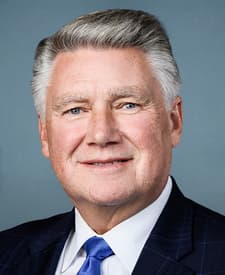
Republicans · 1
- Michael A. RulliR-OH-6signed on Aug 13, 2026
Roll calls
Recorded votes on the measure. Most measures move by voice vote or unanimous consent, which record no individual positions.
No recorded roll call on this measure: it moved by voice vote or unanimous consent, or has not reached the floor.
History
Every action as published, oldest first. Roll calls link to how each member voted.
- Jul 9, 2026Introduced in House
- Jul 9, 2026Introduced in House
- Jul 9, 2026 · HouseReferred to the House Committee on Education and Workforce.
- Jul 15, 2026 · HouseCommittee Consideration and Mark-up Session Held
- Jul 15, 2026 · HouseOrdered to be Reported (Amended) by the Yeas and Nays: 20 - 16.
Committees
Committees and subcommittees the measure was referred to.
Agencies in its committees' jurisdiction
Analisa's mapping of committee jurisdiction to federal agencies; the bill may touch others, or none of these.
Sources and method
Every figure on this page traces to these records.
- Bill status: bills and resolutions, sponsors, actions, subjects and CRS summaries (U.S. Government Publishing Office (GovInfo), from Congress.gov (Library of Congress))GovInfo Bill Status bulk data (Congress.gov; summaries by the Congressional Research Service) · data current to Oct 7, 2026 · loaded Oct 7, 2026 · license: Public domain (U.S. Government work, 17 U.S.C. § 105)
- Members of Congress, their terms, committees and identifiers (The @unitedstates project (from the Biographical Directory of the U.S. Congress, the House and the Senate))unitedstates/congress-legislators: legislators, committees and current committee membership · data current to Oct 3, 2026 · loaded Oct 3, 2026 · license: CC0 1.0 (public domain dedication)
- House roll-call votes (Office of the Clerk, U.S. House of Representatives)Office of the Clerk, U.S. House of Representatives, roll-call vote records · data current to Oct 3, 2026 · loaded Oct 3, 2026 · license: Public domain (U.S. Government work, 17 U.S.C. § 105)
- Senate roll-call votes and DW-NOMINATE scores (Voteview (UCLA Department of Political Science))Lewis, Jeffrey B., Keith Poole, Howard Rosenthal, Adam Boche, Aaron Rudkin, and Luke Sonnet (2026). Voteview: Congressional Roll-Call Votes Database. https://voteview.com/ · data current to Oct 3, 2026 · loaded Oct 3, 2026 · license: Free to use with the required citation
- Lobbying disclosures (LD-1 registrations, LD-2 quarterly reports, LD-203 contribution reports) (Clerk of the U.S. House of Representatives)Clerk of the House, Lobbying Disclosure Act filings (organizations only; lobbyists' names are not loaded) · data current to Oct 7, 2026 · loaded Oct 7, 2026 · license: Public domain (U.S. Government work, 17 U.S.C. § 105)
- Positions are shown only where a roll call recorded them; voice votes and unanimous consent record none.