H.R. 9643 · 119th Congress
Comment Integrity and Management Act
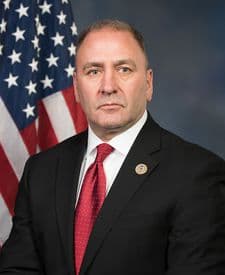
Introduced on Jul 13, 2026 by Clay Higgins (R-LA-3). Latest action (Jul 22, 2026): Ordered to be Reported (Amended) by the Yeas and Nays: 24 - 19.
- Stage
- Introduced
- Introduced
- Jul 13, 2026
- Cosponsors
- 0
- Policy area
- Government Operations and Politics
Progress
The furthest stage the measure reached. Simple and concurrent resolutions do not go to the President.
- Introduced
- 2Reported by committee
- 3Passed one chamber
- 4Passed both chambers
- 5Sent to the President
- 6Became law
Official title
To amend section 206 of the E-Government Act of 2002 to improve the integrity and management of mass comments and computer-generated comments in the regulatory review process, and for other purposes.
Subjects
- Administrative law and regulatory procedures
- Computers and information technology
- Congressional oversight
- Government information and archives
- Government studies and investigations
- Internet, web applications, social media
- Public participation and lobbying
Summary
By the Congressional Research Service (Introduced in House, Jul 13, 2026). Public domain.
Comment Integrity and Management Act
This bill establishes requirements with respect to the submission of mass comments and computer-generated comments in the federal rulemaking process.
Specifically, the bill requires federal agencies to verify, to the greatest extent possible at the time a public comment is submitted, whether the comment has been submitted by a human being.
An agency also must determine whether comments are mass comments and may publish on the docket only a single representative copy of such comments or a single copy of one variation of mass comments that use standardized but not identical language. If the agency publishes only a single copy of a mass comment, the agency also must indicate the number of mass comments submitted that were identical or substantively identical to the representative copy or variation that the agency published.
Additionally, each agency must establish a policy with respect to the posting and consideration of computer-generated comments and mass-comments during the agency's rulemaking process.
The Office of Management and Budget must issue guidance for implementing the requirements of the bill, and the Government Accountability Office must report on the identification and effect of computer-generated comments in the rulemaking process. Additionally, the General Services Administration must update regulations.gov and the eRulemaking system as necessary to ensure compliance with the requirements the bill.
Sponsor and cosponsors
Cosponsors by party as of the day they signed on. Original cosponsors signed on the day of introduction.
No cosponsors.
Roll calls
Recorded votes on the measure. Most measures move by voice vote or unanimous consent, which record no individual positions.
No recorded roll call on this measure: it moved by voice vote or unanimous consent, or has not reached the floor.
History
Every action as published, oldest first. Roll calls link to how each member voted.
- Jul 13, 2026Introduced in House
- Jul 13, 2026Introduced in House
- Jul 13, 2026 · HouseReferred to the House Committee on Oversight and Government Reform.
- Jul 22, 2026 · HouseCommittee Consideration and Mark-up Session Held
- Jul 22, 2026 · HouseOrdered to be Reported (Amended) by the Yeas and Nays: 24 - 19.
Committees
Committees and subcommittees the measure was referred to.
Agencies in its committees' jurisdiction
Analisa's mapping of committee jurisdiction to federal agencies; the bill may touch others, or none of these.
Sources and method
Every figure on this page traces to these records.
- Bill status: bills and resolutions, sponsors, actions, subjects and CRS summaries (U.S. Government Publishing Office (GovInfo), from Congress.gov (Library of Congress))GovInfo Bill Status bulk data (Congress.gov; summaries by the Congressional Research Service) · data current to Oct 7, 2026 · loaded Oct 7, 2026 · license: Public domain (U.S. Government work, 17 U.S.C. § 105)
- Members of Congress, their terms, committees and identifiers (The @unitedstates project (from the Biographical Directory of the U.S. Congress, the House and the Senate))unitedstates/congress-legislators: legislators, committees and current committee membership · data current to Oct 3, 2026 · loaded Oct 3, 2026 · license: CC0 1.0 (public domain dedication)
- House roll-call votes (Office of the Clerk, U.S. House of Representatives)Office of the Clerk, U.S. House of Representatives, roll-call vote records · data current to Oct 3, 2026 · loaded Oct 3, 2026 · license: Public domain (U.S. Government work, 17 U.S.C. § 105)
- Senate roll-call votes and DW-NOMINATE scores (Voteview (UCLA Department of Political Science))Lewis, Jeffrey B., Keith Poole, Howard Rosenthal, Adam Boche, Aaron Rudkin, and Luke Sonnet (2026). Voteview: Congressional Roll-Call Votes Database. https://voteview.com/ · data current to Oct 3, 2026 · loaded Oct 3, 2026 · license: Free to use with the required citation
- Lobbying disclosures (LD-1 registrations, LD-2 quarterly reports, LD-203 contribution reports) (Clerk of the U.S. House of Representatives)Clerk of the House, Lobbying Disclosure Act filings (organizations only; lobbyists' names are not loaded) · data current to Oct 7, 2026 · loaded Oct 7, 2026 · license: Public domain (U.S. Government work, 17 U.S.C. § 105)
- Positions are shown only where a roll call recorded them; voice votes and unanimous consent record none.