S. 1283 · 119th Congress
Innovate to De-Escalate Modernization Act
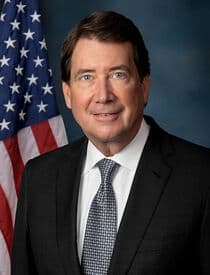
Introduced on Apr 3, 2025 by Bill Hagerty (R-TN). 13 cosponsors, 1 of them from another party. Latest action (Apr 3, 2025): Read twice and referred to the Committee on the Judiciary.
- Stage
- Introduced
- Introduced
- Apr 3, 2025
- Cosponsors
- 13
- 1 from the other party
- Policy area
- Crime and Law Enforcement
Progress
The furthest stage the measure reached. Simple and concurrent resolutions do not go to the President.
- Introduced
- 2Reported by committee
- 3Passed one chamber
- 4Passed both chambers
- 5Sent to the President
- 6Became law
Official title
A bill to modernize Federal firearms laws to account for advancements in technology and less-than-lethal weapons, and for other purposes.
Subjects
- Criminal procedure and sentencing
- Firearms and explosives
Summary
By the Congressional Research Service (Introduced in Senate, Apr 3, 2025). Public domain.
Innovate to De-Escalate Modernization Act
This bill removes less-than-lethal projectile devices (e.g., certain TASERs) from regulation under the Gun Control Act.
The term less-than-lethal projectile device means a device that (1) is not designed or intended to expel (and may not be readily converted to discharge) commonly used ammunition or projectiles exceeding a velocity of 500 feet per second; (2) is designed and intended to be used in a manner not likely to cause death or serious bodily injury; and (3) does not accept (and cannot be readily modified to accept) an ammunition feeding device.
The bill also requires the Bureau of Alcohol, Tobacco, Firearms and Explosives to determine whether a device satisfies the definition of a less-than-lethal projectile device within 90 days of a request.
Sponsor and cosponsors
Cosponsors by party as of the day they signed on. Original cosponsors signed on the day of introduction.
Democrats · 1
- Ruben GallegoD-AZoriginal
Republicans · 12
- Kevin CramerR-NDsigned on Jun 24, 2025
- Cynthia M. LummisR-WYsigned on Jun 24, 2025
- Mike LeeR-UTsigned on Oct 16, 2025
- Ashley MoodyR-FLsigned on Dec 8, 2025
- James C. JusticeR-WVsigned on Feb 4, 2026
- Thom TillisR-NCsigned on Mar 17, 2026
- Shelley Moore CapitoR-WVsigned on Mar 24, 2026
- Tom CottonR-ARsigned on Mar 25, 2026
- Eric SchmittR-MOsigned on Apr 16, 2026
- Tommy TubervilleR-ALsigned on Apr 21, 2026
- Mike CrapoR-IDsigned on Apr 22, 2026
- Marsha BlackburnR-TNsigned on Jun 23, 2026
Roll calls
Recorded votes on the measure. Most measures move by voice vote or unanimous consent, which record no individual positions.
No recorded roll call on this measure: it moved by voice vote or unanimous consent, or has not reached the floor.
History
Every action as published, oldest first. Roll calls link to how each member voted.
- Apr 3, 2025Introduced in Senate
- Apr 3, 2025 · SenateRead twice and referred to the Committee on the Judiciary.
Committees
Committees and subcommittees the measure was referred to.
Agencies in its committees' jurisdiction
Analisa's mapping of committee jurisdiction to federal agencies; the bill may touch others, or none of these.
Who lobbied on it
Organizations whose lobbying reports (LD-2) name this measure. Spending is what they reported for those quarters on all issues, not on this measure alone.
- AXON ENTERPRISE INC19 reports$3.2M reported (all issues)Federal contractor: AXON ENTERPRISE, INC.$127M in contracts, FY2026AI match · 100%
- Axon Enterprises6 reports$260K reported (all issues)Federal contractor: AXON ENTERPRISE, INC.$127M in contracts, FY2026AI match · 99%
- Giffords5 reports$370K reported (all issues)
- National Fraternal Order of Police5 reports$500K reported (all issues)
- Brady Campaign to Prevent Gun Violence4 reports$160K reported (all issues)
- GUN OWNERS OF AMERICA, INC.4 reports$2.3M reported (all issues)
- Peace Officers Research Association of California2 reports$100K reported (all issues)
- SANDY HOOK PROMISE ACTION FUND2 reports$240K reported (all issues)
- Byrna Technologies Inc.1 report$13K reported (all issues)
- EVERYTOWN FOR GUN SAFETY ACTION FUND, INC.1 report$270K reported (all issues)
Reports filed in 2025, 2026.
Sources and method
Every figure on this page traces to these records.
- Bill status: bills and resolutions, sponsors, actions, subjects and CRS summaries (U.S. Government Publishing Office (GovInfo), from Congress.gov (Library of Congress))GovInfo Bill Status bulk data (Congress.gov; summaries by the Congressional Research Service) · data current to Oct 7, 2026 · loaded Oct 7, 2026 · license: Public domain (U.S. Government work, 17 U.S.C. § 105)
- Members of Congress, their terms, committees and identifiers (The @unitedstates project (from the Biographical Directory of the U.S. Congress, the House and the Senate))unitedstates/congress-legislators: legislators, committees and current committee membership · data current to Oct 3, 2026 · loaded Oct 3, 2026 · license: CC0 1.0 (public domain dedication)
- House roll-call votes (Office of the Clerk, U.S. House of Representatives)Office of the Clerk, U.S. House of Representatives, roll-call vote records · data current to Oct 3, 2026 · loaded Oct 3, 2026 · license: Public domain (U.S. Government work, 17 U.S.C. § 105)
- Senate roll-call votes and DW-NOMINATE scores (Voteview (UCLA Department of Political Science))Lewis, Jeffrey B., Keith Poole, Howard Rosenthal, Adam Boche, Aaron Rudkin, and Luke Sonnet (2026). Voteview: Congressional Roll-Call Votes Database. https://voteview.com/ · data current to Oct 3, 2026 · loaded Oct 3, 2026 · license: Free to use with the required citation
- Lobbying disclosures (LD-1 registrations, LD-2 quarterly reports, LD-203 contribution reports) (Clerk of the U.S. House of Representatives)Clerk of the House, Lobbying Disclosure Act filings (organizations only; lobbyists' names are not loaded) · data current to Oct 7, 2026 · loaded Oct 7, 2026 · license: Public domain (U.S. Government work, 17 U.S.C. § 105)
- Positions are shown only where a roll call recorded them; voice votes and unanimous consent record none.
- Money and votes are shown side by side; neither explains the other.