S. 1582 · 119th Congress
GENIUS Act
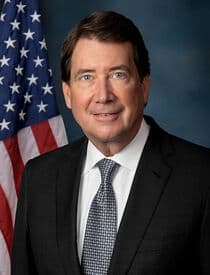
Introduced on May 1, 2025 by Bill Hagerty (R-TN). 5 cosponsors, all from the sponsor's party. Became Public Law 119-27.
- Stage
- Became law
- Public Law 119-27
- Introduced
- May 1, 2025
- Cosponsors
- 5
- 0 from the other party
- Policy area
- Finance and Financial Sector
Progress
The furthest stage the measure reached. Simple and concurrent resolutions do not go to the President.
- Introduced
- Reported by committee
- Passed one chamber
- Passed both chambers
- Sent to the President
- Became law
Official title
A bill to provide for the regulation of payment stablecoins, and for other purposes.
Subjects
- Accounting and auditing
- Administrative law and regulatory procedures
- Bank accounts, deposits, capital
- Banking and financial institutions regulation
- Bankruptcy
- Business records
- Civil actions and liability
- Congressional oversight
- Currency
- Department of the Treasury
- Digital media
- Financial crises and stabilization
- Financial services and investments
- Fraud offenses and financial crimes
- Government studies and investigations
- Interest, dividends, interest rates
- International monetary system and foreign exchange
- Judicial procedure and administration
- Judicial review and appeals
- Licensing and registrations
- Securities
- State and local government operations
Summary
By the Congressional Research Service (Public Law, Jul 18, 2025). Public domain.
Guiding and Establishing National Innovation for U.S. Stablecoins Act or the GENIUS Act
This act establishes a regulatory framework for payment stablecoins (digital assets which an issuer must redeem for a fixed value).
Under the act, only permitted issuers may issue a payment stablecoin for use by U.S. persons, subject to certain exceptions and safe harbors. Permitted issuers must be a subsidiary of an insured depository institution, a federal-qualified nonbank payment stablecoin issuer, or a state-qualified payment stablecoin issuer. Permitted issuers must be regulated by the appropriate federal or state regulator. Permitted issuers may choose federal or state regulation; however, state regulation is limited to those with a stablecoin issuance of $10 billion or less.
Permitted issuers must maintain reserves backing the stablecoin on a one-to-one basis using U.S. currency or other similarly liquid assets, as specified. Permitted issuers must also publicly disclose their redemption policy and publish monthly the details of their reserves.
The act specifies requirements for (1) reusing reserves; (2) providing safekeeping services for stablecoins; and (3) supervisory, examination, and enforcement authority over federal-qualified issuers.
The act allows foreign issuers of stablecoins to offer, sell, or make available in the United States stablecoins using digital asset service providers, subject to requirements, including a determination by the Department of Treasury that they are subject to comparable foreign regulations.
Read the full summary
Under the act, permitted payment stablecoins are not considered securities or commodities under law. However, permitted issuers are subject to the Bank Secrecy Act for anti-money laundering and related purposes.
(Sec. 3) This section establishes that only payment stablecoin issuers permitted under this act are allowed to issue a payment stablecoin in the United States. Knowing violations of this requirement shall be subject to a fine of up to $1 million for each violation, up to 5 years imprisonment, or both. Treasury may issue regulations establishing limited safe harbors from this requirement that are consistent with the act's purposes, limited in scope, and apply to a de minimus volume of transactions.
Three years after the date of enactment, digital asset service providers are prohibited from offering or selling stablecoins that are not issued by permitted issuers. Providers are also prohibited from offering, selling, or otherwise making available in the United States a foreign-issued payment stablecoin, unless it complies with requirements provided in section 18 of the act.
(Sec. 4) This section establishes requirements for permitted issuers. Issuers must maintain reserves on a one-to-one basis. Reserves must be comprised of
- U.S. coins and currency;
- demand deposits or shares at an insured depository institution;
- certain Treasury acts, notes, or bonds;
- money received under certain repurchase agreements or reverse repurchase agreements;
- certain investment company securities and money market funds invested in certain approved assets on this list;
- similarly liquid federal assets approved by regulators; or
- certain listed reserves in tokenized forms.
Issuers must comply with redemption requirements, such as establishing timely redemption procedures and disclosing such procedures and associated fees. Issuers must also report on the monthly composition of the issuer's reserves. These reports must be examined by a registered public accounting firm and certified by the chief executive officer and chief financial officer of the issuer.
The section prohibits the rehypothecation, or reuse, of reserves with limited exceptions.
Primary federal payment stablecoin regulators (federal regulators) and state payment stablecoin regulators (state regulators), where applicable, must issue regulations to implement capital requirements, liquidity reserve standards, reserve asset diversification standards, and risk management standards.
Issuers are subject to the anti-money laundering and counterterrorism requirements that are applicable to financial institutions.
The section sets forth requirements regarding activities of a permitted issuer, including by prohibiting issuers from providing services on the condition that a customer obtains an additional paid product or service from the issuer or a subsidiary.
Large issuers (those with more than $50 billion in consolidated total outstanding issuance) must publish an audited annual financial statement in accordance with generally accepted accounting principles.
The section prohibits a public nonfinancial services company from issuing payment stablecoins unless the company obtains unanimous approval from the Stablecoin Certification Review Committee.
A state qualified payment stablecoin issuer with a consolidated total outstanding issuance of not more than $10 billion may opt for state regulation if such regulation is substantially similar to the federal regulatory framework under this act. If the issuance exceeds that amount, the issuer must transition to federal regulation, receive a waiver from the federal regulator to remain under state regulation, or stop issuing stablecoins until the issuance is under the threshold.
(Sec. 5) This section establishes requirements for stablecoins issued by subsidiaries of insured depository institutions and certain entities chartered by the Office of the Comptroller of the Currency (OCC) to issue payment stablecoins. Federal regulators must establish an application process and a supervision framework for such entities.
The section sets forth requirements for the review of applications, explanations for denials, and an appeals process.
(Sec. 6) This section sets forth supervision, examination, and enforcement requirements for payment stablecoin issuers under federal supervision. The provisions include reporting on financial conditions, risk management, compliance with the act, and compliance with sanctions and anti-money laundering requirements. The section specifies that payment stablecoin issuers with less than $10 billion in consolidated total outstanding issuance are subject to federal supervision if they are not state qualified payment stablecoin issuers.
The section establishes civil penalties for violations of this act that are committed by those subject to federal supervision.
(Sec. 7) This section establishes state regulatory authority over issuers that qualify for and elect state regulation. The Federal Reserve Board may exercise enforcement authority over state issuers in unusual and exigent circumstances. The OCC must exercise enforcement authority over nonbank state issuers in these circumstances.
(Sec. 8) This section requires foreign issuers to comply with the terms of lawful orders to be allowed to offer, sell, or make available for trading a payment stablecoin in the United States. The section sets forth enforcement and appeal provisions. Treasury may waive the prohibition against the secondary trading of foreign payment stablecoins in the United States from noncompliant foreign issuers on a case-by-case basis if certain criteria are met.
(Sec. 9) Treasury must seek public comment regarding methods, techniques, or strategies for financial institutions to detect illicit activities involving digital assets and perform research and risk assessments on such methods, techniques, or strategies. Treasury must report their legislative recommendations to Congress and the Financial Crimes Enforcement Network must issue rules based on the results.
(Sec. 10) This section establishes requirements for custodial or safekeeping services for payment stablecoin reserves, collateral, and the private keys used to issue stablecoins. Among other requirements, such property must be separately accounted for and not comingled with other assets of the custodian.
(Sec. 11) This section addresses the treatment of payment stablecoins and stablecoin issuers in bankruptcy and insolvency proceedings, including their claim priority, conditions for an automatic stay, and the treatment of reserves as property of the estate.
Federal regulators must also report on topics regarding potential insolvency proceedings of issuers.
(Sec. 12) Federal regulators may, if determined necessary after an assessment, prescribe technical standards for issuers to promote compatibility and interoperability with other issuers and the broader digital finance system.
(Sec. 13) This section requires regulators to issue regulations to carry out the act, with federal and state regulators and Treasury coordinating as appropriate.
(Sec. 14) This section requires Treasury to study and report on nonpayment stablecoins, including endogenously collateralized payment stablecoins (a digital asset the originator of which has represented will be converted, redeemed, or repurchased for a fixed amount of monetary value and that relies solely on the value of another digital asset created or maintained by the same originator to maintain the fixed price).
(Sec. 15) This section requires federal regulators to annually report on payment stablecoin activity trends, the number of payment stablecoin issuer applicants, and the potential financial stability risks to the safety and soundness of the broader financial system posed by payment stablecoin activities.
(Sec. 16) This section defines authorities related to the act, such as by providing that the act does not limit the authority of a depository institution, credit union, national bank, or trust company to issue digital assets to represent deposits or shares.
Federal financial regulators may not require a financial institution to include certain digital assets held in its custody as a liability on financial statements or balance sheets.
(Sec. 17) This section establishes that payment stablecoins issued by permitted issuers are not securities or commodities under federal law.
(Sec. 18) This section provides an exception to the act's prohibition on foreign-issued payment stablecoins. For the exception to apply, foreign issuers must be subject to regulation and supervision by a foreign country that is comparable to the requirements under this act, as determined by Treasury. The foreign issuer must also be registered with the OCC, hold sufficient reserves in a U.S. financial institution (subject to exceptions), and the country where the issuer is domiciled must not be subject to U.S. sanctions.
The section sets forth requirements for Treasury's determination as to whether a foreign country has comparable regulatory and supervisory requirements, including the process of requesting a determination, the deadline for Treasury to render a decision, and the process by which Treasury may rescind a previous determination.
The section also sets forth OCC registration requirements.
Treasury may implement reciprocal or bilateral agreements between the United States and jurisdictions with comparable regulatory requirements.
(Sec. 19) This section requires certain federal employees to disclose holdings over $5,000 of permitted payment stablecoins as part of required financial disclosures.
(Sec. 20) The act takes effect on the earlier of (1) 18 months after the date of enactment, or (2) 120 days after federal regulators issue final regulations implementing the act.
Sponsor and cosponsors
Cosponsors by party as of the day they signed on. Original cosponsors signed on the day of introduction.
Republicans · 5
- Cynthia M. LummisR-WYoriginal
- Tim ScottR-SCoriginal
- Dan SullivanR-AKsigned on May 7, 2025
- Bernie MorenoR-OHsigned on Jun 17, 2025
- Pete RickettsR-NEsigned on Jun 17, 2025
Roll calls
Recorded votes on the measure. Most measures move by voice vote or unanimous consent, which record no individual positions.
- May 8, 2025· Senate· Cloture· Cloture Motion Rejected 48–49
- May 19, 2025· Senate· Cloture· Cloture on the Motion to Proceed Agreed to 66–32
- May 21, 2025· Senate· Procedural· Motion to Proceed Agreed to 69–31
- Jun 11, 2025· Senate· Cloture· Cloture Motion Agreed to 68–30
- Jun 12, 2025· Senate· Procedural· Motion to Table Failed 45–52
- Jun 12, 2025· Senate· Procedural· Motion Agreed to 64–33
- Jun 12, 2025· Senate· Amendments· Amendment Agreed to 67–30
- Jun 12, 2025· Senate· Cloture· Cloture Motion Agreed to 67–27
- Jun 17, 2025· Senate· Passage· Bill Passed 68–30
- Jul 17, 2025· House· Passage· Passed 308–122
History
Every action as published, oldest first. Roll calls link to how each member voted.
- May 1, 2025Introduced in Senate
- May 1, 2025 · SenateIntroduced in the Senate. Read the first time. Placed on Senate Legislative Calendar under Read the First Time.
- May 5, 2025 · SenateRead the second time. Placed on Senate Legislative Calendar under General Orders. Calendar No. 66.
- May 6, 2025 · SenateMotion to proceed to consideration of measure made in Senate. (CR S2772)
- May 6, 2025 · SenateCloture motion on the motion to proceed to the measure presented in Senate. (CR S2772)
- May 8, 2025 · SenateMotion to proceed to consideration of measure made in Senate. (CR S2814)
- May 8, 2025 · SenateCloture on the motion to proceed to the measure not invoked in Senate by Yea-Nay Vote. 48 - 49. Record Vote Number: 240. (CR S2823)Senate · Roll call 240
- May 8, 2025 · SenateMotion by Senator Thune to reconsider the vote by which cloture on the motion to proceed to the measure was not invoked (Record Vote No. 240) made in Senate.
- May 12, 2025 · SenateMotion to proceed to consideration of measure made in Senate. (CR S2847)
- May 15, 2025 · SenateMotion to proceed to consideration of measure made in Senate.
- May 15, 2025 · SenateSecond cloture motion on the motion to proceed presented in Senate. (CR S2947)
- May 19, 2025 · SenateSecond cloture motion on the motion to proceed invoked in Senate by Yea-Nay Vote. 66 - 32. Record Vote Number: 262. (CR S2965)Senate · Roll call 262
- May 19, 2025 · SenateCloture motion on the motion to proceed rendered moot in Senate.
- May 19, 2025 · SenateMotion by Senator Thune to reconsider the vote by which cloture on the motion to proceed to the measure was not invoked (Record Vote No. 240) rendered moot in Senate.
- May 20, 2025 · SenateMotion to proceed to measure considered in Senate. (CR S2983)
- May 21, 2025 · SenateMotion to proceed to measure considered in Senate. (CR S3017)
- May 21, 2025 · SenateMotion to proceed to consideration of measure agreed to in Senate by Yea-Nay Vote. 69 - 31. Record Vote Number: 263.Senate · Roll call 263
- May 21, 2025 · SenateMeasure laid before Senate by motion. (consideration: CR S3025)
- Jun 2, 2025 · SenateConsidered by Senate. (consideration: CR S3155-3156)
- Jun 9, 2025 · SenateConsidered by Senate. (consideration: CR S3275-3277)
- Jun 9, 2025 · SenateCloture motion on the bill presented in Senate. (CR S3276)
- Jun 9, 2025 · SenateMotion by Senator Thune to commit to Senate Committee on Banking, Housing, and Urban Affairs with instructions to report back forthwith with the following amendment (SA 2312) made in Senate.
- Jun 11, 2025 · SenateConsidered by Senate. (consideration: CR S3335-3336)
- Jun 11, 2025 · SenateMotion by Senator Thune to commit to Senate Committee on Banking, Housing, and Urban Affairs with instructions to report back forthwith with the following amendment (SA 2312) fell when cloture was invoked on amendment SA 2307 in Senate.
- Jun 12, 2025 · SenateConsidered by Senate. (consideration: CR S3366-3367)
- Jun 12, 2025 · SenateCloture on the bill, as amended invoked in Senate by Yea-Nay Vote. 67 - 27. Record Vote Number: 312.Senate · Roll call 312
- Jun 17, 2025 · SenateConsidered by Senate. (consideration: CR S3418-3432)
- Jun 17, 2025Passed/agreed to in Senate: Passed Senate with an amendment by Yea-Nay Vote. 68 - 30. Record Vote Number: 318.Senate · Roll call 318
- Jun 17, 2025 · SenatePassed Senate with an amendment by Yea-Nay Vote. 68 - 30. Record Vote Number: 318. (text: CR S3419-3432)Senate · Roll call 318
- Jun 23, 2025 · SenateMessage on Senate action sent to the House.
- Jun 23, 2025 · HouseReceived in the House.
- Jun 23, 2025 · HouseHeld at the desk.
- Jul 15, 2025 · HouseRules Committee Resolution H. Res. 580 Reported to House. Rule provides for consideration of H.R. 4016, H.R. 3633, H.R. 1919 and S. 1582. The resolution provides for consideration of H.R. 4016 and H.R. 3633 under a structured rule, and H.R. 1919 and S. 1582 under a closed rule, with one hour of general debate on each bill. The resolution provides for a motion to recommit on H.R. 4016, H.R. 3633, and H.R. 1919, and a motion to commit on S. 1582.
- Jul 16, 2025 · HouseRule H. Res. 580 passed House.
- Jul 17, 2025 · HouseConsidered under the provisions of rule H. Res. 580. (consideration: CR H3405-3427)
- Jul 17, 2025 · HouseRule provides for consideration of H.R. 4016, H.R. 3633, H.R. 1919 and S. 1582. The resolution provides for consideration of H.R. 4016 and H.R. 3633 under a structured rule, and H.R. 1919 and S. 1582 under a closed rule, with one hour of general debate on each bill. The resolution provides for a motion to recommit on H.R. 4016, H.R. 3633, and H.R. 1919, and a motion to commit on S. 1582.
- Jul 17, 2025 · HouseDEBATE - The House proceeded with one hour of debate on S. 1582.
- Jul 17, 2025 · HouseThe previous question was ordered pursuant to the rule.
- Jul 17, 2025 · HousePOSTPONED PROCEEDINGS - At the conclusion of debate on S. 1582, the Chair put the question on passage of the bill and by voice vote, announced that the ayes had prevailed. Ms. Waters demanded the yeas and nays and the Chair postponed further proceedings until a time to be announced.
- Jul 17, 2025 · HouseConsidered as unfinished business. (consideration: CR H3449-3450)
- Jul 17, 2025Passed/agreed to in House: On passage Passed by the Yeas and Nays: 308 - 122 (Roll no. 200).House · Roll call 200
- Jul 17, 2025 · HouseOn passage Passed by the Yeas and Nays: 308 - 122 (Roll no. 200). (text: CR H3405-3418)House · Roll call 200
- Jul 17, 2025 · HouseMotion to reconsider laid on the table Agreed to without objection.
- Jul 17, 2025Presented to President.
- Jul 17, 2025 · HousePresented to President.
- Jul 18, 2025Signed by President.
- Jul 18, 2025Signed by President.
- Jul 18, 2025Became Public Law No: 119-27.
- Jul 18, 2025Became Public Law No: 119-27.
Who lobbied on it
Organizations whose lobbying reports (LD-2) name this measure. Spending is what they reported for those quarters on all issues, not on this measure alone.
- Block Inc.11 reports$2.4M reported (all issues)
- AMERICAN AIRLINES INC.10 reports
- COINBASE INC.9 reports
- VISA INC8 reports$9M reported (all issues)
- SOLANA POLICY INSTITUTE7 reports$1.8M reported (all issues)
- AMERICAN COUNCIL OF LIFE INSURERS6 reports$4.1M reported (all issues)
- CONSUMER BANKERS ASSOCIATION5 reports$4.6M reported (all issues)
- Chainalysis Inc.5 reports$76K reported (all issues)Federal contractor: CHAINALYSIS INC.$9.9M in contracts, FY2026AI match · 100%
- Ernst & Young LLP (Washington Council Ernst & Young)5 reports$3.3M reported (all issues)
- FOOD MARKETPLACE INC.5 reports$2.6M reported (all issues)
- GOWEST CREDIT UNION ASSOCIATION5 reports$310K reported (all issues)
- JPMORGAN CHASE HOLDINGS LLC5 reports
- PayPal, Inc.5 reports
- THE PNC FINANCIAL SERVICES GROUP, INC.5 reports$1.3M reported (all issues)
- BLOCKCHAIN ASSOCIATION4 reports$1.5M reported (all issues)
- Citigroup Washington, Inc.4 reports$3.9M reported (all issues)
- DEFENSE CREDIT UNION COUNCIL4 reports
- Electronic Payments Coalition Inc.4 reports
- Filecoin Foundation4 reports$270K reported (all issues)
- H&R Block Management, LLC4 reports$200K reported (all issues)
- INTERNATIONAL BROTHERHOOD OF ELECTRICAL WORKERS4 reports$623.5K reported (all issues)
- LIVE OAK BANK4 reports$720K reported (all issues)
- Pilot Travel Centers LLC4 reports$880K reported (all issues)
- S&P Global Inc. (f/k/a McGraw Hill Financial Inc.)4 reports$1.6M reported (all issues)
- TRANSPARENCY INTERNATIONAL U.S. (A PROJECT OF THE FUND FOR CONSTITUTIONAL GOVT)4 reports$150K reported (all issues)
- Visa USA, Inc.4 reports$240K reported (all issues)
- AMERICAN FINTECH COUNCIL3 reports$240K reported (all issues)
- BANK POLICY INSTITUTE3 reports$2.5M reported (all issues)
- IDEMIA IDENTITY & SECURITY USA, LLC3 reports$750K reported (all issues)Federal contractor: IDEMIA IDENTITY & SECURITY USA LLC$33.5M in contracts, FY2026AI match · 91%
- RockWallet, LLC3 reports$150K reported (all issues)
- Satoshi Action Fund3 reports$67.5K reported (all issues)
- WINTERMUTE TRADING LTD.3 reports$150K reported (all issues)
- Americans for Financial Reform2 reports$300K reported (all issues)
- Ava Labs Inc.2 reports$16K reported (all issues)
- Avalanche BVI, Inc.2 reports$16K reported (all issues)
- CENTER FOR RESPONSIBLE LENDING, A SUPPORTING CORP OF CTR FOR COMMUNITY SELF-HELP2 reports$150K reported (all issues)
- CMFG LIFE INSURANCE COMPANY2 reports$220K reported (all issues)
- CREDIT UNION NATIONAL ASSOCIATION, INC.2 reports$2.2M reported (all issues)
- Community Bankers Association of Illinois2 reports$130K reported (all issues)
- ConsenSys Software Inc.2 reports$120K reported (all issues)
Reports filed in 2025, 2026.
Sources and method
Every figure on this page traces to these records.
- Bill status: bills and resolutions, sponsors, actions, subjects and CRS summaries (U.S. Government Publishing Office (GovInfo), from Congress.gov (Library of Congress))GovInfo Bill Status bulk data (Congress.gov; summaries by the Congressional Research Service) · data current to Oct 3, 2026 · loaded Oct 3, 2026 · license: Public domain (U.S. Government work, 17 U.S.C. § 105)
- Members of Congress, their terms, committees and identifiers (The @unitedstates project (from the Biographical Directory of the U.S. Congress, the House and the Senate))unitedstates/congress-legislators: legislators, committees and current committee membership · data current to Oct 3, 2026 · loaded Oct 3, 2026 · license: CC0 1.0 (public domain dedication)
- House roll-call votes (Office of the Clerk, U.S. House of Representatives)Office of the Clerk, U.S. House of Representatives, roll-call vote records · data current to Oct 3, 2026 · loaded Oct 3, 2026 · license: Public domain (U.S. Government work, 17 U.S.C. § 105)
- Senate roll-call votes and DW-NOMINATE scores (Voteview (UCLA Department of Political Science))Lewis, Jeffrey B., Keith Poole, Howard Rosenthal, Adam Boche, Aaron Rudkin, and Luke Sonnet (2026). Voteview: Congressional Roll-Call Votes Database. https://voteview.com/ · data current to Oct 3, 2026 · loaded Oct 3, 2026 · license: Free to use with the required citation
- Lobbying disclosures (LD-1 registrations, LD-2 quarterly reports, LD-203 contribution reports) (Clerk of the U.S. House of Representatives)Clerk of the House, Lobbying Disclosure Act filings (organizations only; lobbyists' names are not loaded) · data current to Oct 5, 2026 · loaded Oct 5, 2026 · license: Public domain (U.S. Government work, 17 U.S.C. § 105)
- Positions are shown only where a roll call recorded them; voice votes and unanimous consent record none.
- Money and votes are shown side by side; neither explains the other.