S. 1967 · 119th Congress
PROTECT Act of 2025
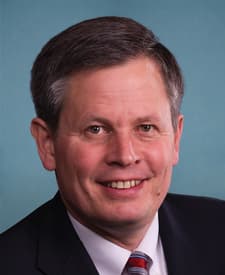
Introduced on Jun 5, 2025 by Steve Daines (R-MT). One cosponsor. Latest action (Jun 5, 2025): Read twice and referred to the Committee on Indian Affairs.
- Stage
- Introduced
- Introduced
- Jun 5, 2025
- Cosponsors
- 1
- 1 from the other party
- Policy area
- Native Americans
Progress
The furthest stage the measure reached. Simple and concurrent resolutions do not go to the President.
- Introduced
- 2Reported by committee
- 3Passed one chamber
- 4Passed both chambers
- 5Sent to the President
- 6Became law
Official title
A bill to amend the Stored Communications Act to include Tribal courts as courts of competent jurisdiction, to amend the Indian Civil Rights Act of 1968 to confer Tribal jurisdiction over controlled substances, related offenses, and firearms, and for other purposes.
Summary
By the Congressional Research Service (Introduced in Senate, Jun 5, 2025). Public domain.
Protection for Reservation Occupants against Trafficking and Evasive Communications Today Act of 2025 or the PROTECT Act of 2025
This bill expands special tribal criminal jurisdiction (STCJ) to include certain controlled substance-related offenses and firearms offenses. It also allows tribal courts to execute warrants for electronic material.
STCJ allows participating tribes to investigate, prosecute, convict, and sentence both Indian and non-Indian offenders who commit covered crimes in Indian country against Indian victims. Covered crimes currently include assault of tribal justice personnel, child violence, dating violence, domestic violence, obstruction of justice, sexual violence, sex trafficking, stalking, and a violation of a protection order.
The bill expands STCJ to allow participating tribes to prosecute individuals for controlled substance-related offenses (i.e., drug trafficking, unlawful drug possession, or unlawful possession of drug paraphernalia) and firearms offenses (i.e., use or possession of a firearm in furtherance of a covered crime or by a person who has been convicted of domestic violence).
Additionally, the bill allows participating tribes to exercise STCJ over a controlled substance-related offense or a firearms offense if neither the defendant nor the alleged victim is an Indian. (Currently, this exception only applies in cases of obstruction of justice or assault of tribal justice personnel.)
The bill allows offenders convicted pursuant to STCJ to be incarcerated through the Bureau of Prisons Tribal Prisoner Program.
The bill gives tribal courts the same authority as state courts to compel service providers to disclose stored electronic communication information through court-issued warrants, court orders, or administrative subpoenas.
Sponsor and cosponsors
Cosponsors by party as of the day they signed on. Original cosponsors signed on the day of introduction.
Democrats · 1
- Tina SmithD-MNoriginal
Roll calls
Recorded votes on the measure. Most measures move by voice vote or unanimous consent, which record no individual positions.
No recorded roll call on this measure: it moved by voice vote or unanimous consent, or has not reached the floor.
History
Every action as published, oldest first. Roll calls link to how each member voted.
- Jun 5, 2025Introduced in Senate
- Jun 5, 2025 · SenateRead twice and referred to the Committee on Indian Affairs.
Committees
Committees and subcommittees the measure was referred to.
Agencies in its committees' jurisdiction
Analisa's mapping of committee jurisdiction to federal agencies; the bill may touch others, or none of these.
Who lobbied on it
Organizations whose lobbying reports (LD-2) name this measure. Spending is what they reported for those quarters on all issues, not on this measure alone.
- Lummi Nation5 reports
- Makah Tribe5 reports$250K reported (all issues)
- PHARMACEUTICAL CARE MANAGEMENT ASSOCIATION5 reports
- The Confederated Salish and Kootenai Tribes4 reports$120K reported (all issues)Federal contractor: CONFEDERATED SALISH AND KOOTENAI TRIBES OF THE FLATHEAD RESERVATION$127K in contracts, FY2026AI match · 100%
Reports filed in 2025, 2026.
Sources and method
Every figure on this page traces to these records.
- Bill status: bills and resolutions, sponsors, actions, subjects and CRS summaries (U.S. Government Publishing Office (GovInfo), from Congress.gov (Library of Congress))GovInfo Bill Status bulk data (Congress.gov; summaries by the Congressional Research Service) · data current to Oct 9, 2026 · loaded Oct 9, 2026 · license: Public domain (U.S. Government work, 17 U.S.C. § 105)
- Members of Congress, their terms, committees and identifiers (The @unitedstates project (from the Biographical Directory of the U.S. Congress, the House and the Senate))unitedstates/congress-legislators: legislators, committees and current committee membership · data current to Oct 3, 2026 · loaded Oct 3, 2026 · license: CC0 1.0 (public domain dedication)
- House roll-call votes (Office of the Clerk, U.S. House of Representatives)Office of the Clerk, U.S. House of Representatives, roll-call vote records · data current to Oct 3, 2026 · loaded Oct 3, 2026 · license: Public domain (U.S. Government work, 17 U.S.C. § 105)
- Senate roll-call votes and DW-NOMINATE scores (Voteview (UCLA Department of Political Science))Lewis, Jeffrey B., Keith Poole, Howard Rosenthal, Adam Boche, Aaron Rudkin, and Luke Sonnet (2026). Voteview: Congressional Roll-Call Votes Database. https://voteview.com/ · data current to Oct 3, 2026 · loaded Oct 3, 2026 · license: Free to use with the required citation
- Lobbying disclosures (LD-1 registrations, LD-2 quarterly reports, LD-203 contribution reports) (Clerk of the U.S. House of Representatives)Clerk of the House, Lobbying Disclosure Act filings (organizations only; lobbyists' names are not loaded) · data current to Oct 9, 2026 · loaded Oct 9, 2026 · license: Public domain (U.S. Government work, 17 U.S.C. § 105)
- Positions are shown only where a roll call recorded them; voice votes and unanimous consent record none.
- Money and votes are shown side by side; neither explains the other.