S. 2 · 119th Congress
Secure America Act
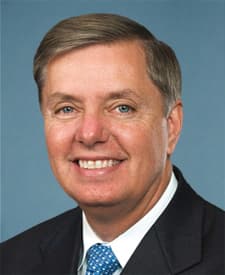
Introduced on May 20, 2026 by Lindsey Graham (R-SC). Became Public Law 119-98.
- Stage
- Became law
- Public Law 119-98
- Introduced
- May 20, 2026
- Cosponsors
- 0
- Policy area
- Immigration
Progress
The furthest stage the measure reached. Simple and concurrent resolutions do not go to the President.
- Introduced
- Reported by committee
- Passed one chamber
- Passed both chambers
- Sent to the President
- Became law
Official title
An original bill to provide for reconciliation pursuant to title II of S. Con. Res. 33.
Subjects
- Advanced technology and technological innovations
- Border security and unlawful immigration
- Computer security and identity theft
- Computers and information technology
- Drug trafficking and controlled substances
- Human trafficking
- Immigration status and procedures
- Law enforcement administration and funding
- Smuggling and trafficking
Summary
By the Congressional Research Service (Public Law, Jun 10, 2026). Public domain.
Secure America Act
This act provides $70 billion in funding to the Department of Homeland Security (DHS), U.S. Customs and Border Protection (CBP), and U.S. Immigration and Customs Enforcement (ICE) through FY2029 for immigration enforcement, border security, and related activities.
It is known as a reconciliation bill and includes legislation submitted by certain congressional committees pursuant to provisions in the FY2026 congressional budget resolution (S. Con. Res. 33) that directed the committees to submit legislation to the House or Senate Budget Committee that will increase the deficit. (Reconciliation bills are considered by Congress using expedited legislative procedures that prevent a filibuster and restrict amendments in the Senate.)
TITLE I--COMMITTEE ON HOMELAND SECURITY AND GOVERNMENTAL AFFAIRS
(Sec. 101) This section provides funding for CBP to hire, pay, train, and equip Border Patrol agents and Border Patrol support personnel to conduct functions other than immigration enforcement and customs functions.
The funds provided by this section may not be used to recruit, hire, or train personnel for the duties of processing coordinators after October 31, 2028.
Read the full summary
(Sec. 102) This section provides funding to ICE for (1) hiring, paying, training, and equipping Homeland Security Investigations (HIS) agents and support personnel; and (2) other necessary expenses for HSI’s mission support and operations and maintenance.
It also requires specified funds to be used to hire, pay, and equip additional child exploitation investigators and forensics analysts for certain HSI offices to (1) support the identification and rescue of victims of child sexual exploitation and abuse, and (2) train such personnel and state and local law enforcement regarding identifying victims of child sexual exploitation and abuse.
The funds provided by this section must be used for functions other than those related to HSI’s immigration enforcement and customs enforcement missions.
(Sec. 103) This section provides funding to CBP for border security, technology, and screening, including
- procurement and integration of new nonintrusive inspection equipment and associated civil works (e.g., artificial intelligence, machine learning, and other innovative technologies) and other mission support to combat the entry or exit of illicit narcotics at ports of entry and along the southwest, northern, and maritime borders;
- upgrading and procurement of platforms for rapid air and marine response capabilities;
- upgrading and procurement of border surveillance technologies along the southwest, northern, and maritime borders;
- necessary expenses, including the deployment of technology, relating to the biometric entry and exit system under the Intelligence Reform and Terrorism Prevention Act of 2004;
- enhancing border security by combating drug trafficking, including fentanyl and its precursor chemicals, at the southwest, northern, and maritime borders; and
- necessary expenses for CBP's mission support and operations and maintenance for functions other than those related to its immigration enforcement and customs missions.
None of the funds provided by this section may be used for the procurement or deployment of surveillance towers along the southwest border and the northern border that have not been tested and accepted by CBP to deliver autonomous capabilities.
Under this section the term autonomous means a system designed to apply artificial intelligence, machine learning, computer vision, or other algorithms to accurately detect, identify, classify, and track items of interest in real time such that the system can make operational adjustments without the active engagement of personnel or continuous human command or control.
(Sec. 104) This section provides additional funding to DHS for the purposes for which funding is provided in this title.
TITLE II--COMMITTEE ON THE JUDICIARY
(Sec. 201) This section provides funding to CBP for hiring, paying, training, and equipping CBP agents and the necessary support staff, and other necessary expenses for mission support and operations and maintenance, in order to carry out immigration enforcement activities.
(Sec. 202) This section provides funding to ICE for immigration enforcement and related activities, including
- hiring, paying, and training personnel;
- transportation;
- information technology;
- facility and fleet maintenance and sustainment;
- 287(g) agreements (i.e., agreements that allow state and local law enforcement agencies to perform certain immigration enforcement functions);
- the Office of the Principal Legal Advisor;
- operation and maintenance; and
- operations by ICE to arrest certain unlawful aliens.
(Sec. 203) This section provides additional funding to DHS for (1) the purposes for which funding is provided in this title, (2) the assignment of certain DHS employees and state officers to carry out immigration enforcement activities, or (3) the participation of state and local agencies in certain homeland security efforts.
Sponsor and cosponsors
Cosponsors by party as of the day they signed on. Original cosponsors signed on the day of introduction.
No cosponsors.
Roll calls
Recorded votes on the measure. Most measures move by voice vote or unanimous consent, which record no individual positions.
- Jun 3, 2026· Senate· Procedural· Motion to Proceed Agreed to 53–46
- Jun 4, 2026· Senate· Procedural· Motion Rejected 49–50
- Jun 4, 2026· Senate· Procedural· Motion Rejected 15–84
- Jun 4, 2026· Senate· Procedural· Motion Rejected 53–46
- Jun 4, 2026· Senate· Procedural· Motion Rejected 46–53
- Jun 4, 2026· Senate· Procedural· Motion Rejected 47–50
- Jun 4, 2026· Senate· Procedural· Motion Rejected 46–52
- Jun 4, 2026· Senate· Procedural· Motion Rejected 49–49
- Jun 4, 2026· Senate· Procedural· Motion Rejected 48–50
- Jun 4, 2026· Senate· Procedural· Motion Rejected 51–47
- Jun 4, 2026· Senate· Procedural· Motion Rejected 46–53
- Jun 4, 2026· Senate· Procedural· Motion Rejected 46–52
- Jun 4, 2026· Senate· Procedural· Motion Rejected 45–53
- Jun 4, 2026· Senate· Procedural· Motion Rejected 46–53
- Jun 4, 2026· Senate· Procedural· Motion Rejected 46–53
- Jun 5, 2026· Senate· Procedural· Motion Rejected 50–49
- Jun 5, 2026· Senate· Procedural· Motion Rejected 48–51
- Jun 5, 2026· Senate· Procedural· Motion Rejected 48–51
- Jun 5, 2026· Senate· Amendments· Amendment Rejected 46–53
- Jun 5, 2026· Senate· Amendments· Amendment Rejected 46–53
- Jun 5, 2026· Senate· Amendments· Amendment Rejected 47–52
- Jun 5, 2026· Senate· Amendments· Amendment Rejected 46–53
- Jun 5, 2026· Senate· Procedural· Motion Rejected 54–45
- Jun 5, 2026· Senate· Procedural· Motion Rejected 52–47
- Jun 5, 2026· Senate· Amendments· Amendment Rejected 45–53
- Jun 5, 2026· Senate· Procedural· Motion Rejected 53–46
- Jun 5, 2026· Senate· Procedural· Motion Rejected 51–48
- Jun 5, 2026· Senate· Passage· Bill Passed 52–47
- Jun 9, 2026· House· Procedural· Failed 211–215
- Jun 9, 2026· House· Passage· Passed 214–212
History
Every action as published, oldest first. Roll calls link to how each member voted.
- May 20, 2026Committee on the Budget. Original measure reported to Senate by Senator Graham. Without written report.
- May 20, 2026 · SenateCommittee on the Budget. Original measure reported to Senate by Senator Graham. Without written report.
- May 20, 2026 · SenatePlaced on Senate Legislative Calendar under General Orders. Calendar No. 417.
- Jun 3, 2026 · SenateMotion to proceed to consideration of measure agreed to in Senate by Yea-Nay Vote. 53 - 46. Record Vote Number: 136.Senate · Roll call 136
- Jun 3, 2026 · SenateMeasure laid before Senate by motion. (consideration: CR S2510-2518)
- Jun 4, 2026 · SenateConsidered by Senate. (consideration: CR S2545-2571)
- Jun 4, 2026 · SenateMotion by Senator Schumer to commit to Senate Committee on the Judiciary with instructions rejected in Senate by Yea-Nay Vote. 49 - 50. Record Vote Number: 137. (text: CR S2549)Senate · Roll call 137
- Jun 4, 2026 · SenateMotion by Senator Ossoff to commit to Senate Committee on the Judiciary with instructions rejected in Senate by Yea-Nay Vote. 47 - 50. Record Vote Number: 141. (text: CR S2552)Senate · Roll call 141
- Jun 4, 2026 · SenateMotion by Senator Warnock to commit to Senate Committee on the Judiciary with instructions rejected in Senate by Yea-Nay Vote. 46 - 52. Record Vote Number: 147. (text: CR S2558)Senate · Roll call 147
- Jun 5, 2026 · SenateMotion by Senator Wyden to commit to Senate Committee on the Judiciary with instructions rejected in Senate by Yea-Nay Vote. 48 - 51. Record Vote Number: 153. (text: CR S2562)Senate · Roll call 153
- Jun 5, 2026 · SenateMotion by Senator Rosen to commit to Senate Committee on the Judiciary with instructions rejected in Senate by Voice Vote. (text: CR S2567)
- Jun 5, 2026 · SenateMotion by Senator Wyden to commit to Senate Committee on the Judiciary with instructions rejected in Senate by Voice Vote. (text: CR S2567)
- Jun 5, 2026Passed/agreed to in Senate: Passed Senate with an amendment by Yea-Nay Vote. 52 - 47. Record Vote Number: 163.Senate · Roll call 163
- Jun 5, 2026 · SenatePassed Senate with an amendment by Yea-Nay Vote. 52 - 47. Record Vote Number: 163. (text: CR S2570-2571)Senate · Roll call 163
- Jun 5, 2026 · SenateMessage on Senate action sent to the House.
- Jun 8, 2026 · HouseReceived in the House.
- Jun 8, 2026 · HouseHeld at the desk.
- Jun 8, 2026 · HouseRules Committee Resolution H. Res. 1345 Reported to House. Rule provides for consideration of H.R. 8312, H.R. 8464, H. Res. 1335 and S. 2. The resolution provides for consideration of H.R. 8312, H.R. 8464, H. Res. 1335, and S. 2 under a closed rule with one hour of general debate on each measure. The resolution provides for a motion to recommit H.R. 8312 and H.R. 8464 and a motion to commit S. 2.
- Jun 9, 2026 · HouseRule H. Res. 1345 passed House.
- Jun 9, 2026 · HouseConsidered under the provisions of rule H. Res. 1345. (consideration: CR H4017-4029)
- Jun 9, 2026 · HouseRule provides for consideration of H.R. 8312, H.R. 8464, H. Res. 1335 and S. 2. The resolution provides for consideration of H.R. 8312, H.R. 8464, H. Res. 1335, and S. 2 under a closed rule with one hour of general debate on each measure. The resolution provides for a motion to recommit H.R. 8312 and H.R. 8464 and a motion to commit S. 2.
- Jun 9, 2026 · HouseDEBATE - The House proceeded with one hour of debate on S. 2.
- Jun 9, 2026 · HouseThe previous question was ordered pursuant to the rule.
- Jun 9, 2026 · HouseMr. Boyle (PA) moved to commit to the Committee on the Budget. (text: CR H4027)
- Jun 9, 2026 · HouseThe previous question on the motion to commit was ordered pursuant to clause 2(b) of rule XIX.
- Jun 9, 2026 · HouseOn motion to commit Failed by the Yeas and Nays: 211 - 215 (Roll no. 213).House · Roll call 213
- Jun 9, 2026Passed/agreed to in House: On passage Passed by recorded vote: 214 - 212 (Roll no. 214). (text: CR H4017-4018)House · Roll call 214
- Jun 9, 2026 · HouseOn passage Passed by recorded vote: 214 - 212 (Roll no. 214). (text: CR H4017-4018)House · Roll call 214
- Jun 9, 2026 · HouseMotion to reconsider laid on the table Agreed to without objection.
- Jun 9, 2026Presented to President.
- Jun 9, 2026 · HousePresented to President.
- Jun 10, 2026Signed by President.
- Jun 10, 2026Signed by President.
- Jun 10, 2026Became Public Law No: 119-98.
- Jun 10, 2026Became Public Law No: 119-98.
Committees
Committees and subcommittees the measure was referred to.
Who lobbied on it
Organizations whose lobbying reports (LD-2) name this measure. Spending is what they reported for those quarters on all issues, not on this measure alone.
- El Paso Chamber of Commerce2 reports$50K reported (all issues)
- CORECIVIC, INC.1 report
- California Agricultural Commissioners and Sealers Association1 report$20K reported (all issues)
- Clearview AI1 report$30K reported (all issues)Federal contractor: CLEARVIEW AI, INC.$4.3M in contracts, FY2026AI match · 99%
- GSK (fka GLAXOSMITHKLINE INC.)1 report$890K reported (all issues)
- PHARMACEUTICAL RESEARCH & MANUFACTURERS OF AMERICA1 report$7.4M reported (all issues)
Reports filed in 2026.
Sources and method
Every figure on this page traces to these records.
- Bill status: bills and resolutions, sponsors, actions, subjects and CRS summaries (U.S. Government Publishing Office (GovInfo), from Congress.gov (Library of Congress))GovInfo Bill Status bulk data (Congress.gov; summaries by the Congressional Research Service) · data current to Oct 3, 2026 · loaded Oct 3, 2026 · license: Public domain (U.S. Government work, 17 U.S.C. § 105)
- Members of Congress, their terms, committees and identifiers (The @unitedstates project (from the Biographical Directory of the U.S. Congress, the House and the Senate))unitedstates/congress-legislators: legislators, committees and current committee membership · data current to Oct 3, 2026 · loaded Oct 3, 2026 · license: CC0 1.0 (public domain dedication)
- House roll-call votes (Office of the Clerk, U.S. House of Representatives)Office of the Clerk, U.S. House of Representatives, roll-call vote records · data current to Oct 3, 2026 · loaded Oct 3, 2026 · license: Public domain (U.S. Government work, 17 U.S.C. § 105)
- Senate roll-call votes and DW-NOMINATE scores (Voteview (UCLA Department of Political Science))Lewis, Jeffrey B., Keith Poole, Howard Rosenthal, Adam Boche, Aaron Rudkin, and Luke Sonnet (2026). Voteview: Congressional Roll-Call Votes Database. https://voteview.com/ · data current to Oct 3, 2026 · loaded Oct 3, 2026 · license: Free to use with the required citation
- Lobbying disclosures (LD-1 registrations, LD-2 quarterly reports, LD-203 contribution reports) (Clerk of the U.S. House of Representatives)Clerk of the House, Lobbying Disclosure Act filings (organizations only; lobbyists' names are not loaded) · data current to Oct 3, 2026 · loaded Oct 3, 2026 · license: Public domain (U.S. Government work, 17 U.S.C. § 105)
- Positions are shown only where a roll call recorded them; voice votes and unanimous consent record none.
- Money and votes are shown side by side; neither explains the other.