S. 320 · 119th Congress
National Earthquake Hazards Reduction Program Reauthorization Act of 2025
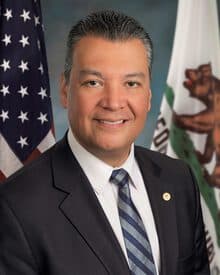
Introduced on Jan 29, 2025 by Alex Padilla (D-CA). One cosponsor. Latest action (Jan 7, 2026): Held at the desk.
- Stage
- Passed one chamber
- Introduced
- Jan 29, 2025
- Cosponsors
- 1
- 1 from the other party
- Policy area
- Emergency Management
Progress
The furthest stage the measure reached. Simple and concurrent resolutions do not go to the President.
- Introduced
- Reported by committee
- Passed one chamber
- 4Passed both chambers
- 5Sent to the President
- 6Became law
Official title
A bill to reauthorize the Earthquake Hazards Reduction Act of 1977, and for other purposes.
Subjects
- Building construction
- Emergency communications systems
- Emergency planning and evacuation
- Environmental assessment, monitoring, research
- Government studies and investigations
- Natural disasters
- Research administration and funding
Summary
By the Congressional Research Service (Passed Senate, Jan 5, 2026). Public domain.
National Earthquake Hazards Reduction Program Reauthorization Act of 2025
This bill reauthorizes through FY2028 the National Earthquake Hazards Reduction Program (NEHRP) and expands the activities federal agencies must conduct under the program, including activities relating to secondary effects of earthquakes and post-earthquake infrastructure performance.
NEHRP is a coordinated earthquake hazards reduction program of four federal agencies: the National Institute of Standards and Technology, the U.S. Geological Survey, the Federal Emergency Management Agency, and the National Science Foundation. Under NEHRP, these agencies are required to conduct various activities relating to earthquakes, including advancing warning systems, hazard reduction measures, and research to improve understanding of earthquakes and their effects.
The bill expands the scope of the activities under NEHRP, including requiring the agencies to
- improve understanding of and develop resilience measures for secondary effects and multiple hazards associated with earthquakes, such as tsunamis and fires;
- improve post-earthquake functional recovery, which means maintaining or restoring the pre-earthquake functionality of buildings and lifeline infrastructure systems (e.g., infrastructure for water, electricity, and transportation); and
- assist public entities with developing an inventory, and conducting seismic performance evaluation, of infrastructure with high seismic risk.
Additionally, the bill specifically includes tribal governments in the activities conducted under NEHRP.
Sponsor and cosponsors
Cosponsors by party as of the day they signed on. Original cosponsors signed on the day of introduction.
Republicans · 1
- Lisa MurkowskiR-AKoriginal
Roll calls
Recorded votes on the measure. Most measures move by voice vote or unanimous consent, which record no individual positions.
No recorded roll call on this measure: it moved by voice vote or unanimous consent, or has not reached the floor.
History
Every action as published, oldest first. Roll calls link to how each member voted.
- Jan 29, 2025Introduced in Senate
- Jan 29, 2025 · SenateRead twice and referred to the Committee on Commerce, Science, and Transportation.
- Apr 30, 2025 · SenateCommittee on Commerce, Science, and Transportation. Ordered to be reported with an amendment in the nature of a substitute favorably.
- Oct 14, 2025Committee on Commerce, Science, and Transportation. Reported by Senator Cruz with an amendment in the nature of a substitute. With written report No. 119-74.
- Oct 14, 2025 · SenateCommittee on Commerce, Science, and Transportation. Reported by Senator Cruz with an amendment in the nature of a substitute. With written report No. 119-74.
- Oct 14, 2025 · SenatePlaced on Senate Legislative Calendar under General Orders. Calendar No. 183.
- Jan 5, 2026 · SenateMeasure laid before Senate by unanimous consent. (consideration: CR S5-10)
- Jan 5, 2026 · SenateThe committee substitute as amended agreed to by Unanimous Consent. (text of amendment in the nature of a substitute: CR S7-10)
- Jan 5, 2026Passed/agreed to in Senate: Passed Senate with an amendment by Unanimous Consent.
- Jan 5, 2026 · SenatePassed Senate with an amendment by Unanimous Consent.
- Jan 7, 2026 · SenateMessage on Senate action sent to the House.
- Jan 7, 2026 · HouseReceived in the House.
- Jan 7, 2026 · HouseHeld at the desk.
Committees
Committees and subcommittees the measure was referred to.
Agencies in its committees' jurisdiction
Analisa's mapping of committee jurisdiction to federal agencies; the bill may touch others, or none of these.
- Consumer Product Safety Commission
- Department of Commerce
- Department of Transportation
- Federal Communications Commission
- Federal Maritime Commission
- Federal Trade Commission
- National Aeronautics and Space Administration
- National Science Foundation
- National Transportation Safety Board
- Surface Transportation Board
Who lobbied on it
Organizations whose lobbying reports (LD-2) name this measure. Spending is what they reported for those quarters on all issues, not on this measure alone.
- AMERICAN GEOPHYSICAL UNION6 reports$90K reported (all issues)
- National Institute of Building Sciences2 reports$30K reported (all issues)Federal contractor: NATIONAL INSTITUTE OF BUILDING SCIENCES$24.2M in contracts, FY2026AI match · 100%
- REINSURANCE ASSN OF AMERICA1 report$390K reported (all issues)
Reports filed in 2025, 2026.
Sources and method
Every figure on this page traces to these records.
- Bill status: bills and resolutions, sponsors, actions, subjects and CRS summaries (U.S. Government Publishing Office (GovInfo), from Congress.gov (Library of Congress))GovInfo Bill Status bulk data (Congress.gov; summaries by the Congressional Research Service) · data current to Oct 10, 2026 · loaded Oct 10, 2026 · license: Public domain (U.S. Government work, 17 U.S.C. § 105)
- Members of Congress, their terms, committees and identifiers (The @unitedstates project (from the Biographical Directory of the U.S. Congress, the House and the Senate))unitedstates/congress-legislators: legislators, committees and current committee membership · data current to Oct 3, 2026 · loaded Oct 3, 2026 · license: CC0 1.0 (public domain dedication)
- House roll-call votes (Office of the Clerk, U.S. House of Representatives)Office of the Clerk, U.S. House of Representatives, roll-call vote records · data current to Oct 3, 2026 · loaded Oct 3, 2026 · license: Public domain (U.S. Government work, 17 U.S.C. § 105)
- Senate roll-call votes and DW-NOMINATE scores (Voteview (UCLA Department of Political Science))Lewis, Jeffrey B., Keith Poole, Howard Rosenthal, Adam Boche, Aaron Rudkin, and Luke Sonnet (2026). Voteview: Congressional Roll-Call Votes Database. https://voteview.com/ · data current to Oct 3, 2026 · loaded Oct 3, 2026 · license: Free to use with the required citation
- Lobbying disclosures (LD-1 registrations, LD-2 quarterly reports, LD-203 contribution reports) (Clerk of the U.S. House of Representatives)Clerk of the House, Lobbying Disclosure Act filings (organizations only; lobbyists' names are not loaded) · data current to Oct 10, 2026 · loaded Oct 10, 2026 · license: Public domain (U.S. Government work, 17 U.S.C. § 105)
- Positions are shown only where a roll call recorded them; voice votes and unanimous consent record none.
- Money and votes are shown side by side; neither explains the other.