S. 435 · 119th Congress
IRONDOME Act of 2025
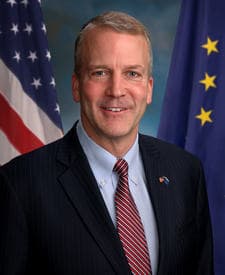
Introduced on Feb 5, 2025 by Dan Sullivan (R-AK). 2 cosponsors, all from the sponsor's party. Latest action (Feb 5, 2025): Read twice and referred to the Committee on Armed Services.
- Stage
- Introduced
- Introduced
- Feb 5, 2025
- Cosponsors
- 2
- 0 from the other party
- Policy area
- Armed Forces and National Security
Progress
The furthest stage the measure reached. Simple and concurrent resolutions do not go to the President.
- Introduced
- 2Reported by committee
- 3Passed one chamber
- 4Passed both chambers
- 5Sent to the President
- 6Became law
Official title
A bill to improve the missile defense capabilities of the United States, and for other purposes.
Subjects
- Administrative law and regulatory procedures
- Alaska
- Aviation and airports
- Congressional oversight
- Department of Defense
- Hawaii
- Military facilities and property
- Military procurement, research, weapons development
- Public contracts and procurement
- Spacecraft and satellites
- Supply chain
Summary
By the Congressional Research Service (Introduced in Senate, Feb 5, 2025). Public domain.
Increasing Response Options and Deterrence of Missile Engagements Act of 2025 or the IRONDOME Act of 2025
This bill requires the Department of Defense (DOD) and other entities to take specified actions to support U.S. missile defense capabilities, particularly with respect to the U.S. homeland.
DOD must submit to Congress a multi-year phased plan to transfer operations and sustainment responsibility for missile defense from the Missile Defense Agency to the appropriate military departments to allow the Missile Defense Agency to focus on research, development, and prototyping and testing.
Additionally, among other elements, the bill requires
- the United States Northern Command and the Space Development Agency within DOD to use a specified acquisition process to conduct rapid testing and development of certain drone and satellite systems;
- each commander of a combatant command to include the missile defense interceptor and sensor requirements of the command in annual budget requests;
- DOD to use all authorities available to accelerate the development, production, and modernization of various defense systems and technology, including certain space-based interceptors; and
- the Department of the Army to procure and field airships in support of the missile defense of the U.S. homeland from drones and ballistic, hypersonic, and cruise missiles.
On January 27, 2025, President Trump signed an executive order titled The Iron Dome for America. The order directs DOD to develop plans for a next-generation missile defense shield to protect the U.S. homeland from ballistic, hypersonic, and advanced cruise missiles, and other next-generation aerial attacks.
Sponsor and cosponsors
Cosponsors by party as of the day they signed on. Original cosponsors signed on the day of introduction.
Republicans · 2
- Kevin CramerR-NDoriginal
- Jim BanksR-INsigned on Feb 27, 2025
Roll calls
Recorded votes on the measure. Most measures move by voice vote or unanimous consent, which record no individual positions.
No recorded roll call on this measure: it moved by voice vote or unanimous consent, or has not reached the floor.
History
Every action as published, oldest first. Roll calls link to how each member voted.
- Feb 5, 2025Introduced in Senate
- Feb 5, 2025 · SenateRead twice and referred to the Committee on Armed Services.
Committees
Committees and subcommittees the measure was referred to.
Agencies in its committees' jurisdiction
Analisa's mapping of committee jurisdiction to federal agencies; the bill may touch others, or none of these.
Who lobbied on it
Organizations whose lobbying reports (LD-2) name this measure. Spending is what they reported for those quarters on all issues, not on this measure alone.
- ASTROSCALE U.S., INC.6 reports$220K reported (all issues)Federal contractor: ASTROSCALE US INC$203.5K in contracts, FY2026AI match · 100%
- FDD Action1 report$300K reported (all issues)
Reports filed in 2025, 2026.
Sources and method
Every figure on this page traces to these records.
- Bill status: bills and resolutions, sponsors, actions, subjects and CRS summaries (U.S. Government Publishing Office (GovInfo), from Congress.gov (Library of Congress))GovInfo Bill Status bulk data (Congress.gov; summaries by the Congressional Research Service) · data current to Oct 8, 2026 · loaded Oct 8, 2026 · license: Public domain (U.S. Government work, 17 U.S.C. § 105)
- Members of Congress, their terms, committees and identifiers (The @unitedstates project (from the Biographical Directory of the U.S. Congress, the House and the Senate))unitedstates/congress-legislators: legislators, committees and current committee membership · data current to Oct 3, 2026 · loaded Oct 3, 2026 · license: CC0 1.0 (public domain dedication)
- House roll-call votes (Office of the Clerk, U.S. House of Representatives)Office of the Clerk, U.S. House of Representatives, roll-call vote records · data current to Oct 3, 2026 · loaded Oct 3, 2026 · license: Public domain (U.S. Government work, 17 U.S.C. § 105)
- Senate roll-call votes and DW-NOMINATE scores (Voteview (UCLA Department of Political Science))Lewis, Jeffrey B., Keith Poole, Howard Rosenthal, Adam Boche, Aaron Rudkin, and Luke Sonnet (2026). Voteview: Congressional Roll-Call Votes Database. https://voteview.com/ · data current to Oct 3, 2026 · loaded Oct 3, 2026 · license: Free to use with the required citation
- Lobbying disclosures (LD-1 registrations, LD-2 quarterly reports, LD-203 contribution reports) (Clerk of the U.S. House of Representatives)Clerk of the House, Lobbying Disclosure Act filings (organizations only; lobbyists' names are not loaded) · data current to Oct 7, 2026 · loaded Oct 7, 2026 · license: Public domain (U.S. Government work, 17 U.S.C. § 105)
- Positions are shown only where a roll call recorded them; voice votes and unanimous consent record none.
- Money and votes are shown side by side; neither explains the other.