S. 5254 · 119th Congress
Civil Nuclear Export Act of 2026
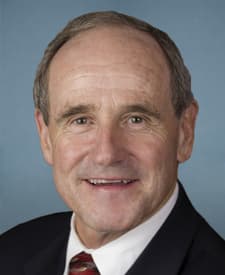
Introduced on Aug 5, 2026 by James E. Risch (R-ID). One cosponsor. Latest action (Aug 5, 2026): Read twice and referred to the Committee on Banking, Housing, and Urban Affairs.
- Stage
- Introduced
- Introduced
- Aug 5, 2026
- Cosponsors
- 1
- 1 from the other party
- Policy area
- Foreign Trade and International Finance
Progress
The furthest stage the measure reached. Simple and concurrent resolutions do not go to the President.
- Introduced
- 2Reported by committee
- 3Passed one chamber
- 4Passed both chambers
- 5Sent to the President
- 6Became law
Official title
A bill to modify the prohibition on financing of civil nuclear energy by the Export-Import Bank of the United States, and for other purposes.
Summary
By the Congressional Research Service (Introduced in Senate, Aug 5, 2026). Public domain.
Civil Nuclear Export Act of 2026
This bill provides the Export-Import Bank with certain authorities to finance civil nuclear energy exports.
Specifically, the bill allows the Export-Import Bank to provide financing for the purchase of liquid metal fast breeder nuclear reactors and nuclear fuel reprocessing facilities if the purchase is otherwise permitted by law.
Additionally, the bill expands the China and Transformational Exports Program (CTEP) by making civil nuclear energy eligible for financing under the program. Currently, the bank may extend loans, guarantees, and insurance to advance the comparative leadership of the United States with respect to China in specified export areas (e.g., artificial intelligence, biotechnology, and wireless communications equipment). This bill expands those areas to include civil nuclear energy technologies, materials, services, and related infrastructure and goods.
The bill also revises the financial limitation on the outstanding aggregate amount of all of the bank's loans, guarantees, and insurance. In particular, the bill exempts those amounts attributed by the bank to CTEP, as long as that financing does not exceed a specified amount.
The bill also increases from 2% to 4% the bank's default rate cap. Further, the bill allows the bank to exclude financing under CTEP from this default rate, subject to approval of the bank's board of directors.
Sponsor and cosponsors
Cosponsors by party as of the day they signed on. Original cosponsors signed on the day of introduction.
Democrats · 1
- Mark R. WarnerD-VAoriginal
Roll calls
Recorded votes on the measure. Most measures move by voice vote or unanimous consent, which record no individual positions.
No recorded roll call on this measure: it moved by voice vote or unanimous consent, or has not reached the floor.
History
Every action as published, oldest first. Roll calls link to how each member voted.
- Aug 5, 2026Introduced in Senate
- Aug 5, 2026 · SenateRead twice and referred to the Committee on Banking, Housing, and Urban Affairs.
Committees
Committees and subcommittees the measure was referred to.
Agencies in its committees' jurisdiction
Analisa's mapping of committee jurisdiction to federal agencies; the bill may touch others, or none of these.
Sources and method
Every figure on this page traces to these records.
- Bill status: bills and resolutions, sponsors, actions, subjects and CRS summaries (U.S. Government Publishing Office (GovInfo), from Congress.gov (Library of Congress))GovInfo Bill Status bulk data (Congress.gov; summaries by the Congressional Research Service) · data current to Oct 3, 2026 · loaded Oct 3, 2026 · license: Public domain (U.S. Government work, 17 U.S.C. § 105)
- Members of Congress, their terms, committees and identifiers (The @unitedstates project (from the Biographical Directory of the U.S. Congress, the House and the Senate))unitedstates/congress-legislators: legislators, committees and current committee membership · data current to Oct 3, 2026 · loaded Oct 3, 2026 · license: CC0 1.0 (public domain dedication)
- House roll-call votes (Office of the Clerk, U.S. House of Representatives)Office of the Clerk, U.S. House of Representatives, roll-call vote records · data current to Oct 3, 2026 · loaded Oct 3, 2026 · license: Public domain (U.S. Government work, 17 U.S.C. § 105)
- Senate roll-call votes and DW-NOMINATE scores (Voteview (UCLA Department of Political Science))Lewis, Jeffrey B., Keith Poole, Howard Rosenthal, Adam Boche, Aaron Rudkin, and Luke Sonnet (2026). Voteview: Congressional Roll-Call Votes Database. https://voteview.com/ · data current to Oct 3, 2026 · loaded Oct 3, 2026 · license: Free to use with the required citation
- Lobbying disclosures (LD-1 registrations, LD-2 quarterly reports, LD-203 contribution reports) (Clerk of the U.S. House of Representatives)Clerk of the House, Lobbying Disclosure Act filings (organizations only; lobbyists' names are not loaded) · data current to Oct 6, 2026 · loaded Oct 6, 2026 · license: Public domain (U.S. Government work, 17 U.S.C. § 105)
- Positions are shown only where a roll call recorded them; voice votes and unanimous consent record none.