S. 5360 · 119th Congress
Rural and Municipal Utility Cybersecurity Act
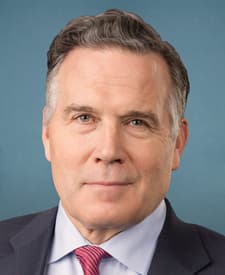
Introduced on Aug 7, 2026 by David McCormick (R-PA). 5 cosponsors, 2 of them from another party. Latest action (Sep 30, 2026): Committee on Energy and Natural Resources. Ordered to be reported without amendment favorably.
- Stage
- Introduced
- Introduced
- Aug 7, 2026
- Cosponsors
- 5
- 2 from the other party
- Policy area
- Science, Technology, Communications
Progress
The furthest stage the measure reached. Simple and concurrent resolutions do not go to the President.
- Introduced
- 2Reported by committee
- 3Passed one chamber
- 4Passed both chambers
- 5Sent to the President
- 6Became law
Official title
A bill to amend the Infrastructure Investment and Jobs Act to reauthorize the Rural and Municipal Utility Advanced Cybersecurity Grant and Technical Assistance Program, and for other purposes.
Subjects
- Computer security and identity theft
- Computers and information technology
- Electric power generation and transmission
- Infrastructure development
- Rural conditions and development
- State and local government operations
Summary
By the Congressional Research Service (Introduced in Senate, Aug 7, 2026). Public domain.
Rural and Municipal Utility Cybersecurity Act
This bill reauthorizes through FY2031 a program that provides cybersecurity-related assistance and funding to rural electric cooperatives and municipal or small, investor-owned electric utilities. The bill also revises methods of awarding support and expands protections for information shared under the program.
This program, known as the Rural and Municipal Advanced Cybersecurity Grant and Technical Assistance Program, is administered by the Department of Energy (DOE). Current law requires DOE to provide technical assistance and funding under the program on a competitive basis; under the bill, assistance and funding may be provided on a competitive or noncompetitive basis.
Current law also requires DOE to prioritize providing technical assistance and funding to certain entities, including entities that own defense critical electric infrastructure. The bill specifies that DOE must also prioritize entities that operate such infrastructure. (Defense critical electric infrastructure is electric infrastructure that (1) is located in the contiguous United States, and (2) serves a designated critical defense facility but is not owned or operated by the owner or operator of the critical facility.)
Finally, the bill expands an existing protection against disclosure to cover all information shared under the program by or with the federal government or a state, tribal, or local government. This provision protects against disclosure under the Freedom of Information Act and other state, tribal, or local disclosure laws.
Sponsor and cosponsors
Cosponsors by party as of the day they signed on. Original cosponsors signed on the day of introduction.
Democrats · 2
- Catherine Cortez MastoD-NVoriginal
- John W. HickenlooperD-COoriginal
Republicans · 3
- John R. CurtisR-UToriginal
- John HoevenR-NDoriginal
- James C. JusticeR-WVsigned on Sep 15, 2026
Roll calls
Recorded votes on the measure. Most measures move by voice vote or unanimous consent, which record no individual positions.
No recorded roll call on this measure: it moved by voice vote or unanimous consent, or has not reached the floor.
History
Every action as published, oldest first. Roll calls link to how each member voted.
- Aug 7, 2026Introduced in Senate
- Aug 7, 2026 · SenateRead twice and referred to the Committee on Energy and Natural Resources.
- Sep 16, 2026 · SenateCommittee on Energy and Natural Resources. Hearings held.
- Sep 30, 2026 · SenateCommittee on Energy and Natural Resources. Ordered to be reported without amendment favorably.
Committees
Committees and subcommittees the measure was referred to.
Agencies in its committees' jurisdiction
Analisa's mapping of committee jurisdiction to federal agencies; the bill may touch others, or none of these.
Who lobbied on it
Organizations whose lobbying reports (LD-2) name this measure. Spending is what they reported for those quarters on all issues, not on this measure alone.
- AMERICAN PUBLIC POWER ASSOCIATION1 report$290K reported (all issues)
- ENTERTAINMENT SOFTWARE ASSOCIATION1 report$1.4M reported (all issues)
- National Taxpayers Union1 report$30K reported (all issues)
Reports filed in 2026.
Sources and method
Every figure on this page traces to these records.
- Bill status: bills and resolutions, sponsors, actions, subjects and CRS summaries (U.S. Government Publishing Office (GovInfo), from Congress.gov (Library of Congress))GovInfo Bill Status bulk data (Congress.gov; summaries by the Congressional Research Service) · data current to Nov 26, 2026 · loaded Nov 26, 2026 · license: Public domain (U.S. Government work, 17 U.S.C. § 105)
- Members of Congress, their terms, committees and identifiers (The @unitedstates project (from the Biographical Directory of the U.S. Congress, the House and the Senate))unitedstates/congress-legislators: legislators, committees and current committee membership · data current to Sep 24, 2026 · loaded Oct 13, 2026 · license: CC0 1.0 (public domain dedication)
- House roll-call votes (Office of the Clerk, U.S. House of Representatives)Office of the Clerk, U.S. House of Representatives, roll-call vote records · data current to Nov 19, 2026 · loaded Nov 20, 2026 · license: Public domain (U.S. Government work, 17 U.S.C. § 105)
- Senate roll-call votes and DW-NOMINATE scores (Voteview (UCLA Department of Political Science))Lewis, Jeffrey B., Keith Poole, Howard Rosenthal, Adam Boche, Aaron Rudkin, and Luke Sonnet (2026). Voteview: Congressional Roll-Call Votes Database. https://voteview.com/ · data current to Nov 20, 2026 · loaded Nov 21, 2026 · license: Free to use with the required citation
- Lobbying disclosures (LD-1 registrations, LD-2 quarterly reports, LD-203 contribution reports) (Clerk of the U.S. House of Representatives)Clerk of the House, Lobbying Disclosure Act filings (organizations only; lobbyists' names are not loaded) · data current to Nov 27, 2026 · loaded Nov 27, 2026 · license: Public domain (U.S. Government work, 17 U.S.C. § 105)
- Positions are shown only where a roll call recorded them; voice votes and unanimous consent record none.
- Money and votes are shown side by side; neither explains the other.