S. 91 · 119th Congress
Western Wildfire Support Act of 2026
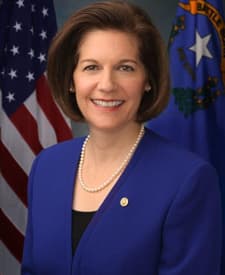
Introduced on Jan 14, 2025 by Catherine Cortez Masto (D-NV). One cosponsor. Latest action (Sep 17, 2026): Placed on Senate Legislative Calendar under General Orders. Calendar No. 629.
- Stage
- Reported by committee
- Introduced
- Jan 14, 2025
- Cosponsors
- 1
- 1 from the other party
- Policy area
- Emergency Management
Progress
The furthest stage the measure reached. Simple and concurrent resolutions do not go to the President.
- Introduced
- Reported by committee
- 3Passed one chamber
- 4Passed both chambers
- 5Sent to the President
- 6Became law
Official title
A bill to improve Federal activities relating to wildfires, and for other purposes.
Subjects
- Accounting and auditing
- Advanced technology and technological innovations
- Advisory bodies
- Appropriations
- Atmospheric science and weather
- Aviation and airports
- Budget process
- Community life and organization
- Computers and information technology
- Congressional oversight
- Department of Agriculture
- Department of the Interior
- Disaster relief and insurance
- Ecology
- Emergency planning and evacuation
- Executive agency funding and structure
- Fires
- First responders and emergency personnel
- Forests, forestry, trees
- Government information and archives
- Government studies and investigations
- Land use and conservation
- Military education and training
- Military operations and strategy
- Motor vehicles
- Parks, recreation areas, trails
- Research and development
- Social work, volunteer service, charitable organizations
- Transportation safety and security
- Wilderness and natural areas, wildlife refuges, wild rivers, habitats
Summary
By the Congressional Research Service (Introduced in Senate, Jan 14, 2025). Public domain.
Western Wildfire Support Act of 2025
This bill addresses wildfires by authorizing post-fire recovery activities, supporting adoption of technology, and requiring additional federal coordination.
The bill authorizes federal wildfire response and recovery activities by
- providing statutory authority for Burned Area Emergency Response Teams to coordinate emergency stabilization and erosion planning, and
- establishing an account to fund federal rehabilitation projects in areas impacted by a wildfire (e.g., ecosystem restoration, replacing infrastructure critical for land management).
Additionally, for all hazard types, the bill includes post-disaster assistance in the federal disaster preparedness program and authorizes assistance to states for operating websites to provide information on post-disaster recovery resources.
The bill requires federal agencies to develop and utilize technologies for managing wildfires by
- expediting the permitting and use of wildfire detection equipment (e.g., sensors, cameras);
- providing funding to Indian tribes for slip-on tanker units that convert vehicles into fire engines;
- performing research and development on wildfire response applications of unmanned aircraft systems (e.g., drones);
- studying radio communications systems, situational awareness tools, and wildland fire predictive modeling; and
- administering a prize competition for technological innovation for managing wildfire-related invasive species.
The bill directs federal agencies to plan and coordinate on wildfire management by
- incorporating the best available science and planning tools into spatial fire management policies for federal lands,
- collaborating with state agencies for mutual aid in fire suppression (including reimbursing states for suppressing fires caused by military operations), and
- studying training gaps for integrating structural (e.g., local) firefighters into wildfire response.
Sponsor and cosponsors
Cosponsors by party as of the day they signed on. Original cosponsors signed on the day of introduction.
Republicans · 1
- Tim SheehyR-MToriginal
Roll calls
Recorded votes on the measure. Most measures move by voice vote or unanimous consent, which record no individual positions.
No recorded roll call on this measure: it moved by voice vote or unanimous consent, or has not reached the floor.
History
Every action as published, oldest first. Roll calls link to how each member voted.
- Jan 14, 2025Introduced in Senate
- Jan 14, 2025 · SenateRead twice and referred to the Committee on Energy and Natural Resources.
- Dec 2, 2025 · SenateCommittee on Energy and Natural Resources Subcommittee on Public Lands, Forests, and Mining. Hearings held. With printed Hearing: S.Hrg. 119-237.
- Feb 4, 2026 · SenateCommittee on Energy and Natural Resources. Ordered to be reported with an amendment in the nature of a substitute favorably.
- Sep 17, 2026Committee on Energy and Natural Resources. Reported by Senator Lee with an amendment in the nature of a substitute. Without written report.
- Sep 17, 2026 · SenateCommittee on Energy and Natural Resources. Reported by Senator Lee with an amendment in the nature of a substitute. Without written report.
- Sep 17, 2026 · SenatePlaced on Senate Legislative Calendar under General Orders. Calendar No. 629.
Committees
Committees and subcommittees the measure was referred to.
Agencies in its committees' jurisdiction
Analisa's mapping of committee jurisdiction to federal agencies; the bill may touch others, or none of these.
Who lobbied on it
Organizations whose lobbying reports (LD-2) name this measure. Spending is what they reported for those quarters on all issues, not on this measure alone.
- AMERICAN PROPERTY CASUALTY INSURANCE ASSOCIATION6 reports$9.4M reported (all issues)
- Advanced Environmental Monitoring Holdings (AEMH)6 reports$360K reported (all issues)
- NATIONAL ASSOCIATION OF MUTUAL INSURANCE COMPANIES6 reports$2.8M reported (all issues)
- United Aerial Firefighters Association3 reports
- Backcountry Hunters & Anglers2 reports$26.4K reported (all issues)
- DEFENDERS OF WILDLIFE2 reports$180K reported (all issues)
Reports filed in 2025, 2026.
Sources and method
Every figure on this page traces to these records.
- Bill status: bills and resolutions, sponsors, actions, subjects and CRS summaries (U.S. Government Publishing Office (GovInfo), from Congress.gov (Library of Congress))GovInfo Bill Status bulk data (Congress.gov; summaries by the Congressional Research Service) · data current to Oct 9, 2026 · loaded Oct 9, 2026 · license: Public domain (U.S. Government work, 17 U.S.C. § 105)
- Members of Congress, their terms, committees and identifiers (The @unitedstates project (from the Biographical Directory of the U.S. Congress, the House and the Senate))unitedstates/congress-legislators: legislators, committees and current committee membership · data current to Oct 3, 2026 · loaded Oct 3, 2026 · license: CC0 1.0 (public domain dedication)
- House roll-call votes (Office of the Clerk, U.S. House of Representatives)Office of the Clerk, U.S. House of Representatives, roll-call vote records · data current to Oct 3, 2026 · loaded Oct 3, 2026 · license: Public domain (U.S. Government work, 17 U.S.C. § 105)
- Senate roll-call votes and DW-NOMINATE scores (Voteview (UCLA Department of Political Science))Lewis, Jeffrey B., Keith Poole, Howard Rosenthal, Adam Boche, Aaron Rudkin, and Luke Sonnet (2026). Voteview: Congressional Roll-Call Votes Database. https://voteview.com/ · data current to Oct 3, 2026 · loaded Oct 3, 2026 · license: Free to use with the required citation
- Lobbying disclosures (LD-1 registrations, LD-2 quarterly reports, LD-203 contribution reports) (Clerk of the U.S. House of Representatives)Clerk of the House, Lobbying Disclosure Act filings (organizations only; lobbyists' names are not loaded) · data current to Oct 9, 2026 · loaded Oct 9, 2026 · license: Public domain (U.S. Government work, 17 U.S.C. § 105)
- Positions are shown only where a roll call recorded them; voice votes and unanimous consent record none.
- Money and votes are shown side by side; neither explains the other.