H.R. 5206 · 117th Congress
To require the Internal Revenue Service to issue a report on the tax gap, to establish a fellowship program within the Internal Revenue Service to recruit mid-career tax professionals to create and participate in an audit task force, and for other purposes.
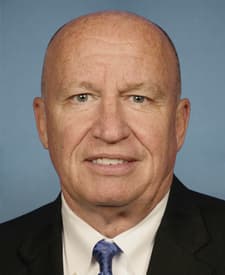
Introduced on Sep 10, 2021 by Kevin Brady (R-TX-8). 23 cosponsors, all from the sponsor's party. Latest action (Sep 10, 2021): Referred to the Committee on Ways and Means, and in addition to the Committee on Financial Services, for a period to be subsequently determined by the Speaker, in each case for consideration of such provisions as fall within the jurisdiction of the committee concerned.
- Stage
- Introduced
- Introduced
- Sep 10, 2021
- Cosponsors
- 23
- 0 from the other party
- Policy area
- Taxation
Progress
The furthest stage the measure reached. Simple and concurrent resolutions do not go to the President.
- Introduced
- 2Reported by committee
- 3Passed one chamber
- 4Passed both chambers
- 5Sent to the President
- 6Became law
Subjects
- Accounting and auditing
- Computers and information technology
- Congressional oversight
- Department of the Treasury
- Employee hiring
- Executive agency funding and structure
- First Amendment rights
- Government employee pay, benefits, personnel management
- Internal Revenue Service (IRS)
- Political movements and philosophies
- Tax administration and collection, taxpayers
Summary
By the Congressional Research Service (Introduced in House, Sep 10, 2021). Public domain.
This bill requires the Internal Revenue Service (IRS) to report to Congress on projections of the estimated tax gap (i.e., the difference between tax liabilities owed to the IRS and those liabilities that the IRS actually collects). The IRS may use artificial intelligence and related data analysis tools to calculate a tax gap projection. The bill also requires the Joint Committee on Taxation to issue periodic reports to the congressional tax committees on the tax gap projection.
The bill restricts IRS funding to FY2021 levels for audits and enforcement until it publishes an updated tax gap projection. Funding is also restricted for certain purposes, including (1) targeting U.S. citizens who exercise their First Amendment rights, (2) targeting a group for regulatory scrutiny based on its ideological beliefs, and (3) auditing individual taxpayers with an adjusted gross income of less than $400,000.
The bill directs the IRS to establish a fellowship program to recruit private sector tax experts to join the IRS to create and participate in the audit task force. The purposes of the tax force include performing audit case selection, educating IRS employees on emerging issues, auditing selected taxpayers, addressing offshore tax evasion, and identifying, mentoring, and training IRS junior employees with respect to audits.
Sponsor and cosponsors
Cosponsors by party as of the day they signed on. Original cosponsors signed on the day of introduction.
Republicans · 23
- Jodey C. ArringtonR-TX-19original
- Vern BuchananR-FL-16original
- Ron EstesR-KS-4original
- A. Drew Ferguson IVR-GA-3original
- Kevin HernR-OK-1original
- Mike KellyR-PA-16original
- Darin LaHoodR-IL-18original
- Carol D. MillerR-WV-3original
- Devin NunesR-CA-22original
- Tom ReedR-NY-23original
- Tom RiceR-SC-7original
- David SchweikertR-AZ-6original
- Adrian SmithR-NE-3original
- Jason SmithR-MO-8original
- Lloyd SmuckerR-PA-11original
- Jackie WalorskiR-IN-2original
- Brad R. WenstrupR-OH-2original
- Russ FulcherR-ID-1signed on Oct 20, 2021
- Brett GuthrieR-KY-2signed on Oct 20, 2021
- Dusty JohnsonR-SDsigned on Oct 20, 2021
- Blaine LuetkemeyerR-MO-3signed on Oct 20, 2021
- Beth Van DuyneR-TX-24signed on Oct 20, 2021
- Tim WalbergR-MI-7signed on Feb 11, 2022
Roll calls
Recorded votes on the measure. Most measures move by voice vote or unanimous consent, which record no individual positions.
No recorded roll call on this measure: it moved by voice vote or unanimous consent, or has not reached the floor.
History
Every action as published, oldest first. Roll calls link to how each member voted.
- Sep 10, 2021Introduced in House
- Sep 10, 2021Introduced in House
- Sep 10, 2021 · HouseReferred to the Committee on Ways and Means, and in addition to the Committee on Financial Services, for a period to be subsequently determined by the Speaker, in each case for consideration of such provisions as fall within the jurisdiction of the committee concerned.
- Sep 10, 2021 · HouseReferred to the Committee on Ways and Means, and in addition to the Committee on Financial Services, for a period to be subsequently determined by the Speaker, in each case for consideration of such provisions as fall within the jurisdiction of the committee concerned.
Committees
Committees and subcommittees the measure was referred to.
Agencies in its committees' jurisdiction
Analisa's mapping of committee jurisdiction to federal agencies; the bill may touch others, or none of these.
- Consumer Financial Protection Bureau
- Department of Health and Human Services
- Department of Housing and Urban Development
- Department of the Treasury
- Export-Import Bank of the United States
- FEDERAL DEPOSIT INSURANCE CORPORATION
- Federal Housing Finance Agency
- National Credit Union Administration
- Securities and Exchange Commission
- Social Security Administration
Sources and method
Every figure on this page traces to these records.
- Bill status: bills and resolutions, sponsors, actions, subjects and CRS summaries (U.S. Government Publishing Office (GovInfo), from Congress.gov (Library of Congress))GovInfo Bill Status bulk data (Congress.gov; summaries by the Congressional Research Service) · data current to Oct 9, 2026 · loaded Oct 9, 2026 · license: Public domain (U.S. Government work, 17 U.S.C. § 105)
- Members of Congress, their terms, committees and identifiers (The @unitedstates project (from the Biographical Directory of the U.S. Congress, the House and the Senate))unitedstates/congress-legislators: legislators, committees and current committee membership · data current to Oct 3, 2026 · loaded Oct 3, 2026 · license: CC0 1.0 (public domain dedication)
- House roll-call votes (Office of the Clerk, U.S. House of Representatives)Office of the Clerk, U.S. House of Representatives, roll-call vote records · data current to Oct 3, 2026 · loaded Oct 3, 2026 · license: Public domain (U.S. Government work, 17 U.S.C. § 105)
- Senate roll-call votes and DW-NOMINATE scores (Voteview (UCLA Department of Political Science))Lewis, Jeffrey B., Keith Poole, Howard Rosenthal, Adam Boche, Aaron Rudkin, and Luke Sonnet (2026). Voteview: Congressional Roll-Call Votes Database. https://voteview.com/ · data current to Oct 3, 2026 · loaded Oct 3, 2026 · license: Free to use with the required citation
- Lobbying disclosures (LD-1 registrations, LD-2 quarterly reports, LD-203 contribution reports) (Clerk of the U.S. House of Representatives)Clerk of the House, Lobbying Disclosure Act filings (organizations only; lobbyists' names are not loaded) · data current to Oct 9, 2026 · loaded Oct 9, 2026 · license: Public domain (U.S. Government work, 17 U.S.C. § 105)
- Positions are shown only where a roll call recorded them; voice votes and unanimous consent record none.