H.R. 6617 · 117th Congress
Further Additional Extending Government Funding Act
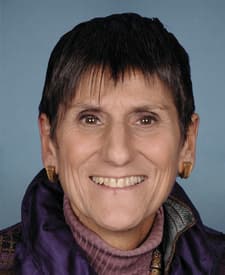
Introduced on Feb 7, 2022 by Rosa L. DeLauro (D-CT-3). Became Public Law 117-86.
- Stage
- Became law
- Public Law 117-86
- Introduced
- Feb 7, 2022
- Cosponsors
- 0
- Policy area
- Economics and Public Finance
Progress
The furthest stage the measure reached. Simple and concurrent resolutions do not go to the President.
- Introduced
- Reported by committee
- Passed one chamber
- Passed both chambers
- Sent to the President
- Became law
Official title
Making further continuing appropriations for the fiscal year ending September 30, 2022, and for other purposes.
Subjects
- American Samoa
- Appropriations
- Congressional oversight
- Crimes against children
- Criminal procedure and sentencing
- Defense spending
- Department of Defense
- Department of Health and Human Services
- Disaster relief and insurance
- Drug trafficking and controlled substances
- Emergency medical services and trauma care
- Energy storage, supplies, demand
- Environmental assessment, monitoring, research
- Executive agency funding and structure
- Government employee pay, benefits, personnel management
- Guam
- Hawaii
- Health personnel
- Health programs administration and funding
- Human trafficking
- Medicaid
- Medicare
- Military facilities and property
- Military procurement, research, weapons development
- Motor fuels
- Northern Mariana Islands
- Public contracts and procurement
- Sex offenses
- U.S. territories and protectorates
- Virgin Islands
- Water quality
- Water use and supply
Summary
By the Congressional Research Service (Public Law, Feb 18, 2022). Public domain.
Further Additional Extending Government Funding Act
This bill provides continuing FY2022 appropriations for federal agencies and extends several expiring authorities.
Specifically, the bill provides continuing FY2022 appropriations to federal agencies through the earlier of March 11, 2022, or the enactment of the applicable appropriations act.
It is known as a continuing resolution (CR) and prevents a government shutdown that would otherwise occur if the FY2022 appropriations bills have not been enacted when the existing CR expires on February 18, 2022.
The CR funds most programs and activities at the FY2021 levels with several exceptions that provide funding flexibility or additional appropriations for various programs. For example, the CR includes provisions that address
- the President's authority to draw down defense articles and services to respond to unforeseen emergencies,
- procurement of the Columbia-class submarine,
- the Department of Defense's response to the contamination of drinking water near the Red Hill Bulk Fuel Storage Facility in Hawaii, and
- the Department of the Interior's implementation of enterprise cybersecurity safeguards.
In addition, the bill extends several expiring authorities, including
- the authority for the Department of Health and Human Services to make certain appointments for the National Disaster Medical System,
- the special assessment under the Justice for Victims of Trafficking Act of 2015 on nonindigent people or entities convicted of certain criminal offenses (e.g., sexual abuse and trafficking),
- the temporary scheduling order issued by the Drug Enforcement Administration to place fentanyl-related substances in Schedule I of the Controlled Substances Act, and
- the current Medicaid federal matching rate (also known as the Federal Medical Assistance Percentage or FMAP) for certain territories.
The bill also exempts the budgetary effects of these extensions from (1) the Statutory Pay-As-You-Go Act of 2010 (PAYGO), (2) the Senate PAYGO rule, and (3) certain budget scorekeeping rules.
Sponsor and cosponsors
Cosponsors by party as of the day they signed on. Original cosponsors signed on the day of introduction.
No cosponsors.
Roll calls
Recorded votes on the measure. Most measures move by voice vote or unanimous consent, which record no individual positions.
- Feb 8, 2022· House· Passage· Passed 272–162
- Feb 17, 2022· Senate· Cloture· Cloture Motion Agreed to 65–30
- Feb 17, 2022· Senate· Amendments· Amendment Rejected 46–47
- Feb 17, 2022· Senate· Amendments· Amendment Rejected 44–49
- Feb 17, 2022· Senate· Amendments· Amendment Rejected 47–45
- Feb 17, 2022· Senate· Passage· Bill Passed 65–27
History
Every action as published, oldest first. Roll calls link to how each member voted.
- Feb 7, 2022Introduced in House
- Feb 7, 2022Introduced in House
- Feb 7, 2022 · HouseReferred to the Committee on Appropriations, and in addition to the Committee on the Budget, for a period to be subsequently determined by the Speaker, in each case for consideration of such provisions as fall within the jurisdiction of the committee concerned.
- Feb 7, 2022 · HouseReferred to the Committee on Appropriations, and in addition to the Committee on the Budget, for a period to be subsequently determined by the Speaker, in each case for consideration of such provisions as fall within the jurisdiction of the committee concerned.
- Feb 7, 2022 · HouseRules Committee Resolution H. Res. 912 Reported to House. Rule provides for consideration of H.R. 3076 and H.R. 6617. The resolution provides for one hour of general debate for both bills. H.R. 6617 is being considered under a closed rule and H.R. 3076 is being considered under a structured rule. The resolution provides that H. Con. Res. 69 is considered adopted and provides that for purposes of the joint session to receive the President of the United States on March 1, 2022, former Members, Delegates, and Resident Commissioners shall not be admitted to the Hall of the House or rooms leading thereto.
- Feb 8, 2022 · HouseRule H. Res. 912 passed House.
- Feb 8, 2022 · HouseConsidered under the provisions of rule H. Res. 912. (consideration: CR H1051-1056)
- Feb 8, 2022 · HouseRule provides for consideration of H.R. 3076 and H.R. 6617. The resolution provides for one hour of general debate for both bills. H.R. 6617 is being considered under a closed rule and H.R. 3076 is being considered under a structured rule. The resolution provides that H. Con. Res. 69 is considered adopted and provides that for purposes of the joint session to receive the President of the United States on March 1, 2022, former Members, Delegates, and Resident Commissioners shall not be admitted to the Hall of the House or rooms leading thereto.
- Feb 8, 2022 · HouseDEBATE - The House proceeded with one hour of debate on H.R. 6617.
- Feb 8, 2022 · HouseThe previous question was ordered pursuant to the rule.
- Feb 8, 2022 · HousePOSTPONED PROCEEDINGS - At the conclusion of debate on H.R. 6617, the Chair put the question on passage and by voice vote, announced that the ayes had prevailed. Ms. Granger demanded the yeas and nays and the Chair announced that further proceedings on the question of passage would be postponed.
- Feb 8, 2022 · HouseConsidered as unfinished business. (consideration: CR H1057-1058)
- Feb 8, 2022Passed/agreed to in House: On passage Passed by the Yeas and Nays: 272 - 162 (Roll no. 39).(text: CR H1052)House · Roll call 39
- Feb 8, 2022 · HouseOn passage Passed by the Yeas and Nays: 272 - 162 (Roll no. 39). (text: CR H1052)House · Roll call 39
- Feb 8, 2022 · HouseMotion to reconsider laid on the table Agreed to without objection.
- Feb 8, 2022 · SenateReceived in the Senate. Read the first time. Placed on Senate Legislative Calendar under Read the First Time.
- Feb 9, 2022 · SenateRead the second time. Placed on Senate Legislative Calendar under General Orders. Calendar No. 267.
- Feb 15, 2022 · SenateMotion to proceed to consideration of measure made in Senate. (CR S703)
- Feb 15, 2022 · SenateCloture motion on the motion to proceed to the measure presented in Senate. (CR S703)
- Feb 17, 2022 · SenateMotion to proceed to measure considered in Senate. (CR S757)
- Feb 17, 2022 · SenateCloture on the motion to proceed to the measure invoked in Senate by Yea-Nay Vote. 65 - 30. Record Vote Number: 60. (CR S765)Senate · Roll call 60
- Feb 17, 2022 · SenateMeasure laid before Senate by unanimous consent. (consideration: CR S775-779)
- Feb 17, 2022Passed/agreed to in Senate: Passed Senate, under the order of 2/17/2022, having achieved 60 votes in the affirmative, without amendment by Yea-Nay Vote. 65 - 27. Record Vote Number: 64.Senate · Roll call 64
- Feb 17, 2022 · SenatePassed Senate, under the order of 2/17/2022, having achieved 60 votes in the affirmative, without amendment by Yea-Nay Vote. 65 - 27. Record Vote Number: 64.Senate · Roll call 64
- Feb 18, 2022 · SenateMessage on Senate action sent to the House.
- Feb 18, 2022Presented to President.
- Feb 18, 2022 · HousePresented to President.
- Feb 18, 2022Signed by President.
- Feb 18, 2022Signed by President.
- Feb 18, 2022Became Public Law No: 117-86.
- Feb 18, 2022Became Public Law No: 117-86.
Committees
Committees and subcommittees the measure was referred to.
Sources and method
Every figure on this page traces to these records.
- Bill status: bills and resolutions, sponsors, actions, subjects and CRS summaries (U.S. Government Publishing Office (GovInfo), from Congress.gov (Library of Congress))GovInfo Bill Status bulk data (Congress.gov; summaries by the Congressional Research Service) · data current to Oct 9, 2026 · loaded Oct 9, 2026 · license: Public domain (U.S. Government work, 17 U.S.C. § 105)
- Members of Congress, their terms, committees and identifiers (The @unitedstates project (from the Biographical Directory of the U.S. Congress, the House and the Senate))unitedstates/congress-legislators: legislators, committees and current committee membership · data current to Oct 3, 2026 · loaded Oct 3, 2026 · license: CC0 1.0 (public domain dedication)
- House roll-call votes (Office of the Clerk, U.S. House of Representatives)Office of the Clerk, U.S. House of Representatives, roll-call vote records · data current to Oct 3, 2026 · loaded Oct 3, 2026 · license: Public domain (U.S. Government work, 17 U.S.C. § 105)
- Senate roll-call votes and DW-NOMINATE scores (Voteview (UCLA Department of Political Science))Lewis, Jeffrey B., Keith Poole, Howard Rosenthal, Adam Boche, Aaron Rudkin, and Luke Sonnet (2026). Voteview: Congressional Roll-Call Votes Database. https://voteview.com/ · data current to Oct 3, 2026 · loaded Oct 3, 2026 · license: Free to use with the required citation
- Lobbying disclosures (LD-1 registrations, LD-2 quarterly reports, LD-203 contribution reports) (Clerk of the U.S. House of Representatives)Clerk of the House, Lobbying Disclosure Act filings (organizations only; lobbyists' names are not loaded) · data current to Oct 9, 2026 · loaded Oct 9, 2026 · license: Public domain (U.S. Government work, 17 U.S.C. § 105)
- Positions are shown only where a roll call recorded them; voice votes and unanimous consent record none.