S. 3971 · 119th Congress
Small Business Innovation and Economic Security Act
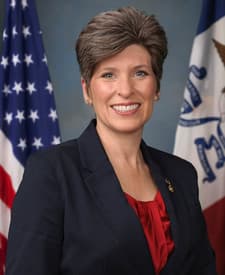
Introduced on Mar 3, 2026 by Joni Ernst (R-IA). One cosponsor. Became Public Law 119-83.
- Stage
- Became law
- Public Law 119-83
- Introduced
- Mar 3, 2026
- Cosponsors
- 1
- 1 from the other party
- Policy area
- Commerce
Progress
The furthest stage the measure reached. Simple and concurrent resolutions do not go to the President.
- Introduced
- Reported by committee
- Passed one chamber
- Passed both chambers
- Sent to the President
- Became law
Official title
A bill to extend the SBIR and STTR programs, and for other purposes.
Subjects
- Advanced technology and technological innovations
- Asia
- China
- Computer security and identity theft
- Computers and information technology
- Data collection, sharing, protection
- Government lending and loan guarantees
- Intellectual property
- Military assistance, sales, and agreements
- Performance measurement
- Public contracts and procurement
- Research administration and funding
- Research and development
- Small Business Administration
- Small business
- Subversive activities
- Technology assessment
- Technology transfer and commercialization
Summary
By the Congressional Research Service (Public Law, Apr 13, 2026). Public domain.
Small Business Innovation and Economic Security Act
This act reauthorizes through FY2031 and modifies the Small Business Innovation Research (SBIR) program, the Small Business Technology Transfer (STTR) program, and related pilot programs. (The SBIR and STTR programs are administered by various federal agencies and provide competitive awards for domestic small businesses to conduct research and development projects that have the potential for commercialization.)
Specifically, the act expands the requirements for federal agencies administering these programs to evaluate the security risks of the small businesses that apply for awards under the programs. If an agency denies an application for security reasons, the agency must provide the small business with the basis for such determination.
Further, each agency must set a maximum number of proposals per fiscal year that a small business concern may submit in response to Phase I and Phase II solicitations.
The act expands the training requirements for agencies' contracting officers and acquisition workforce with respect to Phase III (commercialization of technologies) awards under the SBIR and STTR programs.
The act also establishes strategic breakthrough allocations for critical technology areas. These are additional Phase II SBIR and STTR awards to small businesses that demonstrate an effective technology and receive matching funds.
Sponsor and cosponsors
Cosponsors by party as of the day they signed on. Original cosponsors signed on the day of introduction.
Democrats · 1
- Edward J. MarkeyD-MAoriginal
Roll calls
Recorded votes on the measure. Most measures move by voice vote or unanimous consent, which record no individual positions.
- Mar 17, 2026· House· Passage· Passed 345–41
History
Every action as published, oldest first. Roll calls link to how each member voted.
- Mar 3, 2026Introduced in Senate
- Mar 3, 2026Passed/agreed to in Senate: Introduced in the Senate, read twice, considered, read the third time, and passed without amendment by Voice Vote.
- Mar 3, 2026 · SenateIntroduced in the Senate, read twice, considered, read the third time, and passed without amendment by Voice Vote. (consideration: CR S752-756; text: CR S752-756)
- Mar 4, 2026 · SenateMessage on Senate action sent to the House.
- Mar 4, 2026 · HouseReceived in the House.
- Mar 4, 2026 · HouseHeld at the desk.
- Mar 16, 2026 · HouseMs. Van Duyne moved to suspend the rules and pass the bill.
- Mar 16, 2026 · HouseConsidered under suspension of the rules. (consideration: CR H2491-2497; text: CR H2491-2495)
- Mar 16, 2026 · HouseDEBATE - The House proceeded with forty minutes of debate on S. 3971.
- Mar 16, 2026 · HouseAt the conclusion of debate, the Yeas and Nays were demanded and ordered. Pursuant to the provisions of clause 8, rule XX, the Chair announced that further proceedings on the motion would be postponed.
- Mar 17, 2026 · HouseConsidered as unfinished business. (consideration: CR H2545-2546)
- Mar 17, 2026Passed/agreed to in House: On motion to suspend the rules and pass the bill Agreed to by the Yeas and Nays: (2/3 required): 345 - 41 (Roll no. 89).House · Roll call 89
- Mar 17, 2026 · HouseOn motion to suspend the rules and pass the bill Agreed to by the Yeas and Nays: (2/3 required): 345 - 41 (Roll no. 89).House · Roll call 89
- Mar 17, 2026 · HouseMotion to reconsider laid on the table Agreed to without objection.
- Apr 2, 2026Presented to President.
- Apr 2, 2026 · HousePresented to President.
- Apr 13, 2026Signed by President.
- Apr 13, 2026Signed by President.
- Apr 13, 2026Became Public Law No: 119-83.
- Apr 13, 2026Became Public Law No: 119-83.
Sources and method
Every figure on this page traces to these records.
- Bill status: bills and resolutions, sponsors, actions, subjects and CRS summaries (U.S. Government Publishing Office (GovInfo), from Congress.gov (Library of Congress))GovInfo Bill Status bulk data (Congress.gov; summaries by the Congressional Research Service) · data current to Oct 3, 2026 · loaded Oct 3, 2026 · license: Public domain (U.S. Government work, 17 U.S.C. § 105)
- Members of Congress, their terms, committees and identifiers (The @unitedstates project (from the Biographical Directory of the U.S. Congress, the House and the Senate))unitedstates/congress-legislators: legislators, committees and current committee membership · data current to Oct 3, 2026 · loaded Oct 3, 2026 · license: CC0 1.0 (public domain dedication)
- House roll-call votes (Office of the Clerk, U.S. House of Representatives)Office of the Clerk, U.S. House of Representatives, roll-call vote records · data current to Oct 3, 2026 · loaded Oct 3, 2026 · license: Public domain (U.S. Government work, 17 U.S.C. § 105)
- Senate roll-call votes and DW-NOMINATE scores (Voteview (UCLA Department of Political Science))Lewis, Jeffrey B., Keith Poole, Howard Rosenthal, Adam Boche, Aaron Rudkin, and Luke Sonnet (2026). Voteview: Congressional Roll-Call Votes Database. https://voteview.com/ · data current to Oct 3, 2026 · loaded Oct 3, 2026 · license: Free to use with the required citation
- Lobbying disclosures (LD-1 registrations, LD-2 quarterly reports, LD-203 contribution reports) (Clerk of the U.S. House of Representatives)Clerk of the House, Lobbying Disclosure Act filings (organizations only; lobbyists' names are not loaded) · data current to Oct 3, 2026 · loaded Oct 3, 2026 · license: Public domain (U.S. Government work, 17 U.S.C. § 105)
- Positions are shown only where a roll call recorded them; voice votes and unanimous consent record none.